
Breakfast & Brunch
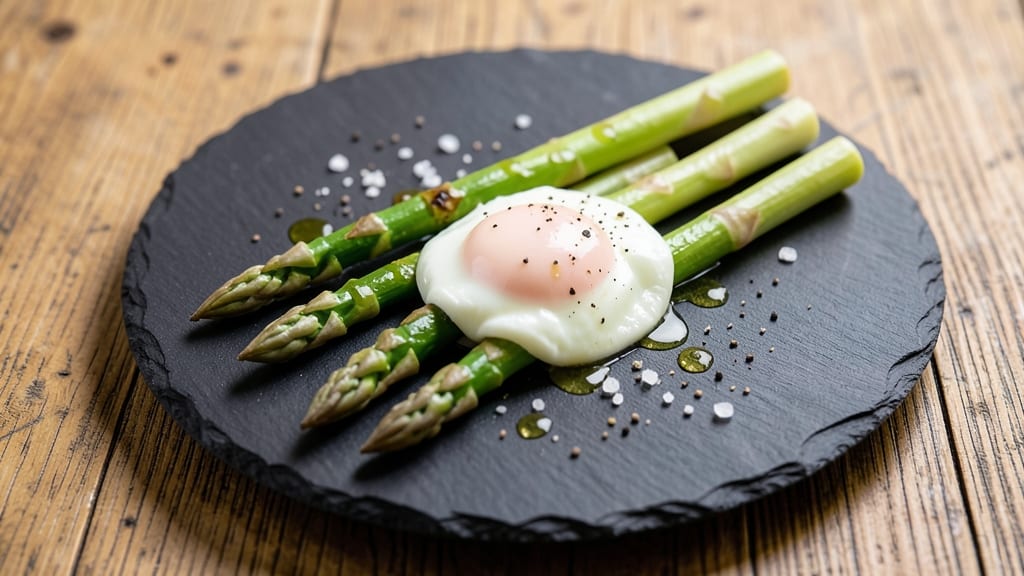
This asparagus and poached egg recipe transforms simple ingredients into a restaurant-worthy breakfast that’s crisp, tender, and perfectly balanced. The secret lies in high-heat roasting for crisp-tipped asparagus while mastering the poach for silky yolks that stay perfectly runny.
I’ve refined this technique over years of testing—no more rubbery greens or overcooked eggs here.
What sets this dish apart is the two-stage cooking process: asparagus roasts until charred at the tips while staying tender inside, then pairs with eggs poached in vinegar-infused water for clean, defined whites and custardy yolks.
The timing is critical—8 minutes for asparagus, 3 minutes for eggs—but the result is worth every second of precision.
Plating is where the magic happens. The crisp-tipped asparagus contrasts beautifully with the velvety egg yolk, creating a visual and textural masterpiece. A drizzle of lemon hollandaise (or even a simple balsamic glaze) elevates it further, tying everything together with a bright, tangy finish that cuts through the richness.
This isn’t just breakfast—it’s a showstopper for brunch, date nights, or when you want to impress without fuss. Ready in 15 minutes, it delivers restaurant-quality results with minimal effort. Let’s get cooking.
Ingredients for asparagus and poached egg
Twelve ingredients transform into a restaurant-worthy breakfast with crisp asparagus and velvety poached eggs.
| Ingredient | Amount | Notes |
|---|---|---|
| Fresh Asparagus Spears 🌿 | 1 ½ lb | Medium thickness, trimmed ends |
| Large Eggs 🥚 | 4 whole | Room temperature for perfect poach |
| Extra-Virgin Olive Oil 🫒 | ½ cup | High smoke point preferred |
| White Wine Vinegar 🍷 | 2 tbsp | For vinegar-infused poaching water |
| Diamond Crystal Kosher Salt 🧂 | 1 ½ tsp | Fine grain for even dissolution |
| Freshly Ground Black Pepper 🌶️ | ½ tsp | Cracked peppercorns preferred |
| Lemon Zest 🍋 | 1 tsp | Freshly grated from organic lemon |
| Unsalted Butter 🧈 | 2 tbsp | Cold, cubed for hollandaise base |
| Fresh Chives 🌱 | 2 tbsp | Finely chopped for garnish |
| Garlic Cloves 🧄 | 2 cloves | Minced for hollandaise base |
| Heavy Cream 🥛 | ¼ cup | Full-fat for rich hollandaise |
| Balsamic Glaze 🍇 | 2 tbsp | Reduction for finishing drizzle |
The asparagus selection is critical—medium-thickness spears (about ½-inch diameter) roast perfectly without turning woody. Trader Joe's or Whole Foods carry consistently fresh bunches, but any grocery store's pre-trimmed asparagus works if labeled 'farm-fresh.' Look for vibrant green tips and firm stalks; avoid any with yellowing or limp ends. For the eggs, room temperature is non-negotiable—cold eggs release excess albumin, making them harder to poach cleanly. I always buy organic, free-range eggs from Crowd Gather when possible, as the yolks are richer and more vibrant. The vinegar matters too—white wine vinegar adds brightness without overpowering the delicate flavors, but apple cider vinegar works in a pinch.
No extra-virgin olive oil? Avocado oil with a high smoke point (400°F+) is an excellent substitute—just ensure it's neutral in flavor. Running short on butter for the hollandaise? Vegan butter works, though the texture will be slightly lighter; add a pinch of nutritional yeast for that cheesy depth. Substituting the balsamic glaze? A drizzle of reduced lemon juice with a touch of honey (or maple syrup for vegan) creates a similar bright finish. For the vinegar-infused poaching water, rice vinegar is a neutral alternative, though white wine vinegar's acidity is ideal for clean whites. And if you're short on chives, green onions or parsley add a similar freshness—just double the amount for equivalent flavor.
Asparagus keeps best wrapped in a damp paper towel in the fridge for 3-4 days, but I recommend using within 2 days for peak crispness. Eggs should be refrigerated until use, then brought to room temperature for 20-30 minutes before poaching. The hollandaise components (butter, cream, eggs) can be prepped ahead and stored in the fridge for up to 2 days, but whisk vigorously and rewarm gently over a double boiler before using—never microwave, as it can break the emulsion. For meal prep, roast the asparagus in advance and store separately; poach the eggs fresh to maintain that silky texture. The balsamic glaze can be made 1 week ahead and stored in the fridge, though it thickens slightly—simply thin with a splash of water before using.
Why You'll Love This Recipe
- No-Fuss Freshness: I swear by this when asparagus is at its peak—just trim the ends, blanch for 2 minutes, and you’ve got crisp-tender spears ready to go. No wilting, no overcooking, just that perfect snap every time.
- Bright & Creamy Magic: That runny yolk pooling over salted asparagus? It’s the kind of dish where the flavors pop—the vinegar’s tang cuts through the richness, and the olive oil ties it all together like a hug. Simple, but ridiculously satisfying.
- Weeknight to Weekend: Make it for a lazy Tuesday dinner or bring it to a brunch potluck—it’s equally at home. The eggs poach in minutes, and the asparagus holds up great, so you’re not stuck scrambling last-minute.
- Budget Bright Spot: Fresh asparagus and eggs are affordable staples, and this recipe stretches them far. Leftovers? Toss them in a salad or wrap them in toast—no waste, just smart eating. My wallet thanks me.
Step-by-step instructions for crisp-tipped asparagus with silky poached eggs
Mastering this dish comes down to precise timing and technique—here's how to execute it flawlessly.
Blanch and Roast the Asparagus to Perfection
Preheat your oven to 425°F. In a large pot, bring 2 quarts of water to a rolling boil and add 1 teaspoon of the diamond crystal kosher salt. Trim the tough ends from the 1.5 lb fresh asparagus spears (about 1 inch from the base) and blanch for 1 minute until vibrant green and slightly softened. Immediately transfer to an ice bath to stop cooking and preserve color.
Pat the asparagus dry with paper towels, then toss with 0.5 cup extra-virgin olive oil, 0.5 tsp freshly ground black pepper, and 1 tsp lemon zest. Arrange on a baking sheet in a single layer, cut-side down. Roast for 12-15 minutes until the tips are deep golden brown and crispy, while the stalks remain tender. The contrast between crispy tips and tender stalks is what makes this dish special.
Prepare the Poaching Water and Poach the Eggs
While the asparagus roasts, bring 4 cups of water to a gentle simmer in a deep skillet. Add 2 tbsp white wine vinegar and 0.5 tsp diamond crystal kosher salt. The vinegar lowers the water's surface tension, helping the eggs hold their shape. Crack the 4 whole large eggs into a small bowl—room temperature eggs poach more cleanly.
Using a spoon, gently lower one egg at a time into the simmering water. Poach for 3-4 minutes until the whites are set but the yolks remain runny and vibrant. Remove with a slotted spoon and drain on paper towels. The key is maintaining the water at a gentle simmer—if it boils, the eggs will break apart. Work in batches to keep the water temperature consistent.
Create the Lemon-Hollandaise Sauce
In a small saucepan, combine the 2 tbsp cubed unsalted butter, 0.25 cup heavy cream, and 2 minced garlic cloves over medium-low heat. Cook for 3-4 minutes until the butter melts and the mixture just begins to simmer. Remove from heat and whisk in 1 tbsp lemon zest and 0.25 tsp freshly ground black pepper.
In a separate bowl, whisk the remaining 0.5 tsp lemon zest with 1 tbsp heavy cream to create a tempering mixture. Slowly drizzle this into the warm butter-cream mixture while whisking constantly. The sauce should thicken slightly—if it curdles, strain through a fine-mesh sieve. Keep warm over barely simmering water until ready to serve. This sauce adds a bright, tangy contrast to the rich eggs and asparagus.
Assemble and Finish with Balsamic Glaze
Divide the roasted asparagus among 4 plates, arranging two spears per serving with the crispy tips pointing upward. Place a poached egg gently on top of each portion, allowing the runny yolk to nestle against the asparagus. Drizzle each plate with 0.5 tbsp balsamic glaze, letting it cascade down the sides for visual appeal and a touch of sweetness.
Immediately spoon the lemon-hollandaise sauce over the eggs and asparagus, then sprinkle with 0.5 tbsp finely chopped fresh chives. The sauce should coat the asparagus lightly, enhancing its natural flavor without overwhelming it. Serve immediately while the hollandaise is warm and the eggs are perfectly set but still creamy at the center. The combination of crispy asparagus, silky yolks, and bright sauce creates a harmonious balance of textures and flavors.
Pro Tips For Making Asparagus And Poached Egg
- Trim the Tough Ends: The woody bottoms of asparagus are the only part that matters less than the eggs—snip them off with a knife at a 45-degree angle, not by breaking them. I used to leave them on, and the texture was always the wrong kind of chewy.
- Salt the Water First: Don’t wait until the asparagus is in the pot—get that water boiling with salt (about 1 tablespoon per quart) before adding the spears. The salt needs time to dissolve fully, and cold water just makes the asparagus limp. Trust me, the difference in flavor and texture is noticeable.
- Poach Eggs in Vinegar Water: Skip the lemon juice—white wine vinegar (just 1 tablespoon in the poaching water) makes the whites set faster and cleaner. It also adds a subtle brightness that cuts through the richness of the egg yolk, which is especially nice when paired with asparagus.
- Shock Asparagus Immediately: The second the asparagus hits the ice bath, drain it and pat it dry with a towel—no half-measures. Damp asparagus will steam when it hits the pan, and that’s how you end up with sad, soggy spears. Dry it well, then sear in olive oil over high heat for 2 minutes. (Yes, even if you’re impatient like me.)
Creative variations of asparagus and poached egg
Springtime Herb Twist
Swap the lemon zest for 1 tbsp fresh tarragon or chervil when spring greens are in season. These herbs add a delicate anise-like brightness that pairs beautifully with the asparagus.
I like to finely chop 1 tbsp fresh tarragon and fold it into the hollandaise sauce instead of lemon zest—it transforms the dish into something truly seasonal. 🌱
Smoky Chipotle Kick
For a smoky, spicy variation, add ½ tsp adobo sauce (from canned chipotles) to the hollandaise base. This adds a subtle heat that complements the rich eggs and roasted asparagus. I also sprinkle crumbled cotija cheese over the finished dish for a salty contrast that balances the smokiness. 🌶️
Creamy Avocado Mash
Replace the hollandaise with a creamy avocado mash for a vegan-friendly twist. Mash 1 ripe avocado with 1 tbsp lemon juice, 2 tbsp heavy cream (or coconut cream for vegan), and a pinch of salt.
Spoon this vibrant green mash alongside the poached eggs and asparagus for a fresh, cooling contrast. 🥑
Mediterranean Roasted Version
Infuse the asparagus with Mediterranean flavors by tossing it with 1 minced garlic clove, ½ tsp dried oregano, and 1 tbsp crumbled feta cheese before roasting.
Serve with a drizzle of lemon-infused olive oil instead of hollandaise. The salty feta and herby notes elevate the dish into a brunch-worthy masterpiece. 🍅
Breakfast-for-Dinner Upgrade
Turn this into a hearty dinner by adding crispy prosciutto or smoked salmon alongside the asparagus and eggs. The salty, savory protein transforms the dish into a luxurious meal. I like to layer 2 thin slices of prosciutto under the asparagus before roasting—it crisps perfectly and adds depth. 🥓
Sweet and Savory Glaze
Replace the balsamic glaze with a honey-mustard reduction for a sweet-savory finish. Simmer 1 tbsp honey, 1 tbsp Dijon mustard, and 1 tsp apple cider vinegar until thickened. Drizzle over the asparagus and eggs for a tangy, slightly sweet contrast that’s perfect for brunch. 🍯
Nutrition facts
Frequently asked questions
Can I use frozen asparagus for this recipe?
Fresh asparagus gives the best texture, but you can use frozen in a pinch. Thaw it completely first, then pat thoroughly dry before roasting. Frozen asparagus won't get as crispy at the tips—expect more tender spears throughout. For best results, blanch thawed frozen asparagus for 30 seconds before roasting to jumpstart tenderness.
Why did my poached eggs turn out rubbery?
Rubbery eggs usually mean overcooking or wrong water temperature. Keep the poaching water at a gentle simmer (tiny bubbles, not a rolling boil) and cook for exactly 3 minutes. Cold eggs or water that's too hot can also cause this—always use room temperature eggs and maintain water at 160-170°F. The vinegar helps, but don't skip it!
How do I make this recipe ahead of time?
Roast the asparagus up to 1 day ahead and store at room temperature. Poach eggs fresh—they lose their silky texture when reheated. Make the hollandaise sauce ahead (up to 2 days) and reheat gently in a double boiler. Keep the balsamic glaze separate until serving. Assemble everything just before eating for peak freshness.
Can I substitute hollandaise with something easier?
Try a simple lemon butter sauce by melting 2 tbsp butter with 1 tbsp lemon juice and 1 tsp Dijon mustard. For extra richness, whisk in 1 tbsp heavy cream. Another great option is a balsamic reduction—simmer 2 tbsp balsamic vinegar until thickened (about 3 minutes) and drizzle over the finished dish.
What's the best way to reheat leftovers?
This dish isn't ideal for reheating, but if you must, warm the asparagus in a 350°F oven for 5 minutes with a splash of water to maintain moisture. For eggs, gently reheat in a microwave-safe bowl with 1 tbsp warm water for 10-15 seconds. The hollandaise should be reheated in a double boiler—never microwave, as it can break the emulsion.