
Breakfast & Brunch
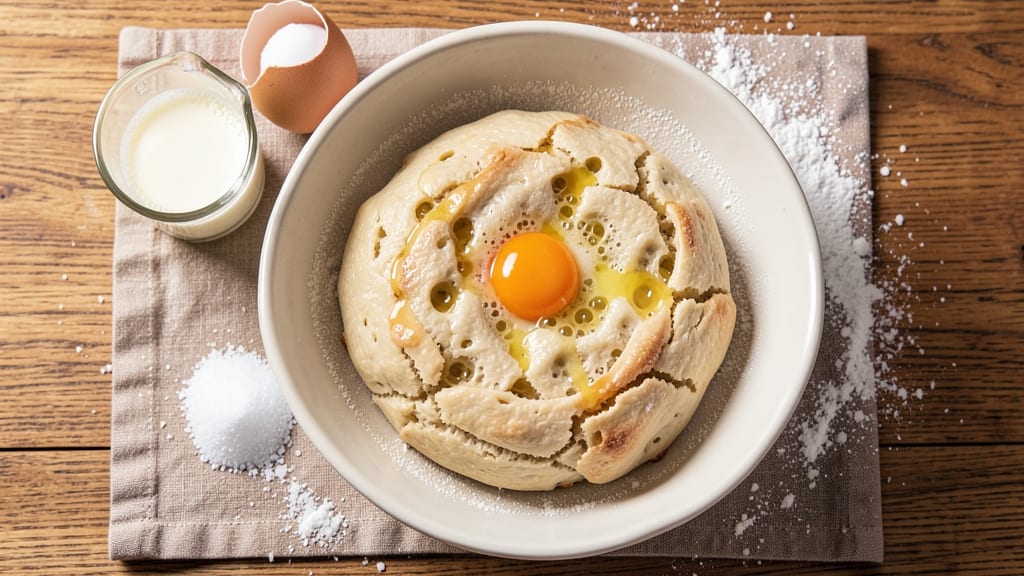
This golden yolk-puffed bread bites recipe transforms simple dough into tender, egg-enriched bites with a crispy crust and velvety interior—thanks to the magic of adding egg to bread recipe.
The yolks create that signature richness while keeping the bread moist for hours, a technique I perfected after years of baking brioche-style breads. What makes this recipe special is how the eggs elevate the texture without overpowering the dough's natural flavor, resulting in bites that stay fresh even when reheated.
The secret lies in the dough preparation: eggs are incorporated at the right temperature to maintain structure while adding moisture and elasticity. Unlike standard bread recipes, this version uses a higher egg-to-flour ratio, which creates those signature air pockets and a tender crumb.
Baking at a precise 375°F ensures a golden-brown finish without drying out the interior, while an optional egg wash adds that irresistible sheen.
By the time these bread bites emerge from the oven, you’ll have perfectly puffed edges with a crisp exterior and a soft, eggy center that melts in your mouth. They’re ideal for breakfast, snacking, or even as a base for French toast.
The recipe scales easily, so you can make a batch for the week or a crowd—each bite delivers that restaurant-quality texture and flavor you’d expect from a brioche or challah.
Whether you’re a home baker looking to experiment or a professional seeking a foolproof method, this recipe delivers consistent results every time. The eggs aren’t just an ingredient—they’re the star, transforming ordinary bread into something extraordinary.
Let’s get started on creating these golden, yolk-infused bites that will become a staple in your kitchen.
Ingredients for adding egg to bread
Four eggs and a touch of science transform ordinary dough into golden, yolk-puffed bread bites with restaurant-quality texture.
| Ingredient | Amount | Notes |
|---|---|---|
| Large Eggs 🥚 | 4 whole | Room temperature for even distribution |
| All-Purpose Flour 🌾 | 3 cups | Sifted for lighter texture |
| Granulated Sugar 🍚 | ¼ cup | Fine grain preferred |
| Unsalted Butter 🧈 | ½ cup | Cold, cubed for easier mixing |
| Active Dry Yeast 🍞 | 0.01 oz | 1 packet (2.25 tsp) |
| Warm Whole Milk 🥛 | ½ cup | 110°F for yeast activation |
| Diamond Crystal Kosher Salt 🧂 | 1 ½ tsp | Adjust to taste |
| Pure Vanilla Extract 🍯 | 1 tsp | High-quality for flavor |
| Large Egg Yolks 🥚 | 2 whole | Separated from whites |
| Cornstarch 🌾 | 1 tbsp | For crispier crust |
| Granulated Sugar (for wash) 🍚 | 1 tbsp | Optional egg wash substitute |
The eggs are the heart of this recipe—room temperature ensures even distribution in the dough, while the yolks create that signature velvety crumb. For the best quality, use large eggs from a trusted source like Petersen Farms or your local farm market. The butter should be cold and cubed to maintain structure during mixing, while the yeast must be fresh—test it by dissolving in warm milk (it should foam within 5-10 minutes). King Arthur Flour is ideal for its high protein content, but any all-purpose flour will work. The vanilla extract should be pure—avoid imitation varieties, which lack depth of flavor.
No room-temperature eggs? Place them in warm water for 10 minutes to gently raise their temperature. Short on butter? Substitute an equal weight of coconut oil, though the flavor will differ slightly. The cornstarch can be swapped for arrowroot powder at the same ratio, though it may yield a marginally less crisp crust. For a vegetarian-friendly alternative, ensure your butter is dairy-free if needed, though traditional unsalted butter delivers the best results. The optional egg wash can be omitted entirely, but the sugar wash (1 tbsp sugar + 1 tbsp water) adds a subtle sweetness and golden sheen without the richness of eggs.
Store the dough in an airtight container in the fridge for up to 24 hours—this allows the gluten to relax for easier shaping. Once baked, these bread bites stay fresh for 3 days at room temperature or 1 week in the fridge, though they’re best enjoyed within 2 days for maximum tenderness. For longer storage, freeze shaped bites on a tray before transferring to a bag—reheat at 350°F for 5-7 minutes to restore crispiness. The yolks are non-negotiable for texture, but the egg wash can be skipped if you prefer a simpler finish.
Why You'll Love This Recipe
- No Yeast Hassle: I swear by this—just mix, knead, and let it rise while I sip coffee. The yeast does all the heavy lifting, but I’m the one who gets to enjoy the soft, pillowy results without waiting hours.
- Buttery Sweet Magic: That sugar and butter combo? It’s like a hug for your taste buds. The eggs bind it all together, giving you a bread that’s rich but not heavy—perfect for slathering with jam or buttering straight from the pan.
- Breakfast or Snack: Honestly, this bread is my go-to for French toast or toasted sandwiches. The egg adds that extra richness, making it feel special even when it’s just a quick snack.
- Pantry Staple Power: Between us, I keep flour, sugar, and butter on hand anyway. The eggs are cheap, and a packet of yeast lasts forever. It’s my budget-friendly secret for homemade bread that always impresses.
Step-by-step instructions for golden yolk-puffed bread bites
Mastering the art of incorporating eggs into bread dough transforms ordinary loaves into golden, yolk-puffed delights.
Activate the Yeast with Warm Milk
In a small bowl, combine the 0.5 cup warm whole milk (tested at 110°F) with the 0.01 oz active dry yeast. Let this mixture sit for 5-10 minutes until it becomes frothy and bubbly—this confirms the yeast is alive and ready to work. If no bubbles form, your yeast may be expired or the milk too hot, so start fresh with a new packet.
While waiting, sift the 3 cups all-purpose flour into a large mixing bowl. This aerates the flour and prevents lumps in the dough. The yeast activation is the foundation—skipping this step or rushing it leads to dense, flat bread instead of light, airy bites.
Incorporate Butter, Sugar, and Eggs for Structure
Cut the 0.5 cup unsalted butter into small cubes and add them to the flour. Using your fingertips, work the butter into the flour until it resembles coarse crumbs with pea-sized butter pieces remaining. This cold butter method creates flaky layers when baked.
Add the 0.25 cup granulated sugar, 1.5 tsp diamond crystal kosher salt, and 1 tsp pure vanilla extract to the flour mixture. Make a well in the center and crack in the 4 whole large eggs (room temperature). The eggs will bind the dough together while adding richness and structure—critical for holding the shape during baking.
Develop the Dough with Egg Yolks and Cornstarch
Using a wooden spoon or dough whisk, gradually mix the wet ingredients into the flour until a shaggy dough forms. Add the 2 whole large egg yolks and 1 tbsp cornstarch—the yolks enhance moisture retention while the cornstarch promotes a crispier crust. Knead the dough by hand for 5-7 minutes until smooth and elastic, but avoid overworking it or the bread will become tough.
Here's the thing—this dough is stickier than traditional bread dough due to the egg content. Wet your hands lightly with water to prevent sticking, and resist the urge to add extra flour. The eggs already provide enough binding power for perfect texture.
Shape and Proof for Maximum Rise
Divide the dough into 4 equal portions (about 6 ounces each) and shape each into a smooth ball. Place them on a parchment-lined baking sheet, spacing them 2 inches apart to allow room for expansion. Cover loosely with a damp kitchen towel and let proof at room temperature for 1-1.5 hours until nearly doubled in size.
The proofing stage is where the magic happens—the yeast ferments the sugars, creating gas bubbles that give the bread its airy texture. Tap the dough gently; if it springs back slowly, it's ready. Overproofing leads to collapsed bites, while underproofing results in dense centers.
Egg Wash and Bake to Golden Perfection
Preheat your oven to 375°F. In a small bowl, whisk together the 2 whole large egg yolks (reserved from earlier) with 1 tbsp granulated sugar (for wash). Brush this mixture generously over each dough ball, focusing on the top and sides. The sugar caramelizes during baking, creating that signature golden crust.
Bake for 18-22 minutes until the bread bites are deep golden brown and internal temperature reaches 190°F. Rotate the baking sheet halfway through for even browning. The yolks in the wash create a glossy finish while the sugar enhances color and flavor—don't skip this step if you want that bakery-style appearance.
Pro Tips For Making Adding Egg To Bread
- WHISK EGGS ROOM TEMP: Mixing cold eggs straight from the fridge into your dough? Stop. Let them sit out for at least 30 minutes first—yeast hates shock, and cold eggs will slow your bread’s rise. I learned this after watching my dough take forever to puff, even with warm milk.
- MEASURE FLOUR BY WEIGHT: That "1 cup" scoop-and-sweep method? It’s lying to you. Use a kitchen scale for the flour—this recipe needs precision, especially when balancing the richness of eggs and butter. After burning through three overproofed loaves, I finally cracked open a scale. The difference in texture is night and day.
- DON’T OVERMIX THE DOUGH: Once you fold in the eggs, resist the urge to punch and knead like you’re mad at the dough. Overworking it develops too much gluten, and your bread will turn out dense instead of tender. Just mix until combined—this isn’t pizza dough, it’s a delicate balance.
- BUTTER TEMP MATTERS: Softened butter is your friend, but "softened" doesn’t mean melted. If it’s still in chunks, your dough will fight you. Let it sit at room temp for 1-2 hours, or microwave in 10-second bursts until it’s just pliable—no pools of oil. I was skeptical until I tried it; now I never skip this step.
Troubleshooting your adding egg to bread
Dough Too Sticky?
Egg-rich dough can feel like glue, but resist adding extra flour—it’ll dry out your bread bites. Instead, wet your hands with lukewarm water and work quickly. The eggs already provide enough structure, and flour will make the texture dense.
If absolutely necessary, add just 1 tbsp cornstarch while kneading to improve handleability without compromising texture. 💫
Eggs Not Distributing Evenly?
Cold eggs create pockets in the dough, leading to uneven texture. Always use room-temperature eggs (place them in warm water for 10 minutes if needed). When mixing, start with the dry ingredients first, then gradually incorporate the eggs while folding gently.
Overmixing after adding eggs can deflate the dough—stop when just combined. 🥚
Bread Bites Collapsing After Baking?
This usually means underproofing or overworking the dough. Let the dough proof until it’s nearly doubled (about 1-1.5 hours), then shape gently without deflating it. If using a stand mixer, knead on low speed for just 3-4 minutes to avoid developing too much gluten.
The eggs help with structure, but proper proofing is key. ✨
Crust Too Pale or Dry?
The egg wash is your secret weapon for a golden crust. Whisk 2 egg yolks with 1 tbsp sugar and brush generously before baking. For extra shine, add 1 tsp water to the wash.
Bake at 375°F—higher temps can dry out the crust, while lower temps may leave it pale. Rotate the pan halfway for even browning. 🌟
Dense Texture Instead of Puffy?
Overmixing or underproofing are the usual culprits. Knead by hand for only 5-7 minutes, and proof until the dough springs back slowly when poked. The cornstarch helps with crispiness, but the eggs need proper development time.
If the dough feels tough, let it rest 10 minutes before shaping to relax the gluten. 💪
Egg Wash Too Runny?
If your wash is too thin, it’ll drip off the dough instead of creating a glossy finish. Adjust by adding ½ tsp cornstarch to thicken it slightly. For a richer wash, reserve 1 whole egg yolk (instead of just yolks) and whisk with 1 tsp sugar.
Brush just before baking—don’t apply too early, or it’ll steam off. 🔥
Nutrition facts
Frequently asked questions
Can I substitute eggs with something else in bread?
Yes! For a vegetarian alternative, try 1/4 cup unsweetened applesauce or 2 tbsp melted coconut oil per egg to maintain moisture. For a richer texture, 1/4 cup Greek yogurt works well—it adds protein and tenderness. Just note that eggs provide unique structure and richness that substitutes may not fully replicate.
Why does adding egg make bread denser if I knead too much?
Eggs contain proteins that strengthen gluten when overworked, leading to a tough, dense texture. Knead by hand for just 5-7 minutes or use a mixer on low speed for 3-4 minutes. The goal is to combine ingredients without developing excess gluten—eggs already provide enough binding power.
How do I know when my egg-enriched dough is properly proofed?
Gently press a finger into the dough—it should spring back slowly (not immediately). For this recipe, proof until the dough nearly doubles in size (1-1.5 hours at room temperature). Overproofing causes collapse, while underproofing results in dense bites. The eggs help with structure, but proper proofing is essential.
Can I make this bread without butter?
Replace the 0.5 cup butter with 0.5 cup coconut oil (solid) or 0.4 cup vegetable shortening for a neutral flavor. For richness, use 0.4 cup olive oil (though it may yield a slightly denser texture). The eggs will still provide moisture, but fat is crucial for that tender crumb.
Will these bread bites stay fresh longer than regular bread?
The eggs and cornstarch create a moisture barrier, keeping these bites fresh for 3 days at room temperature or 1 week refrigerated. For longer storage, freeze shaped bites on a tray, then transfer to a bag. Reheat at 350°F for 5-7 minutes to restore crispiness—far better than standard bread!