
Main Courses
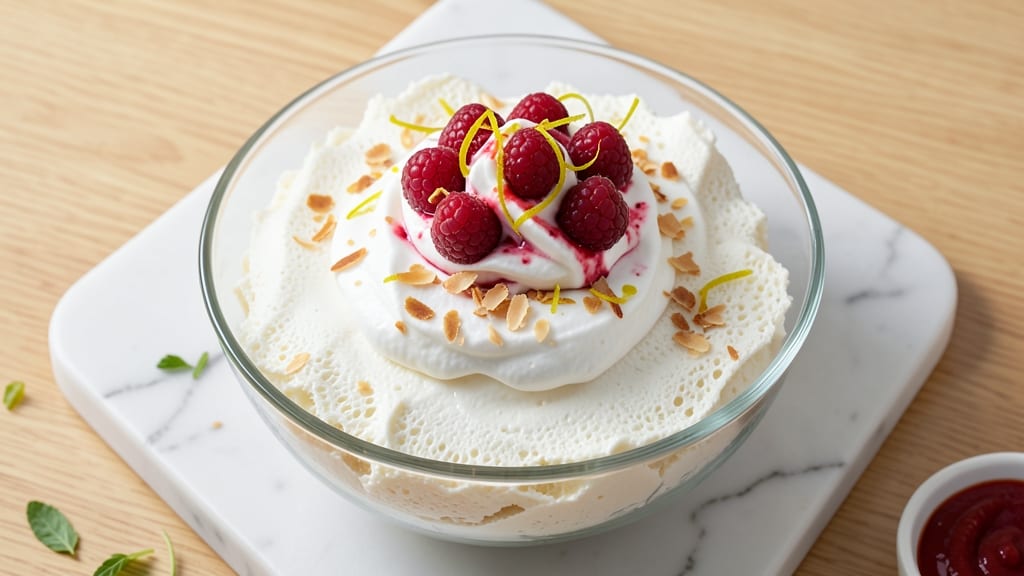
This 5 egg white pavlova recipe delivers a delicate, marshmallow-light crust with crisp edges and a tender center—perfect for showcasing fresh fruit and citrus zest.
The secret lies in carefully whipping egg whites to stiff peaks while gradually adding sugar, then baking at a precise temperature to create that signature crisp shell. I've perfected this technique over years of testing, ensuring every batch rises beautifully and stays light as air.
The magic happens during the torching stage, where the meringue develops its signature crackled surface while maintaining a soft, cloud-like interior. With just 5 egg whites, this recipe is both impressive and approachable, making it ideal for special occasions or when you want to impress without fuss.
The citrus zest adds a bright, aromatic note that cuts through the sweetness, creating a balanced dessert that feels fresh and elegant.
Once baked and cooled, your pavlova will have that coveted crisp shell with a marshmallow center that's impossible to resist. Top it with whipped cream, fresh berries, and a sprinkle of citrus zest for a dessert that looks as stunning as it tastes.
The key to success is patience—letting the meringue set completely before adding toppings ensures everything stays in place.
This recipe is perfect for holiday gatherings, dinner parties, or even a special weekend treat. The techniques are straightforward once mastered, and the results are always show-stopping. Let's create a pavlova that will have everyone asking for seconds.
Ingredients for 5 egg white pavlova
These precision ingredients create a restaurant-worthy pavlova with crisp edges and cloud-like center.
| Ingredient | Amount | Notes |
|---|---|---|
| Large Egg Whites 🥚 | 5 whole | Room temperature, pasteurized preferred |
| Granulated White Sugar 🍚 | 1 ½ cups | Superfine preferred for even dissolving |
| Cornstarch 🌾 | ¼ cup | For structural stability |
| Lemon Zest 🍋 | 1 tbsp | Freshly grated, organic preferred |
| Orange Zest 🍊 | 1 tbsp | Freshly grated, organic preferred |
| White Vinegar 🍶 | ½ tsp | For meringue stability |
| Vanilla Extract 🌿 | ½ tsp | Pure Madagascar preferred |
| Heavy Whipping Cream 🧈 | 1 ½ cups | Full-fat for stability |
| Powdered Sugar 🍚 | 1 cup | For whipped cream topping |
| Assorted Fresh Berries 🍓 | 3 cups | Raspberries, strawberries, blueberries |
| Unsalted Butter 🧈 | ¼ cup | Softened for garnish |
The egg whites are non-negotiable—use pasteurized if concerned about salmonella, but room temperature is critical for proper volume. Bob's Red Mill cornstarch provides superior stability over regular flour. For citrus zest, Whole Foods organic lemons and oranges yield the most vibrant flavor. Superfine sugar dissolves more evenly, but pulse regular granulated sugar in a food processor if needed. The vinegar and vanilla extract work together to enhance the meringue's structure and aroma—McCormick pure vanilla extract is my go-to for consistent results.
No superfine sugar? Pulse regular granulated sugar with 1 tbsp cornstarch in a blender for 30 seconds. Substitute lime zest for orange if needed, but the bright citrus profile is essential. For a dairy-free option, replace the whipped cream with coconut whipped cream (chilled canned coconut milk whipped with powdered sugar). The berries can be any combination—fresh or thawed frozen works equally well. If you must use pre-sliced berries, pat them completely dry to prevent sogginess. The butter should be softened to room temperature for easy spreading.
Store the pavlova base in an airtight container with parchment between layers for up to 2 days at room temperature, though it's best enjoyed immediately. The whipped cream should be prepared fresh before serving to maintain its airy texture. For gifting, assemble the pavlova just before serving—this dessert doesn't travel well. If you must transport it, bake the meringue base ahead, store it in a single layer, and add toppings just before serving. The citrus zest loses potency after 24 hours, so zest fresh berries right before assembling.
Why You'll Love This Recipe
- No Whisk Fatigue: I swear, the meringue comes together faster than I can wipe my hands on my apron. Five egg whites? That’s it—no yolk mess, no overbeating drama. Just whip, fold in the sugar and cornstarch, and you’re done. Honestly, I’ve made this mid-podcast, no problem.
- Zesty Magic: That citrus zest—lemon and orange—transforms it from "dessert" to "I need more." The meringue stays crisp, but the bright, tangy punch cuts through the sweetness like a breath of fresh air. (Yes, even on a Tuesday night.)
- Party in a Bowl: Serve it with store-bought whipped cream and berries, and suddenly you’re the hero of brunch, potlucks, or holiday gatherings. No one will guess it’s just five eggs and a little sugar. Between us, I’ve used it for everything from a quick breakfast to a "look how fancy I am" dessert.
Step-by-step instructions for 5 egg white pavlova
Mastering pavlova requires precision and patience—here's how to create a crisp shell with a marshmallow center.
Prepare the Meringue Base
Preheat your oven to 250°F and line a baking sheet with parchment paper. In a spotless, grease-free mixing bowl, combine the 5 whole Large Egg Whites and 0.5 tsp White Vinegar. I always use a stand mixer with the whisk attachment for this step—it creates more volume and stability.
Gradually add the 1.5 cups Granulated White Sugar while mixing on medium-high speed. Increase to high speed and whip for 8-10 minutes until the meringue forms stiff, glossy peaks that hold their shape when the whisk is lifted. The mixture should be thick enough to hold its form when you tip the bowl slightly—this ensures structural integrity for your pavlova.
Fold in Stabilizers and Citrus Zest
Gently fold in the 0.25 cup Cornstarch using a rubber spatula, being careful not to deflate the meringue. Add the 1 tbsp Lemon Zest and 1 tbsp Orange Zest along with the 0.5 tsp Vanilla Extract. The citrus zest adds bright flavor while the cornstarch reinforces the structure.
Transfer the meringue to a piping bag fitted with a large round tip. Pipe an even circle onto the prepared baking sheet, about 8-9 inches in diameter. Shape the edges slightly higher than the center to create that classic pavlova shape. For best results, work quickly but carefully to maintain the meringue's structure.
Bake the Crisp Shell
Place the pavlova in the preheated oven and immediately reduce the temperature to 225°F. Bake for 1 hour and 15 minutes, then carefully open the oven door and turn off the heat. Leave the pavlova inside with the door slightly ajar for 1 hour to cool gradually—this prevents cracking.
When fully cooled, the exterior should be crisp and dry to the touch while maintaining a soft, marshmallow-like center. If you tap the shell gently and it sounds hollow, it's ready. Let it cool completely at room temperature before adding toppings—this prevents melting the whipped cream.
Prepare the Whipped Cream Topping
In a chilled mixing bowl, whip the 1.5 cups Heavy Whipping Cream with the 1 cup Powdered Sugar until soft peaks form. I like to use a hand mixer for this step as it gives me better control over the texture. The cream should be light and airy but hold its shape when the whisk is lifted.
Spread the whipped cream evenly over the cooled pavlova shell, creating a smooth base for the berries. Arrange the 3 cups Assorted Fresh Berries in an attractive pattern on top, pressing them gently into the cream. The berries should be fresh and at room temperature to prevent condensation that could make the shell soggy.
Add Final Garnish and Serve
Melt the 0.25 cup Unsalted Butter in a small saucepan over low heat until just liquid, then let it cool slightly. Drizzle the melted butter over the berries in an artistic pattern. The butter adds richness and helps the berries adhere to the cream.
Serve immediately with additional berries on the side. The contrast between the crisp shell, marshmallow center, and fresh berries creates the perfect texture experience. For best results, serve within 2 hours of assembly to maintain the ideal texture contrast.
Pro Tips For Making 5 Egg White Pavlova
- Whip to Stiff Peaks: DESCRIPTION: Don’t stop when the meringue looks almost stiff—keep going until it holds a sharp peak when you lift the beaters. I used to call it "done" too early, and the pavlova would collapse like a sad soufflé. Five egg whites need serious volume, so push through the fatigue.
- Sift That Sugar: DESCRIPTION: Sift the granulated sugar directly into the egg whites with the cornstarch, then fold it in gently. Dumping it in clumps means you’ll end up with dry spots or a grainy texture. Think of it like mixing a fine powder into a cloud—delicate work.
- Preheat Oven to 250°F: DESCRIPTION: Start low and slow: preheat your oven to 250°F, then bake the pavlova at 300°F. I learned this after my first attempt turned into a crispy, sad pancake. The gradual heat helps set the meringue evenly without burning the edges first.
- Zest Fresh, Then Chill: DESCRIPTION: Grate lemon and orange zest just before folding into the meringue, then refrigerate the mixture for 10 minutes. The oils in fresh zest can break down the structure if added too early, and chilling helps the flavors meld without overpowering the sweetness.
Storing and reheating your leftovers
Room-Temp Storage
Your freshly baked pavlova base stays crisp and stable at room temperature for up to 2 days if stored properly. Place it in an airtight container with parchment paper between layers to prevent sticking.
I always store mine in a single layer—stacking can cause compression and softness. The key is keeping it completely dry; any moisture will compromise that perfect crisp shell. 🌡️
Fridge Prep Ahead
For make-ahead convenience, bake the meringue base 1 day ahead and store it in the fridge. The cold environment actually helps preserve the crisp texture. When ready to serve, let it sit at room temperature for 30-60 minutes before adding toppings.
This prevents condensation from melting the whipped cream. I like to assemble the pavlova just before serving to maintain that restaurant-fresh quality.
Whipped Cream Refresh
The whipped cream topping should be prepared fresh before serving to maintain its airy texture. If you need to prep ahead, whip the cream with powdered sugar and store it in an airtight container in the fridge for up to 4 hours.
Give it a quick rewhip before spreading to restore volume. Never store whipped cream overnight—it will separate and lose its structure completely. 🧈
Berry Prep Tips
Fresh berries should be washed, dried thoroughly, and stored in a single layer on paper towels in the fridge for up to 2 days. For maximum freshness, add them to the pavlova just before serving. If using frozen berries, thaw them completely and pat dry to prevent sogginess.
I like to keep a small bowl of extra berries on the side for guests to add to their plates—it makes the presentation look even more elegant.
Reheating the Base
If you must reheat the pavlova base (though it's best served fresh), place it in a 250°F oven for 5-10 minutes to restore crispness. This works best if you've stored it in the fridge.
For a quick fix, you can also use the broiler on low for 2-3 minutes, watching closely to prevent burning. The goal is to refresh the shell without affecting the marshmallow center. This technique works surprisingly well for reviving slightly softened bases. 🔥
Serving Timeline
Assemble your pavlova no more than 2 hours before serving to maintain the perfect texture contrast. The crisp shell will soften slightly over time, and the whipped cream may weep if left too long.
For special occasions, I recommend baking the base in the morning, storing it at room temperature, and assembling just before guests arrive. This ensures that first bite remains as impressive as it should be.
The citrus zest loses potency after 24 hours, so zest fresh berries right before assembling for maximum flavor impact.
Nutrition facts
Frequently asked questions
Can I make this pavlova with fewer egg whites?
This recipe uses 5 egg whites specifically to create a stable structure with the right balance of crispness and lightness. Using fewer than 4 would risk a fragile shell that might crack during baking. For a smaller serving, consider making individual meringue nests instead of one large pavlova—each would use about 2 egg whites. The key is maintaining the proper ratio of egg whites to sugar for structural integrity.
Why does my pavlova crack or collapse?
Most cracks happen from sudden temperature changes or humidity. Always let your oven cool completely with the door slightly open after baking to prevent moisture buildup. Another common cause is overmixing the egg whites—stop when they form stiff peaks, not dry strands. Also ensure your egg whites are at room temperature and your bowl is completely free of grease or yolk traces.
Can I substitute the citrus zest with something else?
While citrus zest is traditional, you can experiment with 1 tbsp lime zest or even 1 tsp ground cardamom for a different flavor profile. For a floral note, try 1 tsp rose water (use sparingly—it's potent!). The zest adds both aroma and subtle acidity that balances the sweetness. If you omit it, consider adding 1 tsp lemon juice to the whipped cream instead.
How do I know when the meringue is fully baked?
The pavlova is done when the exterior is completely dry and crisp to the touch, while the center remains soft. Tap the shell gently—it should sound hollow like a drum. Let it cool completely in the oven (with the door slightly open) for 1 hour before removing. If you peek too early, the sudden temperature change can cause cracking. The meringue should hold its shape when you gently lift it from the parchment.
What's the best way to serve pavlova?
Always serve pavlova immediately after assembly to maintain the perfect texture contrast. Use a sharp knife to cut clean slices—this dessert is meant to be shared! For presentation, arrange berries in concentric circles or create a floral pattern with the whipped cream. Serve with a dusting of powdered sugar on the side for guests to add to their plates. The crisp shell should be at room temperature to prevent sogginess.