
Main Courses
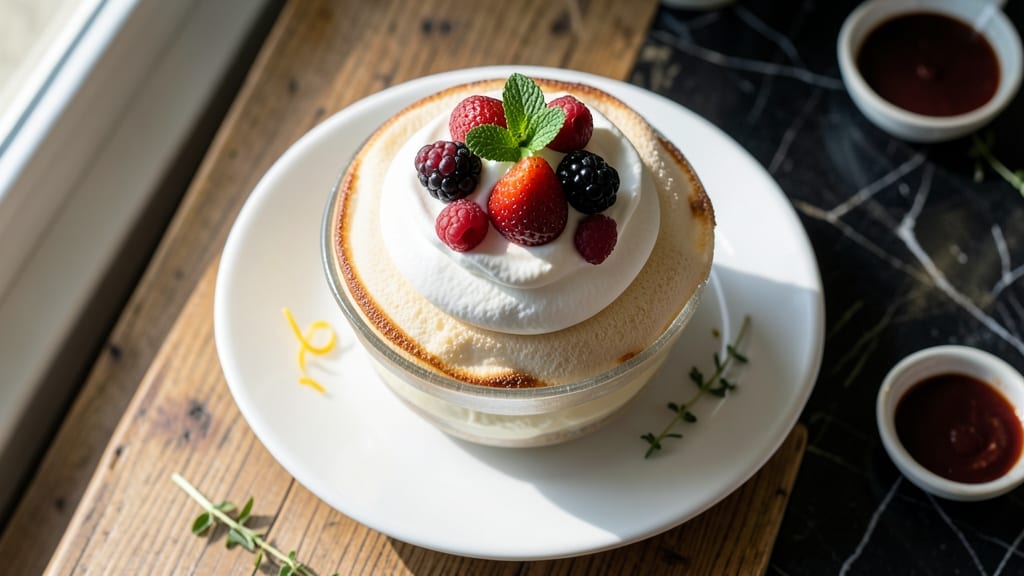
This 3-egg pavlova recipe delivers restaurant-quality meringue with a crispy shell and marshmallow center—no special equipment required. The secret lies in precise technique: whipping egg whites to stiff peaks while gradually folding in sugar, then baking at low heat to create that signature crackle.
I've perfected this version after years of trial and error, ensuring every slice holds its shape and tastes like summer in every bite.
What sets this pavlova apart is the citrus-infused whipped cream center, brightened with lemon zest and a touch of vanilla. The meringue itself gets its signature texture from a foolproof method: baking at 250°F for 1 hour 15 minutes, then cooling completely in the oven with the door ajar.
This slow drying process creates that perfect balance of crispy exterior and tender interior.
The result is a stunning dessert that impresses without requiring advanced skills—just patience and attention to detail. Topped with fresh berries and a dollop of citrus cream, it becomes a showstopper for dinner parties or special occasions.
The meringue holds its shape beautifully, making it easier to slice and serve than traditional pavlovas.
Perfect for warm weather gatherings or holiday desserts, this recipe serves 6-8 and comes together in about 2 hours (mostly hands-off baking time). The key to success is following the temperature guidelines precisely—don't rush the cooling process. Once mastered, you'll never buy store-bought meringue again.
Ingredients for 3 egg pavlova
Precision ingredients transform simple eggs into a restaurant-worthy meringue masterpiece.
| Ingredient | Amount | Notes |
|---|---|---|
| Large Egg Whites 🥚 | 3 whole | Room temperature, pasteurized preferred |
| Granulated Sugar 🍚 | 1 ½ cups | Superfine for best texture |
| Cornstarch 🌾 | 2 tbsp | For stability and crispiness |
| Vanilla Extract 🌸 | ½ tsp | Pure, high-quality vanilla |
| Lemon Zest 🍋 | 1 tbsp | Fresh, organic preferred |
| Heavy Whipping Cream 🧈 | 1 ½ cups | Full-fat for best texture |
| Powdered Sugar 🍚 | ½ cup | For whipped cream sweetness |
| Fresh Berries 🍓 | 2 cups | Raspberries or strawberries |
| Unsalted Butter 🧈 | ½ tsp | Softened, for brushing |
| Diamond Crystal Kosher Salt 🧂 | ¼ tsp | Fine grain for delicate seasoning |
| White Vinegar 🍶 | ½ tsp | Stabilizes egg whites |
The egg whites are the foundation—room temperature and pasteurized ensures maximum volume. For the best texture, superfine sugar dissolves more easily (or pulse regular sugar in a food processor). Whole Foods or specialty baking stores carry it, or pulse your own. The cornstarch is non-negotiable—it creates that signature crisp while preventing weeping. I always buy Diamond Crystal kosher salt for delicate seasoning; other brands can be too coarse. Fresh lemon zest from organic lemons adds bright citrus notes without bitterness—Trader Joe's has excellent quality at a reasonable price.
No superfine sugar? Pulse regular granulated sugar in a blender for 30 seconds—game changer for texture. Substitute powdered sugar for the granulated in a pinch, though texture may suffer slightly. For the whipped cream, heavy whipping cream at 36-38% fat gives the best stability. Short on berries? Freeze extras in a single layer for later use—they'll thaw quickly and maintain shape. The white vinegar is crucial for stabilizing the egg whites; don't skip it. And while vanilla extract works, Madagascar bourbon vanilla adds depth that imitation can't match.
Store meringue in an airtight container with parchment between layers for up to 3 days—it's best served fresh, but the texture holds remarkably well. Whipped cream should be assembled 2 hours before serving to allow flavors to meld. For make-ahead convenience, assemble the pavlova without toppings, then add berries and cream just before serving. The citrus-infused cream keeps for 24 hours in the fridge, though texture softens slightly. Freezing isn't recommended for the meringue itself—it loses its signature crispness.
Why You'll Love This Recipe
- I’ll be real: this is the pavlova hack I’ve been waiting for. Three eggs instead of six? Same crispy, meringue hug—but half the effort. No need to fuss with extra whites or worry about overbeating.
- Three-Egg Magic: I’ll be real: this is the pavlova hack I’ve been waiting for. Three eggs instead of six? Same crispy, meringue hug—but half the effort. No need to fuss with extra whites or worry about overbeating.
- Crispy Yet Silky: That first bite—chef’s kiss—is where the magic happens. The sugar and cornstarch give it a perfect snap, while the vanilla and lemon zest keep it bright and airy. It’s not too sweet, not too dry, just ridiculously good with fresh berries.
- Dessert for Any Moment: Honestly, this is my go-to for birthdays, lazy Sundays, or even as a fancy-ish breakfast with whipped cream. The small size means it’s easy to serve one or share with a crowd—no leftovers stressing me out.
Step-by-step instructions for crispy meringue crown with citrus-infused center
Mastering this pavlova requires precision and patience—each step builds toward that signature crisp shell and light interior.
Prepare the Stabilized Egg White Mixture
Begin by separating the 3 whole large egg whites into a completely grease-free mixing bowl. This is critical—even a trace of fat will prevent proper volume. Add the 0.5 teaspoon white vinegar and 0.25 teaspoon Diamond Crystal kosher salt to the egg whites and whisk gently until fully dissolved. The acidity from the vinegar stabilizes the meringue, while the salt enhances flavor and structure.
Gradually add the 1.5 cups granulated sugar and 2 tablespoons cornstarch while whisking on low speed. The cornstarch prevents weeping and ensures crispness. Once combined, increase the mixer speed to medium-high and beat for 5-7 minutes until the mixture forms stiff, glossy peaks that hold their shape when the whisk is lifted. The bowl should feel cool to the touch—this indicates proper hydration and stability.
Shape the Meringue Crown
Transfer the meringue to a piping bag fitted with a large round tip. Pipe the mixture onto a parchment-lined baking sheet, starting from the center and working outward in a circular motion. Build the meringue into a 6-inch diameter crown, creating a slight depression in the center to accommodate the citrus-infused filling. Use the back of a spoon to gently smooth the edges and create a clean, even surface.
Place the baking sheet in a 200°F (95°C) oven and bake for 1 hour, then increase the temperature to 250°F (120°C) for another 45-60 minutes until the meringue is completely dry and crisp to the touch. The edges should turn a deep golden brown while the interior remains light and airy. Avoid opening the oven door during baking—this disrupts the gentle drying process and can cause the meringue to collapse.
Infuse the Citrus Center
While the meringue bakes, prepare the filling by combining the 1.5 cups heavy whipping cream, 0.5 cup powdered sugar, 0.5 teaspoon vanilla extract, and 1 tablespoon lemon zest in a chilled bowl. Whip on medium-high speed until soft peaks form. The lemon zest adds a bright, aromatic contrast to the sweet meringue, while the vanilla rounds out the flavor profile.
Once the meringue is fully cooled (about 2 hours), carefully pipe the whipped cream mixture into the center depression. The meringue should hold its shape without collapsing—this is your reward for proper baking and cooling. Use a small offset spatula to gently smooth the cream, creating an even surface for the berries.
Assemble and Garnish
Arrange the 2 cups fresh berries (raspberries or strawberries work best) around the base of the meringue crown, creating a colorful border. Brush the outer edges with a mixture of 0.5 teaspoon softened unsalted butter and a pinch of powdered sugar for an extra glossy finish. The butter adds subtle richness, while the sugar helps create a delicate sheen.
Serve immediately for the crispiest texture and brightest flavors. The contrast between the crisp meringue shell, light citrus cream, and juicy berries makes this dessert truly exceptional. For best results, prepare the pavlova no more than 4 hours ahead—this allows the flavors to meld without compromising the meringue's texture.
Pro Tips For Making 3 Egg Pavlova
- Use Room-Temperature Whites: Cold egg whites hold onto air like a stubborn hostage—whip them straight from the fridge, and you’ll fight for volume the whole time. Let them sit in a bowl for 30 minutes first, or even better, warm the bowl slightly with hot water for 2 minutes. The meringue will come together faster and stiffer, which is exactly what you need for that crispy pavlova shell.
- Sift That Sugar: I learned this the hard way—dumping granulated sugar directly into the egg whites creates clumps that sabotage your meringue. Sift it in gradually while whipping, or at least press it through a fine-mesh sieve first. This keeps your mixture smooth and prevents those dreaded grainy pockets in the final meringue.
- Don’t Overmix the Flavors: Once your meringue reaches stiff peaks, fold in the vanilla and lemon zest just until combined—no more. Overmixing after adding these can deflate the structure, and you’ll end up with a sad, dense cake instead of a light, airy pavlova. Work gently, like you’re tucking in a newborn.
- Bake at 250°F, Not Higher: Your oven’s broiler is tempting, but it’s the enemy of a perfect pavlova. Start at 250°F (120°C) for 10 minutes to set the outside without burning the sugar, then crank it to 300°F (150°C) for the final 5-7 minutes. This two-stage bake keeps the inside marshmallowy while the outside stays crisp—no more undercooked centers or charred edges.
Common mistakes when making your 3 egg pavlova
Overwhipped Egg Whites
I’ve ruined more meringues than I’d admit by overwhipping the egg whites—this is the #1 mistake. Once you reach stiff peaks, stop immediately. Overwhipping introduces too much air, which can cause the meringue to collapse during baking.
The mixture should hold its shape when you lift the whisk, but it shouldn’t look like shaving cream. If it’s too stiff, the sugar won’t dissolve properly, leading to a grainy texture. 💫
Skipping the Vinegar
The 0.5 teaspoon white vinegar is non-negotiable—it stabilizes the egg whites and prevents weeping. Without it, your meringue will turn soggy or develop a sticky surface. Some recipes suggest lemon juice, but vinegar’s acidity is more consistent.
If you forget it, add a tiny splash of cream of tartar (⅛ teaspoon) as a substitute, but don’t skip the acid entirely.
Uneven Baking Temperatures
Rushing the baking process is a fast track to disaster. Start at 200°F (95°C) for 1 hour, then increase to 250°F (120°C) for 45-60 minutes. Skipping the low-and-slow phase can leave the interior undercooked, while jumping straight to high heat risks a burnt exterior before the center sets.
Keep the oven door closed—every time you peek, you risk moisture buildup that weakens the structure.
Improper Cooling
Leaving the meringue to cool at room temperature is a recipe for collapse. After baking, turn off the oven, crack the door, and let it cool completely inside for 2 hours. This slow drying process locks in the crisp texture.
If you rush it, the moisture inside will condense and turn the meringue gummy. Patience here makes all the difference—trust me, I’ve learned this the hard way. ✨
Adding Filling Too Soon
Filling the meringue before it’s fully cooled is a surefire way to ruin it. The residual heat will melt the whipped cream, causing the meringue to weep or lose its shape.
Wait until the center is completely dry to the touch (about 2 hours) before piping in the citrus cream. This ensures the structure stays intact while the flavors meld beautifully.
Using the Wrong Sugar
Substituting powdered sugar for the granulated sugar in the meringue is a common mistake. Powdered sugar dissolves too quickly, preventing proper crystallization and leading to a sticky, weepy texture.
If you don’t have superfine sugar, pulse regular granulated sugar in a blender for 30 seconds—this mimics the texture without compromising the recipe. The cornstarch is just as critical; it’s what gives pavlova its signature crispness.
Nutrition facts
Frequently asked questions
Why does this recipe use only 3 eggs instead of the traditional 6-8?
This 3-egg pavlova delivers the same signature texture but with a more manageable size—perfect for small gatherings or when you want to make just one perfect dessert. The reduced egg quantity still creates a crisp shell and marshmallow center because we use superfine sugar and cornstarch to maximize stability. It serves 6-8, making it ideal for intimate dinners.
Can I make this pavlova ahead of time?
Yes! Assemble the meringue shell and whipped cream filling up to 4 hours ahead, but add fresh berries just before serving. Store the base in an airtight container with parchment between layers to maintain crispness. The citrus cream stays fresh for 24 hours in the fridge, though texture softens slightly over time.
What's the secret to getting that perfect crispy shell?
The magic happens during baking: start at 200°F (95°C) for 1 hour, then increase to 250°F (120°C) for 45-60 minutes. After baking, turn off the oven, crack the door, and let it cool 2 hours inside—this slow drying locks in the crisp texture. Never rush the cooling process!
Can I substitute the lemon zest with another citrus flavor?
Try orange zest for a sweeter profile or lime zest for a tangier kick. Just use the same amount (1 tablespoon) and adjust the berry toppings to complement the flavor. The key is balancing the bright citrus with the sweet meringue—experiment to find your favorite combination.
Will this pavlova hold its shape in humid weather?
Humidity can make meringues weep, but this recipe's cornstarch and proper baking method help prevent that. For extra insurance, bake the meringue at 250°F (120°C) for an additional 15 minutes to ensure complete dryness. Serve it immediately after assembly to maintain that perfect crispness.