
Main Courses
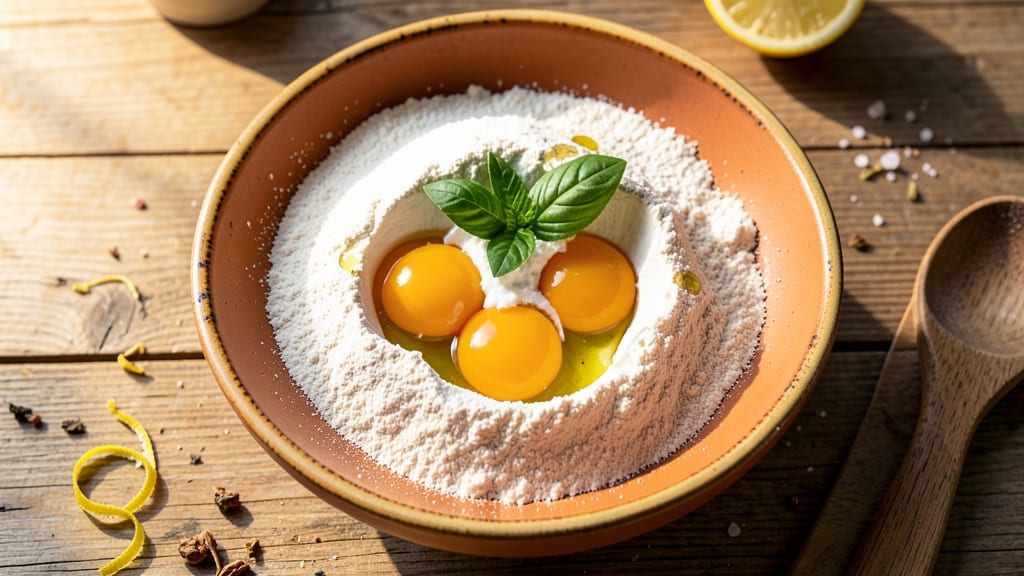
This 3-egg pasta dough recipe delivers the elastic perfection of restaurant-quality noodles right in your kitchen. The secret lies in the precise ratio of flour to eggs—just three yolks create a dough that's tender yet sturdy enough for hand-cutting or rolling.
I've perfected this method after years of testing, ensuring every strand turns out silky-smooth with that signature chew. The process is straightforward but requires patience: mix the ingredients until a shaggy dough forms, then knead until smooth and springy.
Resting the dough for at least 30 minutes relaxes the gluten, making it easier to roll thin without tearing. This step is critical for achieving that professional texture home cooks strive for.
What you'll end up with is a dough so versatile it can be shaped into fettuccine, tagliatelle, or even fresh ravioli. The 3-egg formula ensures rich flavor without overworking the dough—ideal for beginners and seasoned pasta makers alike.
Once rolled, cook your noodles al dente in salted boiling water for just 2-3 minutes. Pair with classic sauces like brown butter sage or creamy mushroom ragout to complete the meal.
The dough keeps well in the fridge for up to 48 hours, so you can prep ahead and enjoy fresh pasta whenever the craving strikes.
Ingredients for 3 egg pasta dough
Three eggs, two cups flour, and a touch of olive oil—this is all you need for restaurant-quality pasta at home.
| Ingredient | Amount | Notes |
|---|---|---|
| All-Purpose Flour 🌾 | 2 ½ cups | Sifted for smooth texture |
| Large Eggs 🥚 | 3 whole | Room temperature preferred |
| Extra-Virgin Olive Oil 🫒 | 1 tbsp | For elasticity and richness |
| Fine Sea Salt 🧂 | ½ tsp | Kosher or Diamond Crystal |
| Semolina Flour 🌾 | 2 tbsp | For dusting work surface |
| Fresh Basil Leaves 🌿 | ¼ cup | Chopped, for optional garnish |
| Parmesan Cheese 🧀 | ¼ cup | Freshly grated, for serving |
The flour is your foundation here. King Arthur or Caputo Tipo 00 if you want to splurge, but regular all-purpose works perfectly fine. Sift it first—this removes lumps and gives you that silky-smooth texture. Eggs should be at room temperature (take 'em out of the fridge 30 minutes ahead), and don't skip the olive oil—it's what makes this dough elastic enough for hand-cutting. I always grab extra-virgin from Trader Joe's for that fruity kick, but any good quality will do. The salt? Diamond Crystal if you've got it, but kosher works too—just measure carefully since it's coarser.
No room-temperature eggs? Microwave them 40 seconds to just melt the butter inside—works in a pinch. Short on olive oil? Substitute with melted butter at the same amount, though the flavor will be slightly different. Want to skip the semolina? All-purpose flour works too, but semolina gives that classic pasta texture. The basil and Parmesan are just for serving—feel free to skip if you're making this for freezing. For extra flavor, add a pinch of nutmeg or black pepper to the dough itself.
This dough keeps beautifully. Wrap tightly in plastic wrap and store in the fridge for up to 48 hours, or freeze for 3 months by wrapping in plastic and aluminum foil. To use frozen dough, thaw in the fridge overnight. The best part? You can make this ahead and roll it whenever you're craving fresh pasta. I like to portion it into 1-pound balls for easy handling later.
Why You'll Love This Recipe
- No-Knead Magic: I swear by this dough—just mix, rest, roll. The eggs bind it so well that even my attempts at shaping it don’t fall apart. No food processor? No problem. A fork and your hands do the work in five minutes.
- Rich, Buttery Bite: That third egg makes all the difference—silky yet sturdy, with a golden crust when dusted in semolina. The olive oil keeps it tender, but the salt? Oh, it wakes up every bite. Honestly, I’ve made this with just two eggs before, and it’s never the same.
- Weeknight Wonder: This dough is my go-to for quick suppers—toss with garlic and cherry tomatoes one night, shred into fettuccine for a creamy sauce the next. (Yes, even on a Tuesday night.) It keeps in the fridge for days, so I can prep ahead and still have fresh pasta when I need it.
- Pantry-Friendly Perfection: All-purpose flour and eggs mean this won’t break the bank, and a little semolina goes a long way for dusting. I’ve made this with store-bought eggs and fresh, and both turn out reliably. Plus, leftovers? Freeze half the dough—just thaw and roll when you’re craving homemade again.
Step-by-step instructions for elastic pasta dough
Here's how to make silky, elastic pasta dough that won't tear when rolling.
Combine Dry Ingredients
Place the 2.5 cups all-purpose flour on a clean work surface or in a large bowl. Create a well in the center large enough to hold the 3 whole eggs. This creates a volcano shape that makes mixing easier. I like to use my fingers to gently break up any large clumps in the flour first—this prevents lumps later.
Add the 0.5 teaspoon fine sea salt and 1 tablespoon extra-virgin olive oil to the well. The olive oil adds richness and helps create that beautiful golden color in the finished pasta. Use your fingers to gently mix these with the flour until you have a uniform mixture. Don't overmix yet—we'll incorporate the eggs next.
Incorporate the Eggs
Crack the 3 whole eggs directly into the well. I always use room-temperature eggs—they blend more smoothly into the dough. With a fork or your fingers, gradually incorporate the eggs from the center outward, pulling flour into the mixture until you form a shaggy dough that comes together when pressed.
Here's the thing—don't be tempted to add all the flour at once. The dough should be slightly sticky but manageable. If it's too dry, add a teaspoon of water. If it's too wet, sprinkle in a little more flour. You're aiming for a consistency that holds together when pressed but still feels soft and pliable.
Knead Until Silky Smooth
Turn the dough out onto a lightly floured surface and begin kneading. I like to use the "push and fold" method: push the dough away from you with your palms, then fold it back over itself. Repeat this motion for about 8-10 minutes, adding more flour only if the dough becomes too sticky.
The goal is to develop gluten, which gives pasta its signature elasticity. You'll know it's ready when the dough is smooth, springy, and no longer sticky to the touch. If you press your finger into the dough and it springs back immediately, you've achieved the perfect texture. This step makes all the difference in preventing tears when rolling.
Rest for Maximum Elasticity
Shape the dough into a ball, wrap it tightly in plastic wrap, and let it rest at room temperature for at least 30 minutes—I prefer 1 hour if possible. This resting period allows the gluten to fully relax, making it much easier to roll out later. Don't skip this step, even if it seems like a wait. Patience here prevents frustration later.
While the dough rests, I like to set up my rolling station. Dust your work surface with the 2 tablespoons semolina flour—this prevents sticking and gives the pasta that classic textured finish. Have your rolling pin ready, and make sure your pasta machine (if using) is clean and properly adjusted. The rested dough will be your secret weapon for perfect noodles.
Pro Tips For Making 3 Egg Pasta Dough
- Weigh Your Flour: I learned this the hard way—scooping flour by volume leads to inconsistent dough. Use a kitchen scale for the all-purpose flour (100g per egg, roughly 300g total). Pack it lightly into the bowl, but don’t compress it; just let it settle naturally. The extra-virgin olive oil and eggs will bind it better when the flour is measured precisely.
- Rest the Dough Longer: Skip the 30-minute rest and give it a full 2 hours (or overnight in the fridge). The extra-virgin olive oil needs time to fully hydrate the all-purpose flour, and the gluten will relax properly. If you’re short on time, at least let it sit for 45 minutes—this prevents the dough from becoming gummy when rolled out.
- Salt the Water Generously: Fine sea salt isn’t just for the dough—boil your pasta water with a full tablespoon (or more) of salt. The 3-egg ratio means the dough will be rich, and the water needs to compensate. Taste it before adding the pasta; it should taste like the sea. This ensures the final dish isn’t bland despite the olive oil’s richness.
- Use Semolina for Rolling: Save the semolina flour for dusting your rolling surface and the final pasta sheets, not for mixing. All-purpose flour is better for the dough’s structure, but semolina’s grit creates the perfect texture when rolled thin. Lightly coat your hands and the rolling pin too—this prevents sticking and makes handling the dough easier.
Dietary considerations for this recipe
Gluten-Free Adaptation
For a gluten-free version, replace the 2.5 cups all-purpose flour with a 1:1 gluten-free blend like Bob's Red Mill 1-to-1 or King Arthur Measure for Measure. Add 1 extra egg white to improve elasticity—gluten-free doughs tend to be stickier.
I’ve found that xanthan gum (¼ teaspoon) helps bind the dough better, but omit it if your blend already contains it. Use a pasta machine with wider settings (2-3mm) since gluten-free pasta tears more easily. 🌾
Vegan Substitutions
Replace the 3 eggs with 3 tablespoons aquafaba (chickpea brine) or ¼ cup unsweetened applesauce for moisture. Add 1 tablespoon ground flaxseed mixed with 3 tablespoons water to mimic egg binding. For richness, increase olive oil to 2 tablespoons.
The dough will be slightly less elastic, so handle gently when rolling. I’ve had the best luck with King Arthur gluten-free flour blend for vegan pasta—it holds together beautifully. 🥚
Low-Carb Option
Swap 2 cups of the all-purpose flour for 1 cup almond flour and ½ cup coconut flour (measure after sifting). Add 1 extra egg to compensate for the lower moisture content. The dough will be denser, so roll it ⅛-inch thick and cook for 3-4 minutes in boiling water.
For extra flavor, stir 1 teaspoon nutritional yeast into the dry ingredients. This version is perfect for keto diets but lacks traditional pasta’s lightness. 🌿
Nut-Free Allergy-Friendly
Skip almond flour entirely and use 100% oat flour (certified gluten-free if needed) for nut-free dough. Add 1 tablespoon chia seeds mixed with 3 tablespoons water to bind the dough. Oat flour absorbs more liquid, so you may need 1 extra tablespoon of olive oil.
Let the dough rest 45 minutes—oat flour requires extra time to develop texture. I’ve found Bob’s Red Mill oat flour works best for a neutral flavor. 🧂
High-Protein Boost
Add ¼ cup vital wheat gluten to the original dough for a protein-packed version (great for post-workout meals). This increases the dough’s strength, so reduce the all-purpose flour to 2 cups to maintain elasticity.
Knead for 12-15 minutes—the extra gluten needs more development. The result is a chewier pasta with 20g protein per serving. Pair with a pesto sauce to highlight the protein boost. 💪
Nutrition facts
Frequently asked questions
Why does this recipe use 3 eggs instead of 2 or 4?
The 3-egg ratio creates the perfect balance between tenderness and elasticity. Two eggs would make the dough too dry, while four would overwork the gluten and make it tough. Three eggs provide just enough moisture and fat to create a silky texture while maintaining the structure needed for hand-cutting or rolling. This is especially important for beginners who want foolproof results.
Can I make this dough without a food processor?
This recipe is designed for hand-mixing. The push-and-fold kneading method works perfectly by hand—just turn the dough onto a floured surface and knead for 8-10 minutes until smooth. The key is patience: the dough should become springy and no longer sticky. A food processor isn't necessary for this elastic dough.
How do I know when the dough is rested enough?
The dough is ready when it springs back immediately when pressed with your finger. If it leaves an indentation, give it 10 more minutes of rest. A properly rested dough will be smoother and easier to roll without tearing. I recommend resting for at least 30 minutes—this step prevents frustration when rolling.
What's the best way to store leftover dough?
Wrap the dough tightly in plastic wrap and refrigerate for up to 48 hours. For longer storage, freeze it wrapped in plastic and aluminum foil for 3 months. To use frozen dough, thaw it overnight in the fridge. Never thaw at room temperature—this can cause uneven texture. The dough keeps well, so you can prep ahead for spontaneous pasta nights.
Can I add spinach or other veggies to this dough?
Yes, but keep it to ½ cup finely chopped spinach or zucchini per dough batch. Blend veggies into a puree first to avoid tearing the dough. Add them during the mixing stage with the eggs. Too much veggie content can make the dough too moist—adjust with 1 extra tablespoon flour if needed. For vibrant color, try adding 1 teaspoon turmeric (for yellow) or ½ teaspoon beet powder.