
Main Courses
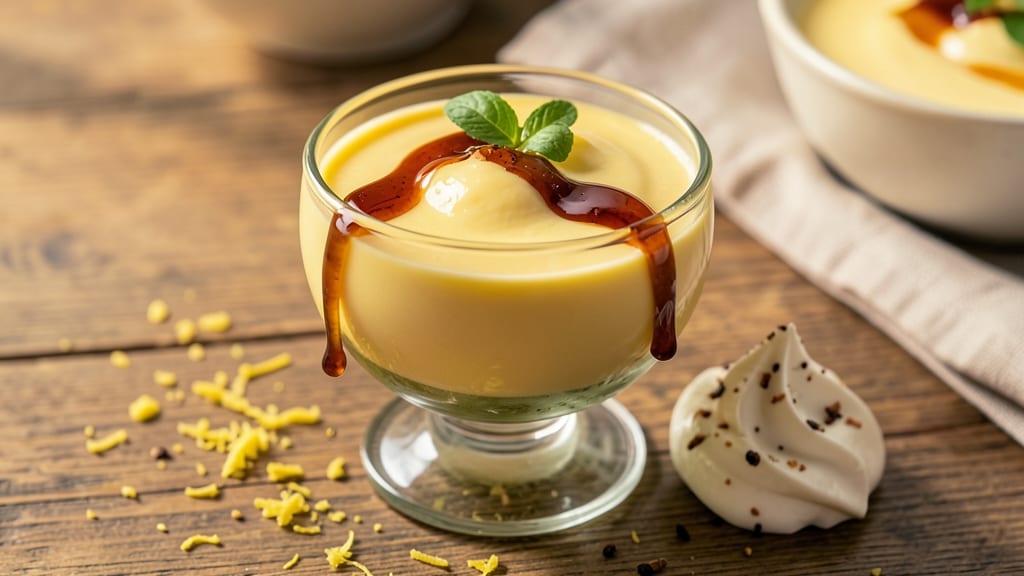
This 2-egg-yolk custard recipe transforms simple ingredients into velvety ribbons that elevate any savory broth—think silky perfection in every spoonful. The secret lies in precise tempering and gentle heat, ensuring a smooth, golden finish without curdling. Even beginners can master this technique with patience and attention to temperature control.
What sets this custard apart is its rich yet delicate texture, achieved by whisking egg yolks with warm broth before simmering in a bain-marie for even cooking. The result? A luscious, spoonable custard that clings to noodles or broths, adding depth without overpowering.
Optional flavorings like vanilla, citrus zest, or a pinch of chocolate can customize it to your taste.
Perfect for savory dishes like ramen, pho, or risotto, this custard turns a simple meal into a restaurant-worthy experience. The process is straightforward—no fancy equipment needed—just a double boiler, a whisk, and careful timing. Once you try it, you’ll never settle for instant versions again.
Ready to elevate your cooking? This recipe delivers restaurant-quality results at home, with just a few ingredients and a little technique. Let’s get started!
Ingredients for 2 egg yolk custard
Precision meets simplicity: these refined ingredients craft velvety custard ribbons perfect for elevating savory dishes.
| Ingredient | Amount | Notes |
|---|---|---|
| Large Egg Yolks 🥚 | 2 whole | Fresh, room temperature preferred |
| Vegetable Broth 💧 | 2 cups | Homemade or high-quality store-bought |
| Heavy Cream 🥛 | ½ cup | Full-fat for optimal texture |
| Unsalted Butter 🧈 | 2 tbsp | Cold, cubed for bain-marie |
| Granulated Sugar 🍚 | 1 tbsp | Adjust to taste for sweetness |
| Vanilla Extract 🌿 | ½ tsp | Pure, high-quality preferred |
| Salt 🧂 | ¼ tsp | Diamond Crystal kosher preferred |
| Lemon Zest 🍋 | ½ tsp | Fresh, finely grated |
| Cornstarch 🌾 | ½ tsp | For thickening consistency |
| White Wine 🍷 | ¼ cup | Dry, optional for depth |
| Ground Nutmeg 🌿 | ⅛ tsp | Freshly grated preferred |
The egg yolks are the foundation—fresh, high-quality yolks yield the richest texture. Source them from local farms or specialty grocers like Whole Foods or Trader Joe's for optimal quality. For the broth, homemade vegetable stock delivers superior depth, but Pacific Foods or Imagine brands offer reliable store-bought options. The heavy cream must be full-fat; anything less compromises the custard's luxurious mouthfeel. Pre-whisk your yolks and sugar until pale and thick—a critical step for preventing curdling during cooking.
No heavy cream? Full-fat coconut milk works as a dairy-free alternative, though texture will differ slightly. Substitute vanilla bean paste for extract if you prefer deeper flavor. For the wine, dry Sauvignon Blanc or Pinot Grigio adds brightness without overpowering. If omitting wine, increase broth by 0.25 cup to maintain balance. The lemon zest can be omitted for purely savory applications, but it brightens the custard beautifully. For a chocolate-infused variation, replace vanilla with 1 tbsp melted dark chocolate, ensuring it's fully incorporated before tempering.
Store finished custard in an airtight container with a thin layer of plastic wrap pressed directly on the surface to prevent skin formation. Keeps 3-4 days refrigerated or up to 3 months frozen in a sealed container. For restaurant-quality results, reheat gently in a bain-marie until just warmed through—never boil. Portion into silicone molds for elegant presentation when serving over broths or alongside noodle dishes. The custard thickens as it cools, so adjust cornstarch slightly if consistency feels too loose.
Why You'll Love This Recipe
- Silky Smooth Magic: I swear, the way those yolks and cream blend into that velvety finish—it’s like the universe conspired to make something this good. No lumps, no fuss, just pure, rich satisfaction in every spoonful.
- Five-Ingredient Luxury: Honestly, you’d think this took a chef’s degree. But it’s just yolks, broth, cream, butter, and sugar—five things I always have on hand. That’s it. No overcomplicating, just layers of flavor that taste like you spent hours in the kitchen.
- Weeknight or Fancy Night: Between us, this custard is my secret weapon for both lazy Tuesday dinners and impressing guests. Serve it warm with toasted bread for a cozy meal, or chill it for a dessert that’ll fool anyone into thinking you slaved over it.
- Leftovers That Last: Make a big batch—it reheats beautifully and keeps for days. I’ll be real: my freezer is full of these because they’re cheaper than takeout, easier than ordering in, and still taste like a restaurant’s version. (Yes, even on a Tuesday night.)
Step-by-step instructions for silky golden ribbons in savory broth
Master this refined technique for custard that transforms into delicate ribbons when chilled.
Infuse the Broth with Aromatics
In a medium saucepan, combine the 2 cups vegetable broth, 0.25 cup white wine, 0.5 tsp lemon zest, and 0.125 tsp ground nutmeg. Bring to a gentle simmer over medium heat, then reduce to a whispering bubble. Let it infuse for 5 minutes—you'll notice the aroma deepen as nutmeg's warm earthiness and lemon's bright citrus meld with the broth's savory base.
Strain the infused broth through a fine-mesh sieve into a clean bowl, discarding the solids. This step ensures your custard will have a velvety texture without any gritty residue. Keep the broth warm over low heat—it should remain just below a simmer, ready for the next stage where we'll build our custard foundation.
Create the Custard Base with Precision
In a separate heatproof bowl, whisk together the 2 whole large egg yolks, 0.5 cup heavy cream, 1 tbsp granulated sugar, 0.5 tsp vanilla extract, and 0.25 tsp salt until completely smooth. The mixture should be pale and homogeneous—this consistency is crucial for achieving those signature golden ribbons when chilled.
Place this bowl over a saucepan of barely simmering water (bain-marie), ensuring the bottom of the bowl doesn't touch the water. This gentle heat will slowly warm the custard mixture to 160°F while preventing curdling. Stir constantly with a silicone spatula, scraping the bottom and sides to incorporate any heat that transfers upward.
Temper and Thicken the Custard
Gradually whisk in ½ cup of the warm infused broth, about 1 tablespoon at a time, while maintaining constant motion. This tempering process is critical—it prevents the eggs from scrambling when exposed to heat. Once fully incorporated, return the mixture to the bain-marie and continue cooking.
Stir continuously for 8-10 minutes until the custard thickens enough to coat the back of a spoon. You'll know it's ready when it reaches 170-175°F—the mixture should leave a clear path when you run your finger through it. Remove from heat immediately to prevent overcooking, which would make the custard grainy.
Finish with Butter and Chill
Remove the custard from the heat and whisk in the 2 tbsp cold unsalted butter, cut into small cubes, until fully melted and incorporated. The butter adds richness and helps create those signature ribbons when chilled. Stir in the 0.5 tsp cornstarch to ensure proper thickening during the chilling process.
Divide the custard among 4 ramekins or small containers, pressing plastic wrap directly onto the surface to prevent a skin from forming. Chill in the refrigerator for at least 4 hours, preferably overnight. When ready to serve, invert the ramekins onto a plate—those silky golden ribbons should slide effortlessly, creating an elegant presentation.
Pro Tips For Making 2 Egg Yolk Custard
- Whisk Until Ribbon Stage: The yolks and sugar should coat the back of a spoon like a thick, glossy ribbon—no streaks, no graininess. I used to rush this and ended up with a custard that was more like scrambled eggs. Take your time; it’s the only way to avoid lumps later.
- Strain the Broth Cold: Hot broth will cook the yolks before they even hit the pot. Strain it through a fine-mesh sieve into an ice bath to chill it fast—this keeps the custard silky instead of breaking. Yes, it’s an extra step, but your custard will thank you.
- Temper the Cream Slowly: Pour the warm custard into the heavy cream in a thin, steady stream while whisking constantly. Dumping it all at once? You’re asking for curdled butterfat. Go slow—this isn’t a race.
- Use Clarified Butter: Skip the milk solids in butter by melting it first and skimming off the foam—this prevents graininess in the custard. I know, it’s a pain, but store-bought butter leaves a weird texture. Worth it for a restaurant-quality finish.
Essential equipment for 2 egg yolk custard
Double Boiler Essentials
Your bain-marie setup is the heart of this custard—no shortcuts here! I use a stainless steel double boiler (like the OXO Good Grips model) for even heat distribution.
If you don’t own one, create your own by placing a heatproof bowl over a saucepan filled with 1-2 inches of water. The key is keeping the water simmering gently—never boiling—so the custard warms slowly without curdling. 🌡️
Precision Thermometer
A candy or instant-read thermometer (I swear by the Thermoworks Thermapen) is non-negotiable for this recipe. You’ll need it to monitor the custard’s temperature during cooking—aim for 170-175°F for perfect thickening.
Without one, you risk overcooking (grainy texture) or undercooking (runny custard). Pro tip: Clip the thermometer to your whisk handle for hands-free monitoring.
Whisk and Heatproof Bowl
Invest in a high-quality silicone whisk (like the Zyliss 360° Swivel)—it’s gentle on egg yolks and won’t scratch your bowl. Your bowl must be heatproof and deep enough to prevent spills during whisking.
I prefer glass or stainless steel (avoid aluminum—it reacts with acids). A medium-sized mixing bowl (8-10 cups) gives you room to whisk without splattering.
Fine-Mesh Sieve
Straining your infused broth through a fine-mesh sieve (I use the Heston Blumenthal brand) removes any solids, ensuring your custard is silky smooth. A cheap mesh won’t cut it—look for stainless steel or nylon with 200-300 micron holes.
This step is especially critical if you’re using homemade broth with herbs or aromatics. 💧
Ramekins and Plastic Wrap
For that restaurant-worthy ribbon effect, use 4-6 small ramekins (3-4 oz capacity). I love Ceramica La Meridiana for their elegant shape. Press plastic wrap directly onto the custard’s surface before chilling to prevent skin formation.
If you’re short on ramekins, silicone molds or even small jars work in a pinch—just ensure they’re food-safe and can handle cold temperatures.
Optional: Immersion Blender
If you’re making a large batch (6+ servings), an immersion blender (like the Bosch MSM66110) saves time and effort. After tempering, blend the custard directly in the pot for a smoother, lump-free texture.
Skip this if you’re comfortable with whisking—it’s not essential, but it’s a game-changer for beginners. 💡
Nutrition facts
Frequently asked questions
Why does this recipe use only 2 egg yolks?
The magic of this custard lies in its rich yet delicate balance. Two yolks create a velvety texture without overpowering the broth's flavor. The addition of heavy cream and butter enhances richness, so you get restaurant-quality depth with fewer eggs. Plus, it's more budget-friendly than traditional custard recipes!
Can I make this custard without a double boiler?
Create your own bain-marie by placing a heatproof bowl over a saucepan filled with 1-2 inches of simmering water. The key is keeping the water at a gentle simmer—never boiling—to prevent curdling. A metal bowl works best, but glass or ceramic bowls also work if they're heatproof.
What if my custard gets grainy?
Graininess usually means you overcooked it. Remove from heat immediately if you see any lumps forming. To fix it, strain the custard through a fine-mesh sieve before chilling. For next time, monitor the temperature closely—it should reach 170-175°F but not exceed it.
How can I use this custard in savory dishes?
This custard is perfect for ramen, pho, or risotto! Swirl it into hot broth just before serving, or use it as a luxurious topping for noodle dishes. For extra flavor, infuse the broth with aromatics like ginger, garlic, or bay leaves before making the custard. The ribbons add a silky contrast to hearty meals.
Can I substitute the white wine?
Yes! Use dry sparkling water (same acidity) or extra broth if avoiding alcohol. For depth, try 1 tsp apple cider vinegar or lemon juice. Just reduce the broth by 0.25 cup if substituting liquids. The wine adds brightness, but these alternatives work beautifully in a pinch.