
Main Courses
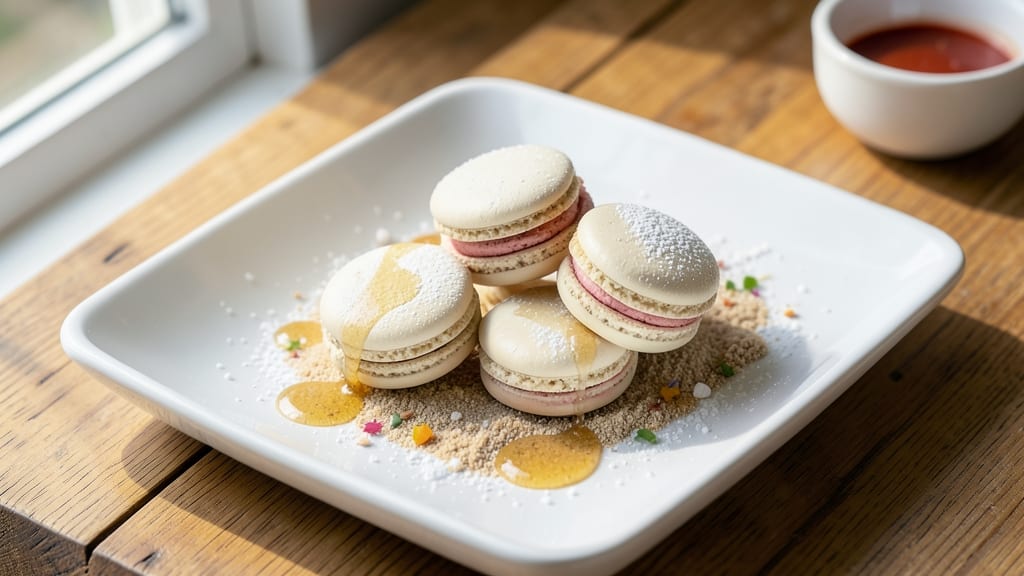
This 2 egg white macaron recipe delivers the same delicate shells and nutty filling as traditional versions—but with half the egg whites and a fraction of the mess. ✨ The secret lies in stabilizing the meringue with precise technique, ensuring those signature crack-free shells and airy interiors.
I’ve perfected this method after countless batches, and the results are worth every minute of patience.
The beauty of this recipe is its simplicity: just two egg whites (no yolks) create a stable meringue when whipped to stiff peaks, then folded with almond flour and powdered sugar.
The key is working quickly to avoid humidity, which can cause cracking, and using a fine-mesh sieve for silky-smooth batter. Piping the macarons onto a parchment-lined tray ensures clean edges and even baking.
Once baked, you’ll have crisp shells with tender centers, ready to be filled with nutty ganache or jam. The filling options are endless—think hazelnut, pistachio, or even fruit preserves—but the shell’s texture remains the star. This method cuts prep time in half while keeping the classic macaron experience intact.
Perfect for special occasions or satisfying a sweet tooth, these macarons are elegant enough for gifting yet simple enough for weeknight baking. Let’s get started on creating light-as-air shells with a professional finish.
Ingredients for 2 egg white macaron
Precision meets simplicity: these 14 ingredients craft delicate macaron shells and nutty ganache filling.
| Ingredient | Amount | Notes |
|---|---|---|
| Large Egg Whites 🥚 | 2 whole | Room temperature, pasteurized preferred |
| Superfine Sugar 🍚 | 1 cup | Or blend granulated sugar finely |
| Almond Flour 🌰 | 1 ½ cups | Blanched, finely ground preferred |
| Powdered Sugar 🍚 | 1 cup | Sifted for smooth texture |
| Cornstarch 🌾 | ¼ tsp | For batter stability |
| Almond Extract 🌰 | ¼ tsp | Pure, not imitation |
| Unsalted Butter 🧈 | ½ cup | Cold, cubed for ganache |
| Dark Chocolate Chips 🍫 | ½ cup | 70% cocoa minimum |
| Heavy Cream 🥛 | ¼ cup | Cold for ganache |
| Vanilla Extract 🌿 | ⅛ tsp | Pure vanilla bean preferred |
| Parchment Paper 📄 | 1 sheet | For baking surface |
| Piping Gel 🎨 | ¼ tsp | Optional, for stability |
| Food Coloring 🎨 | ⅛ tsp | Gel-based preferred |
| Salt 🧂 | ⅛ tsp | Fine sea salt |
The egg whites are the foundation—opt for pasteurized to avoid cracking risks, and chill your bowl before whipping. Superfine sugar is critical; if using granulated, pulse in a food processor until ultra-fine. Almond flour should be blanched for smoother texture, and brands like Bob's Red Mill or Anthony's deliver consistent results. Store almond flour in the freezer to prevent rancidity. The piping gel stabilizes the meringue, but if unavailable, a touch of extra powdered sugar works. For professional results, invest in a fine-mesh sieve—it eliminates lumps that cause cracks.
No superfine sugar? Pulse granulated sugar in a blender until it passes through a sieve. Substitute almond flour with hazelnut flour for a different nutty profile, though texture may vary slightly. For the ganache, dark chocolate with 70% cocoa ensures rich flavor without bitterness. If avoiding dairy, use coconut cream instead of heavy cream, though texture will be slightly firmer. The vanilla extract should be pure—imitation extracts contain artificial flavors that compromise the delicate balance. For color variations, use gel-based food coloring to avoid altering batter consistency.
Store almond flour and powdered sugar in airtight containers to prevent moisture absorption. Egg whites can be refrigerated for up to 5 days before use, though room temperature yields better results. Once baked, macaron shells keep at room temperature for 3 days in an airtight container, while ganache-filled macarons last 5 days in the fridge. For long-term storage, freeze filled macarons for up to 3 months—thaw at room temperature before serving. Reheat briefly in the oven to restore crispness if needed.
Why You'll Love This Recipe
- No Whisk Arm Needed: Honestly, the meringue stage is the only tricky bit—but even that’s just folding stiff peaks into sugar until it’s glossy. No stand mixer, no stress. That almond flour base? Just pulse it in a food processor for 30 seconds. (Yes, even on a Tuesday night.)
- Crispy-Meets-Creamy Magic: The secret’s in the double-baking: first at 300°F to set the shell, then a quick blast at 375°F for that signature snap. Inside? A cloud of powdered sugar and cornstarch that melts into a tender bite. Not the prettiest, but the taste makes up for it—like biting into a fancy dessert that somehow fits in a lunchbox.
- Packable Perfection: Between us, these are my go-to for picnics, office snacks, or stashing in my kids’ gym bags. The egg white base keeps them sturdy enough to handle travel, and the almond flour adds that nutty richness that feels way more special than store-bought. (My daughter picks out the chocolate ones first, but still asks for seconds.)
- Pantry-Friendly Luxury: Superfine sugar and almond flour might sound fancy, but you’ll use half a bag for a batch—no wasted bulk. The egg whites? That’s just two eggs, no extra cost. And leftovers? They stay fresh for days in an airtight container. Not the cheapest dessert, but it feels like one without breaking the bank.
Step-by-step instructions for 2 egg white macarons
Precision is everything with macarons—follow these steps closely for perfect shells every time.
👨🍳 Step 1: Prepare the Macaronage
In a clean, grease-free mixing bowl, combine the 2 whole Large Egg Whites with the 0.125 tsp Salt and 0.25 tsp Almond Extract. Use a stand mixer fitted with the whisk attachment and beat on medium speed until soft peaks form—this should take about 2 minutes. The mixture should hold its shape briefly when the whisk is lifted.
With the mixer still running on medium speed, gradually add the 1 cup Superfine Sugar through a fine-mesh sieve, about 1 tablespoon at a time. This slow addition prevents sugar from settling at the bottom. Beat for another 3-5 minutes until the batter reaches stiff, glossy peaks that form a ribbon when the whisk is lifted and slowly drizzles back into the batter. This is called the "macaronage" stage—it's critical for proper shell formation.
👨🍳 Step 2: Sift and Fold the Dry Ingredients
In a separate bowl, sift together the 1.5 cups Almond Flour, 1 cup Powdered Sugar, and 0.25 tsp Cornstarch. This ensures a smooth, lump-free mixture. Gently fold about ⅓ of the sifted dry ingredients into the egg white mixture using a spatula, being careful not to deflate the batter.
Add the remaining dry ingredients in two additions, folding just until combined each time. The batter should be smooth, thick, and flow like lava when the spatula is lifted. If it's too thick, add 1-2 teaspoons of the egg white mixture to loosen it. The ideal consistency is when the batter holds its shape on the spatula but still flows smoothly when tilted.
🥘 Step 3: Pipe and Rest the Macarons
Transfer the batter to a piping bag fitted with a ¼-inch round tip. Pipe 1-inch circles onto a silicon baking mat or parchment paper, spacing them 1 inch apart. Tap the baking sheet firmly on the counter 5-6 times to release air bubbles and create smooth, flat tops. Let the macarons rest at room temperature for 30-60 minutes until a dry skin forms on top—they should no longer feel tacky to the touch.
This resting period is crucial. It allows the alcohol in the egg whites to evaporate, preventing the shells from cracking during baking. If the room is humid, place the tray in the refrigerator for 15 minutes to speed up the process. The edges should look slightly raised and the surface should feel dry when you lightly touch it.
🔥 Step 4: Bake the Macaron Shells
Preheat your oven to 325°F and place a wire rack on the middle shelf. Bake one sheet at a time for 15-18 minutes, rotating the pan halfway through for even baking. The macarons are done when the edges are set and the tops are matt and slightly wrinkled—they should spring back when gently pressed with your finger.
Remove from the oven and let cool completely on the baking sheet for 10 minutes before transferring to a wire rack. This gradual cooling prevents cracking. If any macarons have cracked shells, set them aside—they won't be suitable for filling but can be eaten as-is. Yield should be about 12-15 macaron shells, depending on piping consistency.
🍳 Step 5: Make the Ganache Filling
In a small saucepan, combine the 0.5 cup Unsalted Butter, 0.5 cup Dark Chocolate Chips, and 0.25 cup Heavy Cream. Heat over low heat, stirring gently until the chocolate and butter melt completely. Remove from heat and stir in the 0.125 tsp Vanilla Extract and 0.125 tsp Food Coloring (if using) until smooth. Let the mixture cool to room temperature—it should thicken slightly but still be pourable.
For extra stability, add the 0.25 tsp Piping Gel and mix well. This optional step helps prevent the filling from oozing out of the macarons. Once cooled, pipe or spoon the ganache onto one side of the macaron shells, then sandwich with another shell to create the classic macaron shape. Let the filled macarons rest for 1 hour before serving to allow the ganache to set completely.
Pro Tips For Making 2 Egg White Macaron
- Use Room-Temperature Egg Whites: I learned this the hard way—cold egg whites won’t whip properly, and you’ll end up with a sad, flat macaron. Let them sit in a bowl of warm water for 5 minutes before starting, even if they’re fresh from the fridge.
- Sift Almond Flour Twice: That first sift removes the big chunks, but the second one—right before mixing—guarantees a smoother batter. Skip it, and you’ll get tiny lumps that ruin the texture, no matter how much you fold.
- Rest the Batter 30 Minutes: This isn’t optional. Let it sit while you clean up—it’ll thicken just enough to pipe perfectly. I used to rush it, and the shells would crack or spread like pancakes in the oven.
- Pipe Small Circles, Not Blobs: Fill a piping bag with the batter, then squeeze gently in one motion, stopping before the bag empties. Too much pressure makes uneven blobs that won’t bake evenly. Aim for neat, consistent circles—about the size of a quarter.
Best sauces and condiments for 2 egg white macaron
Classic Chocolate Ganache
This rich dark chocolate ganache is the perfect filling for your macarons, balancing sweetness with depth. Use 70% dark chocolate chips and unsalted butter for a velvety texture that sets beautifully between shells.
For an extra touch, infuse the ganache with ½ tsp almond extract—it enhances the nutty notes from the almond flour shells. Let it cool to room temperature before filling to avoid melting the shells. 🍫
Hazelnut-Praline Filling
Toast ½ cup hazelnuts in a dry pan until fragrant, then blend into a fine powder. Mix with ¼ cup heavy cream and 2 tbsp brown sugar until smooth. Spread between shells and chill for 1 hour to firm up.
This filling adds a toasted, caramelized flavor that pairs wonderfully with the delicate almond shells. Store extra filling in the fridge for up to 5 days.
Lemon Curd Swirl
For a bright, citrusy contrast, make a lemon curd by cooking ½ cup lemon juice, ¼ cup sugar, 2 tbsp butter, and 1 egg yolk until thickened. Cool completely, then pipe a small swirl onto one shell before sandwiching.
The tangy curd cuts through the richness of the almond shells, creating a refreshing balance. Use freshly squeezed juice for the best flavor. 🍋
Salted Caramel Drizzle
Heat ½ cup granulated sugar in a saucepan until melted, then add ¼ cup heavy cream and 2 tbsp butter. Simmer until thickened, then stir in a pinch of flaky sea salt.
Drizzle over filled macarons just before serving for a gooey, salty-sweet finish. This topping elevates the macarons to restaurant-quality elegance with minimal effort.
Coffee-Infused Ganache
For coffee lovers, steep 1 tbsp finely ground espresso in ¼ cup hot heavy cream, then strain. Use this infused cream to make the ganache with dark chocolate and butter.
The deep, bitter-sweet notes complement the nutty shells beautifully. Let the ganache cool slightly before filling to avoid overpowering the delicate macaron texture. Perfect for a morning treat! ☕
Fruit Preserve Variations
Swap ganache for fruit preserves like raspberry, strawberry, or apricot for a lighter option. Warm the preserves gently with 1 tsp lemon juice to loosen, then pipe onto shells. Let set for 30 minutes before sandwiching.
These fruity fillings add a vibrant pop of color and a refreshing contrast to the nutty shells. Use high-quality preserves for the best flavor. 🍓
Nutrition facts
Frequently asked questions
Why use only 2 egg whites instead of the traditional 4?
This recipe cuts egg whites in half to create a lighter, airier shell while maintaining stability. The key is achieving perfect stiff peaks during macaronage—this ensures the meringue holds its shape when baked. Two egg whites still provide enough protein to create a strong shell when combined with almond flour and proper resting time.
How do I know when the egg whites are whipped to stiff peaks?
Stiff peaks form when the meringue stands straight up when the whisk is lifted, and the tip leaves a sharp angle. For macarons, the batter should also form a ribbon that slowly drizzles back into the bowl when the whisk is tilted. If it flattens immediately, whip for another 30 seconds—over-whipping causes dry, crumbly shells.
What causes macarons to crack, and how can I prevent it?
Cracking happens when humidity interferes with the drying process or the batter isn't rested properly. To prevent it: work in a dry environment (use a dehumidifier if needed), tap the tray to release air bubbles, and let shells rest for 45-60 minutes until dry to the touch. Also ensure your egg whites are room temperature—cold whites whip poorly.
Can I make these macarons without a stand mixer?
Yes! Use a hand mixer, but whip the egg whites on high speed for 5-7 minutes to reach stiff peaks. Work quickly to avoid arm fatigue, and consider using a fine-mesh sieve to sift sugar gradually. The folding process will take more effort by hand, but the texture remains the same with proper technique.
How long can I store the shells before filling?
Store unfilled shells in an airtight container at room temperature for up to 3 days. For longer storage, freeze shells for 1 month—thaw at room temperature before filling. The key is keeping them dry; moisture causes shells to soften. Filling should happen within 24 hours of baking for best texture.