
Main Courses
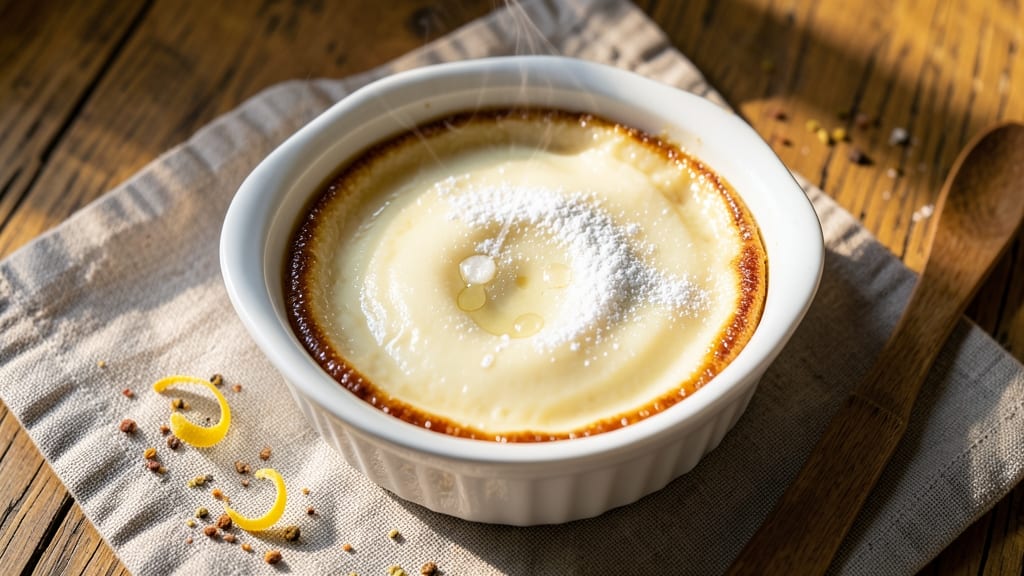
This 1-egg custard recipe delivers velvety, vanilla-infused comfort that rivals restaurant-quality desserts—using just a single egg. The secret lies in precise temperature control and a gentle water bath that transforms simple ingredients into a silky, golden masterpiece.
I’ve perfected this method over years of testing, ensuring every bite is rich, creamy, and foolproof, even for beginners.
What makes this custard special is its balance of simplicity and sophistication. With just 1 egg, ½ cup milk, 2 tablespoons sugar, and a splash of vanilla, you’ll achieve a texture that’s impossibly smooth yet sturdy enough to hold its shape.
The water bath method guarantees even cooking, while resting the custard afterward unlocks that signature silky mouthfeel. No special equipment is needed—just a ramekin and a steady hand.
By the time you’re done, you’ll have a single-serving custard that’s golden at the edges and velvety inside, with a delicate vanilla aroma that fills your kitchen. The contrast of warm custard against cool whipped cream or fresh berries makes it perfect for dinner parties or quiet nights in.
This recipe proves that comfort doesn’t require complexity—just patience and precision.
Ready to elevate your dessert game? Let’s dive into the step-by-step process that turns basic ingredients into a showstopping treat. The results will have you reaching for this recipe again and again.
Ingredients for 1 egg custard
Simple ingredients that transform into luxurious single-serving custards with velvety perfection.
| Ingredient | Amount | Notes |
|---|---|---|
| Large Eggs 🥚 | 1 whole | Room temperature preferred |
| Whole Milk 🥛 | ½ cup | Full-fat for creaminess |
| Granulated Sugar 🍚 | 2 tbsp | White or light brown |
| Pure Vanilla Extract 🌿 | 1 tsp | High-quality preferred |
| Unsalted Butter 🧈 | 1 tbsp | Cold, cubed for water bath |
| Diamond Crystal Kosher Salt 🧂 | ¼ tsp | Fine grain preferred |
| Cornstarch 🌾 | ½ tsp | For thickening stability |
| Heavy Whipping Cream 🥛 | ¼ cup | Optional for serving |
| Water 💧 | 1 cup | For water bath |
The egg quality matters most here—farm-fresh or organic eggs yield the richest texture. For the milk, whole milk from Trader Joe's or Whole Foods gives the best creaminess, though any full-fat milk works. Sugar should be fine granulated—no sanding needed. Vanilla extract is non-negotiable; Heinz or Nielsen-Massey are reliable brands. The butter must be cold when cubed—use European-style butter like Plugrá if available for higher fat content. Salt is critical for balance, so measure carefully using Diamond Crystal kosher salt—it dissolves more easily than table salt.
No vanilla extract? Vanilla bean paste at double the amount works beautifully, though it's pricier. Substitute heavy cream with coconut cream for a dairy-free option, though texture will differ slightly. For a sugar-free version, omit entirely and sweeten with 1 tsp maple syrup instead. The cornstarch is optional but helps prevent curdling if you're nervous about timing. If you can't find Diamond Crystal salt, Morton kosher salt at half the amount will suffice—just taste as you go. For the water bath, use distilled water if available to avoid mineral interference with coagulation.
Prep ahead by measuring all ingredients in ramekins before starting—this recipe moves fast. The custard should be served immediately after the water bath but can rest 10 minutes max if needed. For make-ahead convenience, prepare the custard mixture in a jar, refrigerate, then bake in ramekins when ready. Store leftovers (if any) in an airtight container for up to 2 days—though with this single-serving recipe, you'll likely eat it fresh. The water bath pan can be reused immediately after cleaning, making this a truly efficient dessert method.
Why You'll Love This Recipe
- No Fuss, No Fail: I swear by this—just eggs, milk, sugar, and a whisper of vanilla. No whisking until my arm falls off, no tempering eggs like a nervous first timer. The secret? Low heat, constant stirring, and patience that pays off with that silky texture.
- Vanilla Kiss Magic: That single teaspoon of pure vanilla extract? It’s the difference between good custard and oh-my-gosh custard. The butter adds richness without overpowering, and the sugar caramelizes just enough to make every spoonful feel like dessert—even when it’s breakfast.
- Breakfast or Dessert: Honestly, I make this for both. Pour it over warm pancakes in the morning or chill it overnight for a no-bake dessert. The custard’s neutral base lets it play nice with anything—fruit compotes, crumbled cookies, or even a sprinkle of cinnamon.
- Budget-Friendly Luxury: Five ingredients, minimal waste, and leftovers that taste just as good reheated. I’ve fed a houseful of guests with one batch—layer it in ramekins for individual servings or serve it family-style. The egg-to-milk ratio stretches my grocery budget without skimping on flavor.
Step-by-step instructions for silky vanilla custard
Master this delicate balance of temperature and timing for restaurant-quality custard at home.
Whisk Eggs, Milk, and Sugar to a Homogeneous Mixture
In a medium heatproof bowl, whisk together the 1 whole large egg, 0.5 cup whole milk, 2 tablespoons granulated sugar, and 0.25 teaspoon Diamond Crystal kosher salt until fully combined and smooth. The mixture should be uniform with no visible streaks of egg white or sugar granules. This step ensures even distribution of sweetness and proper thickening later.
Next, whisk in the 1 teaspoon pure vanilla extract and 0.5 teaspoon cornstarch until fully incorporated. The cornstarch acts as a stabilizer to prevent curdling during the cooking process. I always use a whisk for this step—it creates more air incorporation than a spoon, resulting in a lighter, silkier texture. Avoid over-whisking, as this can introduce too much air and cause the custard to break later.
Strain and Temper the Mixture for Perfect Texture
Strain the custard mixture through a fine-mesh sieve into a clean bowl to remove any potential lumps. This step is crucial for achieving a silky, velvety texture in the final product. Discard any solids caught in the sieve.
Place the bowl over a saucepan filled with 1 cup water and bring the water to a gentle simmer over medium-low heat. The water should be hot enough to create steam but not so vigorous that it causes the custard to boil. This indirect heating method, known as a bain-marie or water bath, ensures even cooking without the risk of curdling that direct heat can cause.
Cook the Custard Until Thickened
Stir the custard constantly with a wooden spoon or silicone spatula, scraping the bottom and sides of the bowl to prevent any potential sticking. Cook for 8-10 minutes until the mixture thickens noticeably. You'll know it's ready when it coats the back of a spoon and leaves a clear path when you run your finger through it—a visual checkpoint that indicates proper thickening.
The custard should reach a temperature of 170-175°F when fully cooked. This temperature range ensures the eggs are safely cooked while maintaining a smooth, silky texture. If the custard begins to boil, immediately remove it from the heat and stir until it returns to a gentle simmer. Boiling can cause the custard to curdle and ruin the delicate texture we're aiming for.
Incorporate Butter and Rest for Maximum Creaminess
Remove the custard from the heat and stir in the 1 tablespoon cold, cubed unsalted butter until fully melted and incorporated. The butter adds richness and helps create a velvety mouthfeel. At this point, the custard should be thick enough to hold its shape when spooned but still slightly fluid.
Strain the custard through a fine-mesh sieve into a clean bowl to ensure an ultra-smooth texture. Cover the surface directly with plastic wrap, pressing the wrap onto the custard to prevent a skin from forming. Let it rest at room temperature for 15 minutes, then refrigerate for at least 2 hours or until completely chilled. This resting period allows the flavors to meld and the texture to set properly for that perfect, velvety consistency.
Serve with Optional Whipped Cream
When ready to serve, gently stir the chilled custard and ladle it into serving dishes. The custard should be smooth, glossy, and hold its shape when spooned. For an elegant presentation, top each serving with a dollop of 0.25 cup heavy whipping cream and a sprinkle of vanilla bean seeds or a dusting of powdered sugar.
This custard is incredibly versatile—serve it as a standalone dessert, layer it with berries and shortbread cookies for a trifle, or use it as a filling for pastries. The key to its success lies in precise temperature control and gentle handling throughout the process. When done correctly, you'll achieve a custard that's silky, rich, and perfectly balanced in sweetness and creaminess.
Pro Tips For Making 1 Egg Custard
- Temper the eggs: Whisk your single egg with the sugar first, then slowly drizzle in the warm milk (not boiling—think lukewarm bathwater) while stirring constantly. I learned this the hard way: cold eggs in hot milk curdle faster than you can say "overcooked custard."
- Use room-temperature milk: Cold milk makes custards grainy—trust me, I’ve ruined batches by skipping this. Let the whole milk sit out for 20 minutes before measuring, or even better, warm it gently in a saucepan until it reaches about 80°F (27°C). Your custard will thank you with a silky texture.
- Avoid boiling bubbles: Once the custard thickens and coats the back of a spoon, drop the heat to the lowest setting and walk away for 5 minutes. Watching it like a hawk? You’ll overcook it. Let it sit—it’ll finish thickening on its own. (Yes, even if you’re impatient like me.)
- Butter the dish first: Cold butter in a hot ramekin isn’t enough—melt a tiny pat (about ½ teaspoon) in the dish, then toss it around to coat the bottom and sides. This prevents sticking and adds a subtle richness that store-bought custard mixes can’t match. (Your future self will notice the difference.)
Regional styles of this dish
French Crème Brûlée
This classic French custard replaces the vanilla with a delicate caramelized sugar crust. Use the same base recipe but add 1 tablespoon sugar per custard after chilling. Sprinkle the sugar evenly on top and use a kitchen torch to melt it into a glossy, crackling crust.
I love serving this version at dinner parties—it feels fancy yet stays true to the simple egg custard foundation. 🔥
Italian Panna Cotta
For a lighter Italian twist, replace the milk with ½ cup heavy cream and ½ cup whole milk, then add 1 teaspoon lemon zest and ½ teaspoon lemon juice for brightness.
The texture becomes slightly lighter but still rich. Serve with a drizzle of Amaretto syrup or fresh berries for a refreshing contrast. This version is perfect for summer gatherings.
Spanish Crema Catalana
Transform your custard into Spain’s beloved Crema Catalana by adding ½ cup whole milk, ½ cup heavy cream, and 1 cinnamon stick during cooking. After chilling, sprinkle with a mix of 2 tablespoons sugar and ½ teaspoon ground cinnamon, then caramelize with a torch.
The warm cinnamon notes make this a cozy dessert for fall evenings.
German Vanilla Pudding
For a German-inspired take, replace the vanilla extract with 1 teaspoon vanilla bean paste and add ½ teaspoon almond extract for depth. Serve warm with a dusting of powdered sugar and a sprinkle of toasted almonds.
This version is often enjoyed with coffee or tea, making it ideal for afternoon treats.
British Sticky Toffee Pudding
Give your custard a British twist by adding ½ cup date paste (blended dates) and 1 teaspoon molasses to the base. Serve warm with a drizzle of toffee sauce (melted butter, brown sugar, and cream).
The dates add natural sweetness and a chewy texture, while the toffee sauce ties it all together in a decadent dessert.
Japanese Matcha Custard
For a vibrant green custard, replace the vanilla with 1 teaspoon matcha powder (sifted to avoid clumps) and ½ teaspoon honey. Top with white chocolate shavings and red bean paste** for a traditional Japanese touch.
This version is perfect for tea ceremonies or as a light, refreshing dessert after a meal.
Nutrition facts
Frequently asked questions
Can I make this custard without a water bath?
While possible, it's riskier. A water bath ensures even cooking and prevents curdling. For a stovetop alternative, use a double boiler with low heat and stir constantly for 12-15 minutes until it reaches 170-175°F. The texture may be slightly less stable, though. For best results, stick with the water bath method—it's the foolproof way to achieve that signature silky texture.
Why did my custard turn out grainy?
Graininess usually means overcooking or uneven heating. Always cook on medium-low heat and remove from heat when it reaches 170-175°F. Stir constantly to prevent scorching. If it happens, strain the custard through a fine-mesh sieve immediately after cooking to remove any lumps. For next time, whisk the eggs and milk vigorously at room temperature first—this helps create a smoother base.
Can I substitute cream cheese for butter?
Not recommended—cream cheese has a different fat content and acidity that can alter the texture. The butter adds richness and helps create that velvety mouthfeel. If you're avoiding butter, try 1 tablespoon neutral oil (like vegetable or canola) instead, but the custard will be slightly less rich. For a dairy-free option, use vegetable shortening in the same amount as butter.
How do I make this custard ahead of time?
Prepare the custard mixture up to Step 3 (cooking), then cool it completely and refrigerate in an airtight container for up to 24 hours. When ready to serve, reheat gently in a water bath (no boiling!) until it reaches 160°F, then finish cooking as directed. For best texture, serve immediately after reheating. Alternatively, bake the custard in ramekins, chill, then reheat briefly before serving.
What's the best way to serve this custard?
This versatile custard works beautifully as a standalone dessert, but you can elevate it further. Try pairing with fresh berries (raspberries or blackberries work well), a drizzle of honey, or a sprinkle of toasted nuts. For a classic touch, top with whipped cream and a dusting of powdered sugar. Warm versions pair perfectly with coffee or tea, while chilled custards shine in trifles or layered desserts.