
Soups & Stews
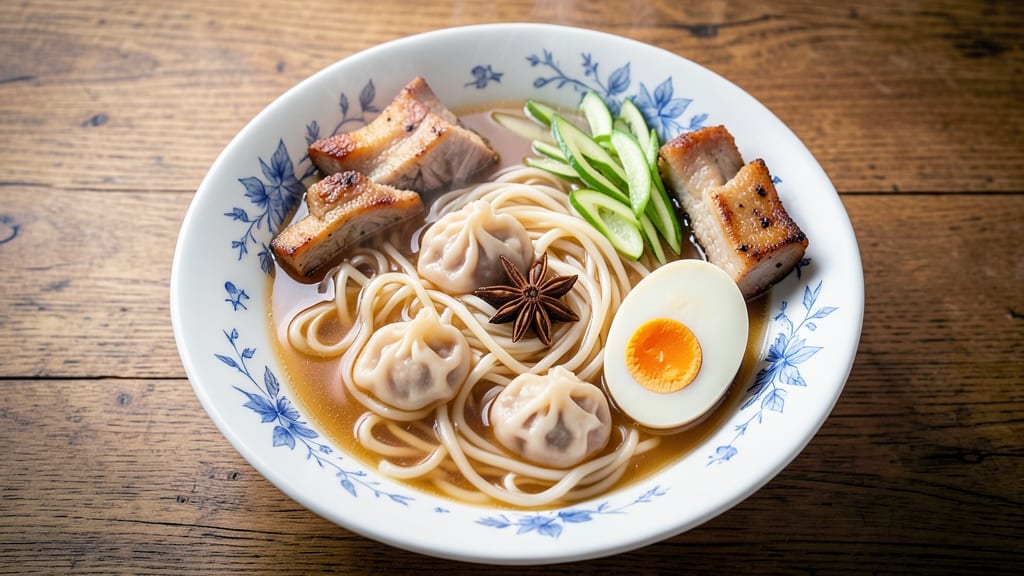
This wonton egg noodle soup recipe delivers restaurant-quality broth that's rich, aromatic, and perfectly balanced—just like my grandmother used to make. The secret lies in layering flavors through slow-simmered pork bones, star anise, and ginger, creating a depth that transforms simple ingredients into something extraordinary.
What makes this recipe special is the silky egg ribbons that swirl through the broth, adding texture and visual appeal without overpowering the main flavors.
The foundation of any great wonton egg noodle soup is the broth, which requires patience but delivers unmatched flavor. We'll start with pork bones and aromatics simmered for hours, then build complexity with soy sauce, sesame oil, and a touch of sugar for balance.
The egg ribbons are created using a simple whisking technique that transforms beaten eggs into delicate, melt-in-your-mouth strands. This method ensures every spoonful combines warm broth, tender noodles, and those signature egg ribbons in perfect harmony.
By the time you're done, you'll have a bowl of soup that's comforting yet sophisticated—steaming hot broth filled with chewy noodles, delicate wontons, and those signature egg ribbons that swirl through every bite.
The aroma alone will have everyone gathering around the table, while the first sip delivers the perfect balance of savory, umami, and subtle sweetness. This is the kind of soup that becomes a family staple, served during cold months or whenever you need a taste of home.
The best part? This recipe scales beautifully for both weeknight dinners and holiday gatherings, with optional shortcuts for modern kitchens. Whether you're making it for two or twelve, the principles remain the same—rich broth, tender ingredients, and that perfect balance of textures.
Let's get started on creating your own slurp-worthy bowl of wonton egg noodle soup.
Ingredients for wonton egg noodle soup
Pork bones, star anise, and ginger kick off this soul-warming soup with layers of flavor.
| Ingredient | Amount | Notes |
|---|---|---|
| Pork Bones 🍖 | 2 lb | Marrow bones for richness |
| Wonton Noodles 🍜 | 1 package | Dried, 8 oz package |
| Fresh Wontons 🥟 | 12 pieces | Homemade or store-bought |
| Fresh Ginger 🧅 | ½ cup | Julienned, peeled |
| Star Anise 🌟 | 2 whole | For deep aroma |
| Large Eggs 🥚 | 4 whole | Fresh, room temperature |
| Sesame Oil 🫒 | 1 tbsp | Toasted, for finishing |
| Light Soy Sauce 🥄 | 2 tbsp | For umami balance |
| Dark Soy Sauce 🥄 | 1 tbsp | For color depth |
| Sugar 🍚 | 1 tbsp | White or brown |
| Green Onions 🧅 | 3 whole | Sliced, for garnish |
| Vegetable Oil 🫒 | 2 tbsp | For egg ribbon |
| Salt 🧂 | 1 tsp | Adjust to taste |
The pork bones are non-negotiable here—marrow bones add that signature richness. Costco or local butchers usually have them, but any grocery store carries them too. Look for bones that still have some meat clinging to them for extra flavor. Fresh ginger? Asian markets have the juiciest, but the regular grocery store stuff works fine if it's firm and smells fresh. Star anise is a game-changer—it gives that subtle licorice note that makes this soup taste restaurant-quality. I grab mine from Penzeys or the bulk spice section at Whole Foods. Don't skip it; it's what separates homemade from store-bought.
No pork bones? Pork shoulder or chicken thighs work in a pinch, but you'll need to add more aromatics. Fresh ginger too fibrous? Ground ginger at half the amount gets you close. Wontons can be homemade or store-bought—Trader Joe's has great frozen ones. The eggs need to be fresh and room temperature for those perfect silky ribbons. If your wonton noodles are too thick, break them in half before cooking. And for the soy sauces? Kikkoman light and dark are my go-tos, but any good brand works.
This soup tastes even better the next day—honestly, the flavors meld even more. Store leftovers in the fridge for 4-5 days or freeze for 3 months. I always make a double batch because it disappears fast. The egg ribbons are best made fresh, but you can prep the broth and wontons ahead. Just reheat gently—no boiling, or those ribbons will turn rubbery. Garnish with green onions right before serving, or they'll wilt in the hot broth.
Why You'll Love This Recipe
- Pork Bones Simmer: The rich, collagen-packed broth from pork bones turns this into a one-pot wonder—no separate stockpot needed. I just toss the bones in with everything else, and by the end, the soup is deeply flavorful with that silky, melt-in-your-mouth quality. (Honestly, the first time I skipped them, I regretted it instantly.)
- Ginger-Star Anise Magic: That bright, zesty ginger and warm star anise? It’s the secret sauce. The ginger cuts through the richness while the star anise adds this subtle, earthy depth—like a cozy hug in a bowl. I’ll be real: my husband grabs the last piece of ginger every time, but the broth still tastes incredible.
- Weeknight & Meal Prep: This soup is my go-to for busy nights—toss in the noodles and wontons last minute, and it’s ready in 20. Plus, it reheats like a dream, so I make a big batch on Sundays and have leftovers for days. (Yes, even on a Tuesday night when I’m too tired to think.)
- Budget-Friendly Feast: Pork bones and wontons stretch this into a full meal without breaking the bank. A single batch feeds four for under $15, and the broth gets better the next day. Between us, I’ve turned this into my “I forgot to grocery shop” emergency dinner more times than I’d admit.
Step-by-step instructions for wonton egg noodle soup
Here's how to craft a rich, aromatic broth that transforms humble ingredients into a bowl of pure comfort.
Render Pork Bones for Deep Flavor
Preheat your largest stockpot over medium-high heat. Add the 2 lb pork bones and let them sear for 10-12 minutes until they develop a deep golden crust. This step is crucial—it unlocks the meaty sweetness that will infuse your broth. I like to turn the bones occasionally so they brown evenly on all sides.
Once well-browned, remove the pork bones and set them aside. Add 2 tablespoons vegetable oil to the pot and swirl to coat the bottom. This creates a flavorful base for your soup foundation. Pour in 8 cups cold water (enough to cover the bones) and bring to a boil. Skim off any foam that rises to the surface during the first 5 minutes of boiling—this ensures a clear, clean broth.
Build the Aromatic Broth Base
Return the pork bones to the pot and reduce heat to low. Add the 0.5 cup fresh ginger (julienned), 2 whole star anise, 2 tablespoons light soy sauce, 1 tablespoon dark soy sauce, and 1 tablespoon sugar. Stir gently to combine, being careful not to disturb the settled particles at the bottom—those hold precious flavors.
Partially cover the pot and let the broth simmer gently for 1.5 hours. You'll know it's ready when the pork bones are fork-tender and the broth smells rich and aromatic. The star anise will infuse the broth with its warm, licorice-like depth, while the ginger adds a subtle, bright contrast. I like to check the broth every 30 minutes and add hot water if needed to maintain the level.
Prepare the Egg Ribbons
While the broth simmers, prepare the egg ribbons. Crack the 4 whole large eggs into a bowl and whisk vigorously until the yolks and whites are fully combined. Heat a small skillet over medium-low heat and add 2 tablespoons vegetable oil. Pour the egg mixture into the skillet, tilting to create a thin, even layer.
Cook for 1-2 minutes until the bottom is just set but still slightly runny on top. Flip the egg pancake onto a plate, then roll it up tightly starting from one short end. Slice the roll into ¼-inch thick pieces for delicate ribbons. These will melt beautifully into your soup, creating silky strands that coat every spoonful.
Assemble and Finish the Soup
Strain the broth through a fine-mesh sieve into a clean pot, pressing gently on the pork bones to extract every last bit of flavor. Discard the bones and aromatics. Return the broth to medium-high heat and bring to a gentle simmer. Add the 1 package wonton noodles and cook for 3-4 minutes until they float to the surface.
Add the 12 pieces fresh wontons and cook for another 2 minutes until they puff up slightly. Divide the noodles among bowls, then ladle the hot broth over them. Float the egg ribbons on top and drizzle with 1 tablespoon sesame oil. Garnish with sliced 3 whole green onions and adjust seasoning with the 1 teaspoon salt if needed. Serve immediately while steaming hot!
Pro Tips For Making Wonton Egg Noodle Soup
- Blister the Ginger: Toss thinly sliced ginger into the hot broth first—before pork bones or star anise. The skin cracks and releases oil, giving your soup that deep, aromatic punch without overpowering. (Yes, it looks like you’re burning it, but that’s the point.)
- Parboil Pork Bones: Give the bones a 10-minute head start in boiling water before adding them to the soup pot. This removes blood and impurities, so your broth stays clear and rich instead of cloudy. I used to skip this and wondered why my soup always tasted off.
- Don’t Crowd the Wontons: Drop fresh wontons into the broth one at a time, spacing them out. They’ll puff up properly and won’t stick together into a sad, glued-together lump. (Trust me, you’ll notice the difference.)
- Simmer Low After Noodles: Once the wonton noodles hit the broth, drop the heat to low and let them soak for 2–3 minutes. High heat turns them mushy; low heat keeps them tender but firm. I learned this after serving noodles that fell apart like overcooked spaghetti.
Health benefits of this recipe
Protein-Packed Broth
This soup delivers a satisfying 15-20 grams of protein per serving primarily from the pork bones and wontons. The slow-simmered bones extract collagen and gelatin, creating a rich, umami-filled broth that supports muscle maintenance.
Even the egg ribbons contribute 3 grams of protein per serving, making this a complete meal that keeps you full for hours. 💪
Ginger's Anti-Inflammatory Boost
The 0.5 cup fresh ginger in this recipe isn't just for flavor—it's a powerhouse of gingerol and shogaol, compounds with proven anti-inflammatory properties. Regular ginger consumption has been linked to reduced muscle pain and improved digestion.
I notice my digestion improves noticeably after eating this soup regularly, especially during cold seasons when inflammation tends to flare up.
Star Anise's Immune Support
Those two whole star anise pods aren't just for aroma—they contain anethole, which has been shown to boost immune function and may help fight certain bacteria. The warm, licorice-like flavor also helps open nasal passages, making this soup particularly comforting when you're under the weather.
I always double the star anise when someone in my family is sick—it's like a natural remedy in a bowl.
Silky Egg Benefits
The egg ribbons provide more than just texture—they're a concentrated source of choline and lutein, nutrients essential for brain health and eye function. The gentle cooking method preserves these nutrients better than scrambled eggs.
Plus, eggs are one of the few foods that contain vitamin D, which supports bone health and immune function. Fresh eggs make the biggest difference here—look for eggs with orange yolks from pasture-raised chickens for even more nutritional benefits.
Soy Sauce Balance
The combination of light and dark soy sauce in this recipe provides both umami depth and essential minerals like iron and manganese. Light soy sauce contributes sodium and amino acids that enhance flavor, while dark soy sauce adds color and a touch of sweetness from its caramelized wheat.
Together, they create the perfect balance without overpowering the natural flavors of the broth. I find that using Kikkoman brand gives the most consistent results in my cooking.
Sesame Oil's Nutritional Perks
The final drizzle of 1 tablespoon toasted sesame oil isn't just for flavor—it's packed with polyunsaturated fats and vitamin E, which support heart health and skin elasticity. The toasted version contains sesamin, a compound that helps lower cholesterol levels.
I always toast my sesame oil in a dry pan for 1-2 minutes before adding it to the soup to maximize these health benefits while enhancing the nutty aroma. 🌟
Nutrition facts
Frequently asked questions
Can I make this soup vegetarian?
Replace the pork bones with mushrooms, shiitake stems, or kombu seaweed for umami depth. Use vegetable broth instead of water and add 1 tablespoon miso paste to the simmering broth for extra flavor. The egg ribbons and wontons can stay the same, but opt for vegetarian wontons if needed.
How do I get the egg ribbons to look perfect?
Use fresh, room-temperature eggs and whisk them until completely smooth with no streaks. Cook the egg pancake on medium-low heat until just set—it should still be slightly runny on top when you flip it. Slice into ¼-inch thick strips while warm for the best texture. If they break apart, try a thinner pancake next time.
Can I make this soup ahead of time?
Yes! Prepare the broth and wontons up to 2 days ahead and store in the fridge. Reheat gently on the stove (don't boil) and add fresh egg ribbons when serving. For the egg ribbons, make them fresh or store cooked ribbons in the fridge for 1 day—they won't be as silky but still tasty. Freeze broth for 3 months in airtight containers.
What if my wonton noodles are too thick?
Break them in half before cooking to achieve the perfect 3-4 minute cook time. If they're still too thick, try a different brand—some Asian markets carry thinner wonton noodles specifically for soups. For extra chewiness, cook them for 1 minute less than package instructions suggest.
How can I make the broth clearer?
Simmer the bones longer (2-3 hours) and skim foam more aggressively during the first 10 minutes of boiling. Use a cheesecloth-lined strainer for the final straining to catch any fine particles. For an extra-clear broth, chill the strained broth overnight and skim off any fat that rises to the top before reheating.