
Desserts
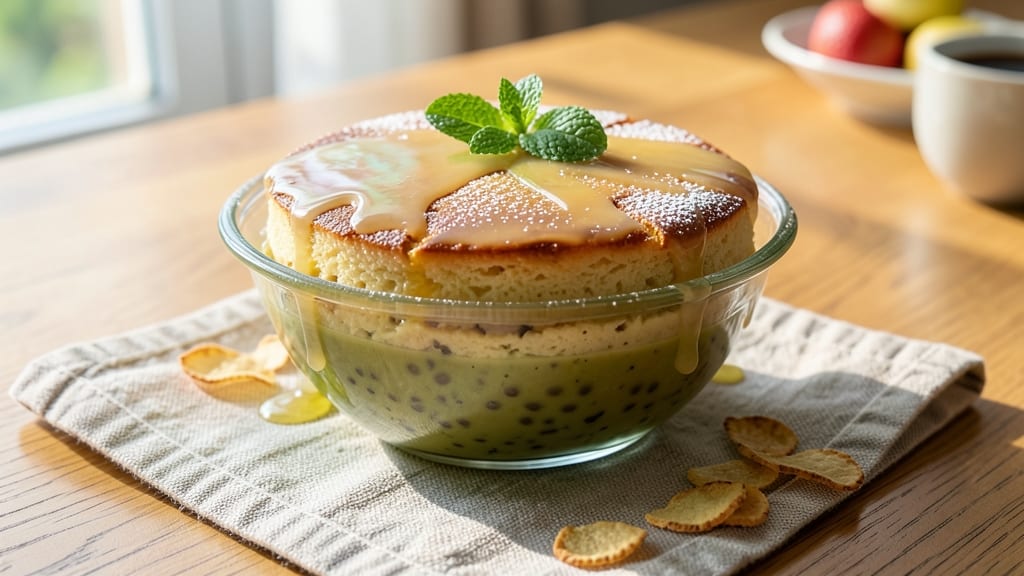
This Vietnamese egg cake recipe transforms simple ingredients into layers of coconut-pandan heaven—steamed to golden perfection with a tender, jiggly center. 🌟 The secret lies in balancing rice flour's delicate texture with coconut butter's richness, creating a dessert that's both nostalgic and refined.
Traditionally served during Lunar New Year, this vegetarian adaptation keeps the cultural heart while making it accessible for home cooks.
The magic happens in the layering: a coconut-pandan base infused with pandan leaves, topped with mung bean filling, and finished with a fluffy egg custard layer. Unlike traditional versions that require banana leaves, this recipe uses a simple baking pan for foolproof results.
Each component steams together, creating a harmonious blend of textures—creamy, chewy, and lightly sweet—that melts in your mouth.
What sets this apart is the steaming technique, which ensures the center stays tender while the edges develop a delicate golden crust. The pandan extract adds an aromatic depth that's unmistakably Vietnamese, while coconut butter brings natural sweetness without overpowering.
Perfect for celebrations or a special treat, this cake is as impressive as it is delicious.
Ready in about 1 hour 15 minutes (including prep and steaming), this recipe delivers restaurant-quality results with minimal effort. Whether you're celebrating Tet or simply craving something extraordinary, this Vietnamese egg cake will become your new favorite dessert. Let's get started!
Ingredients for vietnamese egg cake
The heart of this Vietnamese egg cake lies in balancing rice flour's delicate texture with coconut butter's richness.
| Ingredient | Amount | Notes |
|---|---|---|
| Rice Flour 🌾 | 2 cups | Glutinous or jasmine preferred |
| Coconut Butter 🥥 | 1 cup | Unsweetened, solid form |
| Granulated Sugar 🍚 | ¾ cup | White or coconut sugar |
| Pandan Extract 🌿 | 1 tbsp | Pure, not flavored syrup |
| Mung Beans 🌱 | 1 cup | Dry, soaked overnight |
| Large Eggs 🥚 | 4 whole | Room temperature preferred |
| Coconut Milk 🥥 | 13 ½ oz | Full-fat canned, chilled overnight |
| Pandan Leaves 🌿 | 4 whole | Fresh or frozen, chopped |
| Salt 🧂 | ½ tsp | Fine sea salt preferred |
| Vegetable Oil 🫒 | 2 tbsp | For greasing pan |
| Cornstarch 🌾 | 2 tbsp | For dusting layers |
| Lime Zest 🍋 | 1 tsp | Fresh, finely grated |
| Vanilla Extract 🌸 | ½ tsp | Pure, high-quality |
Pandan extract is non-negotiable for that unmistakable Vietnamese aroma—look for pure extract at Asian markets or specialty stores like H Mart. Fresh pandan leaves are ideal, but frozen work too (thaw first). The coconut butter must be unsweetened; brands like Lundberg or Trader Joe's carry reliable options. For the rice flour, jasmine or glutinous varieties create the signature chewy texture. If your local store lacks these, check the international aisle or order online—it's worth the investment for authentic results. The mung beans should be soaked overnight for optimal texture, though quick-soaking methods work in a pinch.
No pandan extract? Substitute 1 tbsp vanilla extract plus 1 tsp almond extract for a close approximation, though the flavor won't be identical. Running short on coconut butter? Melted coconut oil plus 1 tbsp coconut cream mimics the richness. For the eggs, room temperature ensures even blending—cold eggs create air pockets. The coconut milk can be substituted with full-fat canned coconut cream, but reduce other liquids slightly to maintain balance. If you're avoiding gluten, ensure your rice flour is certified gluten-free; many brands blend with wheat.
Store unused pandan extract in the freezer to preserve potency for up to 6 months. Prepped mung beans keep in the fridge for 3 days if submerged in water. The final cake reheats beautifully—steam for 5-7 minutes to restore tenderness. For presentation, dust with powdered sugar or serve with a drizzle of coconut syrup. Portion into individual servings before freezing; they thaw in 10 minutes in the microwave. The cake's texture improves with time, so make it a day ahead for optimal results.
Why You'll Love This Recipe
- No Fuss, No Mess: I swear by this recipe because it’s actually simple—just mix the rice flour, coconut butter, and sugar into a smooth batter, pour it into a lined pan, and steam. No eggs to scramble, no precise baking times, just hands-off perfection.
- Pandan Magic: That little bottle of pandan extract? Total game-changer. It turns this cake into something fragrant and floral, like a tropical breeze in every bite. Honestly, it’s the secret weapon that makes this recipe feel special without extra effort.
- Steam-Friendly Anywhere: Between us, this cake is my go-to for potlucks, office treats, or even a lazy Sunday. Steam it in a rice cooker, Instant Pot, or even a DIY bamboo steamer—no fancy equipment needed. (Yes, even on a Tuesday night.)
- Budget Sweetness: Rice flour and mung beans are cheap staples, and coconut butter lasts forever. I can make two cakes for the price of one store-bought dessert, and the leftovers? Still delicious reheated or sliced cold. Practical, delicious, and guilt-free.
Step-by-step instructions for Vietnamese egg cake
Master the delicate balance of textures—fluffy, moist layers with a subtle pandan aroma and coconut richness.
👨🍳 Step 1: Prepare the Mung Bean Batter
Soak the 1 cup mung beans overnight in water to soften completely. Drain and blend them with 1 cup coconut milk until smooth, adding water as needed to achieve a thin, pourable consistency. This batter forms the signature creamy layer of Vietnamese egg cake.
Strain through a fine-mesh sieve to remove any remaining bean particles—this ensures a silky texture. Set aside the batter and cover it tightly. The mung bean mixture should be cool before using, so let it sit at room temperature for 30 minutes after blending.
🍳 Step 2: Create the Coconut-Pandan Filling
In a mixing bowl, combine the 2 cups rice flour, 0.75 cup granulated sugar, 1 tbsp pandan extract, 0.5 tsp salt, and 0.5 tsp vanilla extract. Whisk until fully incorporated and no dry spots remain. This dry mixture forms the structural backbone of the cake.
In a separate bowl, melt the 1 cup coconut butter over a double boiler or in the microwave until smooth. Let it cool slightly, then gradually whisk in the 4 whole large eggs, one at a time, ensuring each is fully incorporated before adding the next. Add the melted coconut butter mixture to the dry ingredients and blend until smooth and lump-free.
🥘 Step 3: Assemble the Layers in a Greased Pan
Lightly grease an 8-inch round cake pan with 2 tbsp vegetable oil, then dust the bottom and sides with 2 tbsp cornstarch. This prevents sticking and ensures clean layers. Pour ⅓ of the mung bean batter into the pan and spread evenly to create the first layer.
Next, pour ⅓ of the coconut-pandan mixture over the mung bean layer, spreading it evenly with a spatula. Top with the remaining ⅓ of mung bean batter, followed by the final ⅓ of coconut-pandan mixture. The final layer should be the coconut-pandan mixture to create a rich top layer.
⏰ Step 4: Steam to Perfection
Place the assembled pan in a steamer lined with parchment paper, ensuring the water doesn't touch the bottom of the pan. Cover the steamer and bring the water to a rolling boil over medium-high heat. Reduce heat to medium and steam for 45-50 minutes until the cake is set but still slightly jiggly in the center.
Check for doneness by inserting a toothpick—it should come out clean with a few moist crumbs. Avoid oversteaming, which can make the cake dense. Let the cake cool in the pan for 10 minutes before unmolding onto a wire rack to cool completely.
🔪 Step 5: Garnish and Serve
Once fully cooled, dust the top of the cake with a light layer of 1 tsp lime zest for a bright, aromatic finish. Slice into 4 equal wedges and serve at room temperature. The cake should have a delicate, fluffy texture with a subtle pandan fragrance and a hint of coconut sweetness in every bite.
For best results, serve within 2 days of baking. Store leftovers in an airtight container at room temperature to preserve its moist texture. This cake is best enjoyed slightly warm, so you can gently reheat slices in the microwave for 10-15 seconds to restore its softness.
Pro Tips For Making Vietnamese Egg Cake
- STEAM AT 180°F: The cake’s texture hinges on temperature—any lower and it turns gummy, too high and it dries out. Use a thermometer to confirm; I learned this after a batch collapsed like a sad soufflé. If your oven only does "medium," wrap the pan in foil and let it steam for 10 minutes at the start.
- SOAK MUNG BEANS 4 HOURS: Skimp on soaking time and they’ll stay chalky. Cover the beans in water, add a pinch of salt, and let them sit—yes, even overnight if you’re in a rush. Drain and rinse just before mixing; leftover water turns the batter gluey, and nobody wants a brick for dessert.
- WHISK COCONUT BUTTER UNTIL GLAZED: Cold coconut butter clumps like lumpy buttercream. Microwave it in 10-second bursts until it’s smooth, then whip it with the sugar until it’s almost translucent. This isn’t just for shine—it dissolves evenly, so every bite tastes like the first. (And no, blending won’t cut it.)
- STOP WHEN THE CENTER JIGGLES: The cake pulls away from the pan when it’s done, but the real test is the center. It should wobble like a weak Jell-O—press it gently with a toothpick. If it comes out clean but the middle’s still shaky, tent it and let it rest. Forcing it to bake longer turns it into a sad, dry sponge. Patience here makes all the difference.
Essential equipment for perfect results
Steamer Essentials
You’ll need a bamboo steamer or a stainless steel steamer basket that fits your pot snugly. I recommend a 2-tier bamboo steamer from Amazon or H Mart—it’s affordable and heats evenly.
For electric options, the Ninja Foodi Multi-Cooker has a steam function that works beautifully. The key is ensuring your cake pan sits 1 inch above the water—never let it touch! 🌿
Pan Selection
An 8-inch round cake pan with removable sides is ideal for clean unmolding. I prefer Wilton Perfect Results pans because they’re non-stick and release easily. If you don’t have one, a lightly oiled metal pan works too.
Grease it well with vegetable oil and dust with cornstarch to prevent sticking. Avoid glass pans—they don’t conduct heat evenly and can crack under steam.
Mixing Tools
A stand mixer or hand mixer simplifies blending the coconut-pandan mixture, but a whisk works fine if you’re patient. For the mung bean batter, a high-powered blender like Ninja ensures smoothness.
A fine-mesh sieve is non-negotiable for straining the batter—it removes grit and guarantees a silky texture. I also keep a spatula and rubber scraper on hand for spreading layers evenly. 🥄
Thermometer
While not mandatory, a candy or instant-read thermometer helps gauge doneness. The cake is perfect when the center reaches 185°F—just slightly jiggly. Without one, use the toothpick test: insert it into the center, and it should come out with a few moist crumbs.
Oversteaming dries out the texture, so timing is everything. A kitchen timer set for 45 minutes is your best friend here.
Pandan Prep Tools
Fresh pandan leaves need a sharp knife or scissors for chopping. If using frozen leaves, thaw them first in a bowl of warm water. For pandan extract, a measuring spoon ensures precision—1 tbsp is key for authentic flavor.
I store extra extract in the freezer to preserve its potency. A microplane is perfect for lime zest, adding bright citrus notes to the final garnish. 🍋
Storage Containers
An airtight container with a lid keeps leftovers fresh for 2 days at room temperature. I use glass Pyrex containers because they’re microwave-safe for reheating. For longer storage, wrap individual slices in parchment paper and freeze for up to 1 month.
When reheating, steam for 5-7 minutes to restore moisture—microwaving can make the cake rubbery. 💫
Nutrition facts
Frequently asked questions
Can I make this Vietnamese egg cake without pandan extract?
Yes, but the flavor won't be authentic. Use 1 tbsp vanilla extract + 1 tsp almond extract for a close substitute. For a more tropical twist, add ½ tsp coconut extract if available. The pandan's aromatic quality is key to the traditional taste, so try to find it at Asian markets or online.
Why did my cake turn out dense instead of light and fluffy?
Oversteaming is the most common cause—stop when the center is just slightly jiggly (185°F). Another issue could be under-mixing the batter or using cold eggs. Ensure your coconut butter is melted smoothly and eggs are at room temperature. Also, don't skip the cornstarch dusting—it creates a barrier for even steaming.
How do I serve this cake traditionally?
This Vietnamese egg cake is often enjoyed during Tet (Lunar New Year) as an offering to ancestors. Serve warm slices with green tea or coconut milk for dipping. For a festive touch, garnish with edible gold leaf or dust with powdered sugar. It pairs beautifully with mung bean soup or fresh fruit.
Can I make this cake ahead of time?
This cake actually improves overnight. Store it in an airtight container at room temperature for up to 2 days. For longer storage, wrap individual slices in parchment and freeze for 1 month. Reheat frozen slices by steaming for 5-7 minutes—microwaving can make the texture rubbery.
What's the difference between this and bánh chưng?
While both are Vietnamese New Year treats, this egg cake uses rice flour and coconut instead of glutinous rice and pork. Traditional bánh chưng has a firmer texture from the rice, while this cake's layers are lighter and more custard-like. Both are wrapped (originally in banana leaves), but this version uses a baking pan for easier home preparation.