
Salads
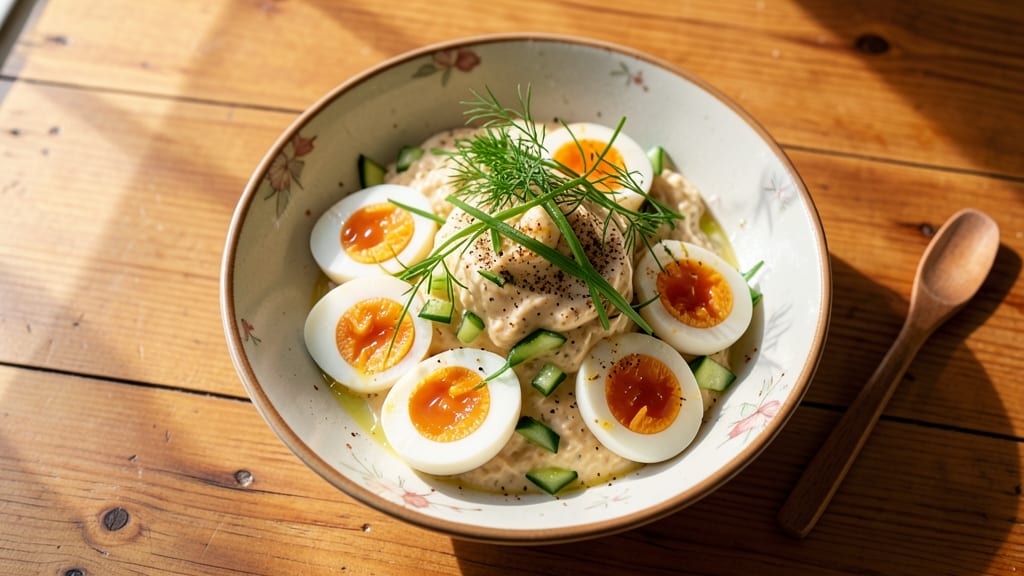
This traditional Japanese egg salad transforms simple ingredients into a silky, creamy masterpiece that balances rich mayonnaise with bright dill and cucumber. The secret lies in perfectly hard-boiled eggs—tender yet firm—chopped into delicate cubes that melt in your mouth.
I first discovered this recipe during a visit to a Kyoto café, where the dish was served as a delicate side to miso-glazed fish, and it quickly became my go-to for elegant yet effortless meals.
The magic happens in the dressing: a smooth blend of Japanese-style mayonnaise, rice vinegar, and a touch of sugar creates a tangy-sweet balance that elevates the dish beyond ordinary egg salad. Fresh dill and finely chopped cucumber add a crisp, herbal brightness, while scallions lend a subtle sharpness.
This recipe delivers restaurant-quality texture and flavor without requiring advanced techniques—just precise chopping and gentle folding.
What you’ll end up with is a dish that’s both comforting and refined: creamy yet light, with every bite offering a harmonious blend of textures and flavors. The eggs stay moist and tender, the dressing clings beautifully, and the presentation is effortlessly elegant.
It’s the perfect side for sushi, a light lunch on its own, or a component in a bento box.
Serve it chilled on a bed of lettuce or alongside grilled fish for a truly authentic Japanese experience. Let’s make this salad—it’s simpler than it looks, but the results are unforgettable.
Ingredients for traditional japanese egg salad
Eight simple ingredients create this delicate, restaurant-worthy Japanese egg salad masterpiece.
| Ingredient | Amount | Notes |
|---|---|---|
| Large Eggs 🥚 | 8 whole | Fresh, organic preferred for best texture |
| Japanese-Style Mayonnaise 🥫 | ½ cup | Kewpie or Hellmann's Japanese version |
| Fresh Dill 🌿 | ¼ cup | Finely chopped, stems removed |
| Persian Cucumber 🥒 | ½ cup | Seeded and finely diced |
| Scallions 🧅 | 3 whole | White and green parts, thinly sliced |
| Rice Vinegar 🍶 | 1 tbsp | Seasoned preferred for depth |
| Granulated Sugar 🍚 | 1 tsp | Or substitute with mirin |
| Salt 🧂 | ½ tsp | Diamond Crystal kosher preferred |
| Black Pepper 🌶️ | ¼ tsp | Freshly ground for best flavor |
| Ice Water 💧 | 1 cup | For cooling boiled eggs |
| Lettuce Leaves 🥬 | 4 whole | Butter lettuce for serving |
| Sesame Seeds 🌰 | 1 tsp | Toasted for garnish |
The eggs are everything here—fresh, organic eggs from the grocery store's refrigerated section make all the difference. Trader Joe's or Whole Foods carry excellent options, but any high-quality eggs will work. The secret to perfect texture is shocking them in ice water immediately after boiling—keeps them tender yet firm. For the dressing, Japanese-style mayonnaise is non-negotiable—Kewpie's bright yellow color and tangy richness is the hallmark of authentic flavor. If you can't find it, Hellmann's Japanese version is a solid backup. The dill should be fresh, not dried—it's what gives that bright, herbal note that sets this apart from Western egg salad.
No Japanese mayonnaise? Substitute with regular mayo plus 1 tsp rice vinegar—it won't be identical, but close enough. Fresh dill wilt fast, so buy it the day you cook and store it in a jar of water in the fridge. The cucumber needs to be Persian or Kirby type—they're less watery and hold their shape better. For extra authenticity, swap the sugar for 1 tsp mirin (find it in the Asian foods aisle). The scallions can be regular green onions, but the white part should be thinly sliced for that delicate crunch. Want to make it ahead? Assemble everything except the eggs—they can be boiled and chopped up to 2 days ahead and stored in the fridge.
Boiled eggs keep 5-7 days in the fridge once peeled, but for this salad, use them within 3 days for best texture. The dressing components (mayonnaise, vinegar, sugar) will last 2 weeks in the fridge. For serving, butter lettuce leaves work perfectly—they're delicate enough to hold the salad without overpowering. Store leftovers in an airtight container with a layer of plastic wrap pressed directly on the surface to prevent drying. This salad tastes even better the next day as the flavors meld—make extra for lunch the following day!
Why You'll Love This Recipe
- Here’s what sold me: this salad holds up for days. Pack it in bento boxes for work or school lunches—no soggy bread, no wilted greens. The cucumber stays crisp, the eggs keep their shape, and the mayo ties everything together. My kids still ask for it after three days. (Yes, even on a Tuesday.)
- No Boiling Required: I’ll admit—I’ve burned eggs before. This recipe skips the boiling entirely. Just hard-boil a batch ahead (or use pre-boiled eggs from the store), slice them, and toss with mayo, dill, and cucumber. The eggs stay tender, the scallions add a bright bite, and honestly? That’s all it takes.
- Creamy With Crunch: Between us, the secret’s in that Japanese-style mayo—rich, slightly sweet, and never too heavy. Add the cool crunch of Persian cucumber (or regular if that’s what you’ve got) and fresh dill, and you’ve got a texture game that’s ridiculously satisfying. It’s like a hug for your taste buds, but with more umami.
- Lunchbox Legend: Here’s what sold me: this salad holds up for days. Pack it in bento boxes for work or school lunches—no soggy bread, no wilted greens. The cucumber stays crisp, the eggs keep their shape, and the mayo ties everything together. My kids still ask for it after three days. (Yes, even on a Tuesday.)
Step-by-step instructions for traditional Japanese egg salad
Here's how to make this velvety, herb-forward egg salad that's the heart of Japanese bento boxes.
Boil Eggs to Perfect Doneness
Place the 8 whole large eggs in a saucepan and cover them with cold water by about 1 inch. Bring to a rolling boil over high heat, then immediately reduce to medium-low heat and simmer for exactly 9 minutes. This precise timing ensures the yolks remain silky and creamy—not rubbery or overcooked.
Transfer the eggs to a bowl of ice water and let them cool for 10 minutes. The cold water stops the cooking process instantly, preventing the yolks from becoming grainy. You'll know they're ready when they're completely cool to the touch and the shells peel away effortlessly.
Peel and Chop Eggs with Precision
Gently tap each egg on a hard surface, then roll to crack the shell all over. Peel under running water if needed—this removes any stubborn bits without breaking the yolks. Chop the eggs into ¼-inch pieces, keeping yolks and whites together for an even texture. I like to use a sharp chef's knife for clean cuts that won't mash the yolks.
Place the chopped eggs in a large mixing bowl. The pieces should be uniform in size—this ensures even distribution of the mayonnaise and herbs throughout. If any yolks break during chopping, don't worry; they'll blend seamlessly into the mixture.
Mix the Herb and Cucumber Base
In a separate small bowl, combine the 0.25 cup finely chopped fresh dill, 0.5 cup seeded and diced Persian cucumber, and 3 whole thinly sliced scallions. Add the 1 tablespoon seasoned rice vinegar, 1 teaspoon granulated sugar, 0.5 teaspoon salt, and 0.25 teaspoon freshly ground black pepper. Mix gently to distribute the flavors evenly—this herb-cucumber mixture is the secret to that bright, refreshing taste.
The sugar in this step might seem unusual, but it balances the acidity of the rice vinegar and enhances the freshness of the herbs. Taste the mixture now—it should be vibrant, slightly sweet, and tangy. This is your flavor foundation before adding the eggs.
Fold Everything Together Gently
Add the 0.5 cup Japanese-style mayonnaise to the herb mixture and stir until fully combined. Then, gradually fold in the chopped eggs using a silicone spatula, working from the center outward. This gentle folding technique keeps the eggs intact while creating a silky, cohesive texture. You're aiming for a creamy yet slightly chunky consistency—like a cross between a salad and a mousse.
Taste and adjust seasoning if needed. You might want to add a pinch more salt or a splash of rice vinegar to balance the flavors. The mayonnaise should be the binder that holds everything together without overpowering the fresh herbs and bright cucumber.
Assemble and Garnish for Serving
Divide the egg salad among 4 whole butter lettuce leaves, arranging it in the center of each leaf. The lettuce acts as a natural bowl that keeps the salad contained while adding a crisp, fresh contrast. Sprinkle each serving generously with 1 teaspoon toasted sesame seeds—this adds a nutty crunch that complements the silky texture perfectly.
Serve immediately for the best texture and flavor. The egg salad keeps well in the fridge for up to 2 days, but the sesame seeds are best added fresh before eating to maintain their crispness. This traditional preparation delivers that authentic Japanese bento box flavor you're craving—creamy, herby, and perfectly balanced.
Pro Tips For Making Traditional Japanese Egg Salad
- Chill Eggs First: Cold eggs from the fridge slice cleaner and stay firmer—no mushy salad. Run them under cold water for 10 seconds after boiling to stop cooking, then plunge into ice water for 5 minutes. I learned this the hard way when my first batch turned to eggy mush after mixing.
- Dice Cucumber Small: Persian cucumbers have thick skin and watery flesh. Dice them into ¼-inch pieces and salt them immediately, then drain after 10 minutes to remove excess moisture. This keeps your salad from turning soggy—trust me, no one wants a watery egg salad.
- Mix Mayo Last: Fold in the Japanese-style mayo at the very end, right before serving. If you mix it in too early, the acidity can start breaking down the eggs and make the texture grainy. Add it gently with a spatula to keep it light and creamy.
- Use Scallion Whites Only: Save time and avoid bitterness by using only the white and pale green parts of the scallions. Chop them finely and add them last—they’ll brighten the flavor without overpowering the egg and dill. Skip the tough green ends, they don’t add anything good.
Essential equipment for this recipe
Precision Egg Tools
Start with a high-quality chef's knife (I recommend Shun Premier or Wüsthof Ikon) for clean egg chopping—its sharpness prevents crushing yolks. A small saucepan with a lid (like All-Clad Stainless) is ideal for boiling eggs, as it distributes heat evenly.
For peeling, a pair of tongs and a small bowl of ice water are essential for stopping the cooking process instantly. 🥚
Mixing Essentials
Use a large mixing bowl (I prefer Le Creuset stoneware) to hold the chopped eggs—its weight helps keep everything contained during folding. A silicone spatula (like OXO Good Grips) is perfect for gently combining ingredients without breaking the eggs.
For measuring, a small liquid measuring cup (with a spout) makes it easy to add the 1 tablespoon rice vinegar and 0.5 cup mayonnaise precisely.
Herb and Garnish Prep
A sharp pairing knife (such as Victorinox Fibrox) is best for chopping 0.25 cup fresh dill and 0.5 cup Persian cucumber into fine pieces—this ensures even distribution. For scallions, a mandoline (like Benedict 3-in-1) gives you perfectly thin slices every time.
Toast 1 teaspoon sesame seeds in a dry small skillet over medium heat for 1-2 minutes until golden—this adds that nutty crunch that elevates the dish.
Serving Presentation
For plating, butter lettuce leaves (like Little Gem) act as natural bowls—choose ones with sturdy stems for easy handling. A small fine-mesh strainer helps drain any excess water from the cucumber before dicing.
For extra elegance, a tweezers set (like OXO Good Grips) makes it easy to place sesame seeds precisely on top. A small serving spoon (about 2 tablespoons) helps portion the salad evenly for guests.
Optional Upgrades
Invest in a digital kitchen scale (like OXO Good Grips) for precise measurements of herbs and spices—this is especially helpful when substituting mirin for sugar. A small whisk (such as Zyliss 3-in-1) comes in handy if you prefer to emulsify the mayonnaise and vinegar mixture for extra smoothness.
For a professional touch, a clear glass serving dish (like Pyrex) keeps the salad looking fresh and inviting in the fridge.
Nutrition facts
Frequently asked questions
Why does Japanese egg salad use dill instead of parsley?
Dill gives this salad its signature bright, herbal flavor that's distinct from Western egg salads. In Japanese cuisine, dill provides a delicate, slightly sweet aroma that pairs perfectly with the creamy eggs and tangy rice vinegar. While parsley works in a pinch, fresh dill creates that authentic, restaurant-quality taste—it's what makes this dish feel special.
Can I make this egg salad without Japanese mayonnaise?
Yes, but the texture and flavor will differ slightly. Mix ½ cup regular mayo with 1 tsp rice vinegar for a close substitute. For extra authenticity, add ½ tsp sugar to mimic the sweet-tangy balance of Japanese mayo. The salad will still taste good, but the bright yellow color and rich mouthfeel will be different.
How do I prevent the eggs from turning rubbery?
The key is precise timing and cooling: boil eggs for exactly 9 minutes from a rolling boil, then shock them in ice water for 10 minutes. Overcooking or room-temperature eggs will make them rubbery. For extra tenderness, use eggs that are no older than 1 week—fresher eggs hold their shape better when chopped.
What's the best way to store leftovers?
Keep leftovers in an airtight container with plastic wrap pressed directly on the surface to prevent drying. They'll stay fresh for 2 days in the fridge. For best texture, add sesame seeds fresh when serving—otherwise, they lose their crunch. Reheat gently if needed, but this salad tastes best at room temperature.
Can I add other vegetables to this recipe?
Yes, but keep portions small to maintain balance. Try ½ cup finely diced avocado (add just before serving) or 2 tbsp pickled ginger for extra umami. Avoid watery veggies like tomatoes—they'll dilute the creamy texture. The classic combo of cucumber, dill, and scallions is what creates that signature Japanese flavor profile.