
Breakfast & Brunch
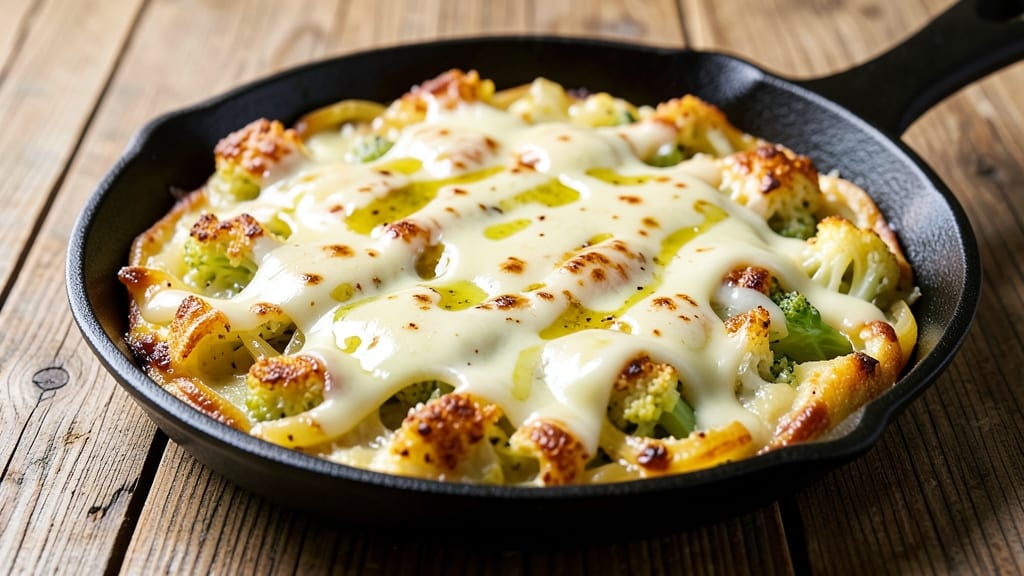
This Trader Joe's-inspired egg frittata delivers the perfect balance of creamy Swiss cheese, crunchy roasted cauliflower, and fluffy egg texture—all in one golden, restaurant-worthy dish.
The secret lies in roasting the cauliflower first for natural sweetness and crisp edges, then folding it into a stovetop base before finishing under the broiler.
I developed this recipe after realizing how much better homemade frittatas taste compared to frozen versions, especially when using high-quality Swiss cheese and Trader Joe's organic cauliflower.
The beauty of this frittata is its versatility—it works as a hearty breakfast or satisfying brunch, and the technique is simple enough for weeknight cooking. You'll start with sautéed onions and garlic as the flavor base, then add beaten eggs and melted Swiss cheese for that signature cheesy pull.
The roasted cauliflower adds texture contrast that keeps every bite interesting, while the broiler finish creates a lightly crispy top that's impossible to resist.
What you'll end up with is a golden, bubbling frittata with tender egg centers, perfectly melted Swiss cheese, and crisp-tender cauliflower pieces throughout. The aroma alone will have everyone gathering around the table, and the first bite delivers that satisfying mix of creamy, cheesy, and slightly crunchy textures.
This is the kind of dish that makes breakfast feel like an event without requiring fancy ingredients or complicated techniques.
Serve it warm with a side of fresh fruit or crusty bread to soak up any extra cheese, or pack leftovers for lunch the next day.
The recipe scales easily too—just adjust your pan size or make two smaller frittatas for a crowd. Here's how to make it perfectly every time.
Ingredients for trader joe's egg frittata with swiss cheese and cauliflower
These quality ingredients transform into a restaurant-worthy frittata with crispy cauliflower and creamy Swiss cheese.
| Ingredient | Amount | Notes |
|---|---|---|
| Large Eggs 🥚 | 8 whole | Room temperature for even cooking |
| Swiss Cheese 🧀 | 1 ½ cups | High-quality, freshly grated |
| Organic Cauliflower 🥬 | 1 lb | Trader Joe's preferred, florets cut |
| Yellow Onion 🧅 | 1 whole | Medium size, diced finely |
| Garlic Cloves 🧄 | 4 cloves | Freshly minced, aromatic |
| Extra-Virgin Olive Oil 🫒 | ¼ cup | High quality, fruity flavor |
| Salt 🧂 | 1 tsp | Diamond Crystal preferred |
| Ground Black Pepper 🌶️ | ½ tsp | Freshly cracked for potency |
| Dried Thyme 🌿 | ¼ tsp | Or 1 tbsp fresh thyme leaves |
| Butter 🧈 | 2 tbsp | Unsalted, for pan coating |
| Fresh Chives 🌱 | ¼ cup | Chopped, for garnish |
The cauliflower is non-negotiable here—Trader Joe's organic delivers the best texture and flavor. Look for florets that are bright white with no yellowing. For the Swiss cheese, high-quality, freshly grated is essential; pre-shredded contains anti-caking agents that prevent proper melting. The eggs should be large, room-temperature for even cooking. If you're using the 12-inch cast-iron skillet from Trader Joe's, it's perfect for this recipe—just make sure it's well-seasoned. The butter and olive oil combo creates that signature crispy bottom while keeping the frittata moist.
No Swiss cheese? Gruyère or Emmental work beautifully as substitutes—both melt smoothly. Running short on cauliflower? Zucchini or bell peppers add a different texture but still deliver that roasted crunch. Fresh chives are ideal for garnish, but parsley or basil work equally well. The thyme can be swapped for oregano or basil at the same quantity. For the onions, yellow or red both work—just make sure they're diced finely. If you're making this ahead, pre-grate the cheese and store it in an airtight container to prevent clumping. The eggs should be whisked thoroughly to avoid any lumps in the final dish.
This frittata reheats beautifully—just pop it in a 350°F oven for 10 minutes to restore that crispy top. Store leftovers in the fridge for up to 4 days, covered tightly to preserve moisture. For freezing, wrap individual portions in parchment paper, then foil, and they'll keep for 2 months. The roasted cauliflower can be prepped a day ahead and stored in the fridge—just reheat it briefly before folding into the eggs. The Swiss cheese should be kept in its original packaging in the fridge, and the eggs should be stored in their carton in the coldest part of your fridge for maximum freshness.
Why You'll Love This Recipe
- One-Pan Magic: I swear by this for days I don’t want to scrub dishes—just chop the onion and cauliflower, toss them in a hot pan with a little oil, then pour in the eggs. The Swiss melts into that golden crust while the cauliflower soaks up all the eggy richness. No flipping, no fuss.
- Creamy Crispy Contrast: That first bite where the outside’s crispy and the inside’s still velvety? It’s the Swiss cheese’s fault—it turns gooey while the edges get a perfect golden sheen. The garlic and onion caramelize just enough to make every forkful taste like a little hug.
- Lunchbox Hero: Between us, this is my go-to for meal prep—slice it up, pack it in containers, and it stays fresh for days. The cauliflower keeps it light enough for lunch, but the Swiss makes it feel indulgent. My kids ask for it more than pizza. (Yes, even on a Tuesday.)
- Budget Breakfast Win: Eggs and cheese stretch further than you’d think, and cauliflower’s the secret weapon—it bulk it up without breaking the bank. I make a big batch on Sundays and eat it all week. Honestly, it’s the kind of recipe that makes grocery shopping feel like a victory.
Step-by-step instructions for Trader Joe's egg frittata
Master this technique for a perfectly set frittata with crispy cauliflower and melted Swiss cheese every time.
Prep and Sauté the Vegetables
Heat a large oven-safe skillet over medium heat and add the 2 tablespoons butter. Once melted and foaming subsides, add the 1 whole Yellow Onion and 1 lb Organic Cauliflower (cut into small florets). Cook for 8-10 minutes until the onion softens and the cauliflower begins to brown slightly.
Add the 4 cloves Garlic Cloves (minced) and the 0.25 tsp Dried Thyme, stirring for 30 seconds until fragrant. Season with 1 tsp Salt and 0.5 tsp Ground Black Pepper. Remove from heat and set aside—this base should be warm but not crispy yet. The vegetables should be tender but still hold their shape when pressed.
Whisk the Egg Mixture
In a large bowl, whisk together the 8 whole Large Eggs until the yolks and whites are fully combined. Add 1.5 cups Swiss Cheese (freshly grated) and whisk until evenly distributed. The mixture should be smooth with no visible cheese chunks—this ensures even melting later.
Season the egg mixture with an additional 0.5 tsp Salt and 0.25 tsp Ground Black Pepper (the vegetables already have some seasoning). Pour the egg mixture evenly over the sautéed vegetables in the skillet, tilting the pan to distribute it completely. Let it sit undisturbed for 2 minutes to begin setting at the edges.
Cook on the Stovetop
Return the skillet to medium-low heat and cook for 5-6 minutes, allowing the bottom to set while the edges begin to firm up. You'll notice the edges turn from translucent to slightly opaque—this is your signal to check for doneness. The center should still appear slightly wet but not runny.
Here's the thing—this step requires patience. If you crank the heat too high, the top will cook too quickly and become rubbery. You want gentle, even cooking that creates a creamy interior with a slightly crisp exterior. If the bottom browns too quickly, reduce the heat further.
Finish in the Oven
Preheat your broiler to high. Transfer the skillet to the oven and broil for 3-4 minutes until the top is golden brown and the center is fully set. Watch closely—broilers can vary, and you don't want to burn the top. The cheese should be bubbly and slightly crispy on top.
Remove from the oven and let the frittata rest for 5 minutes before serving. This resting period allows the interior to firm up slightly and makes slicing easier. The edges should hold their shape when lifted, and the center should be just set—not wet, but not dry either.
Garnish and Serve
Sprinkle the 0.25 cup Fresh Chives (chopped) evenly over the top for freshness and color. Serve immediately while still warm, cutting into wedges for easy sharing. The cauliflower should add a pleasant crunch, while the Swiss cheese provides rich, creamy depth with every bite.
For best results, serve this frittata within 30 minutes of cooking. The texture and temperature are at their peak when fresh from the oven, and the cauliflower maintains its slight crispness. Store any leftovers in the refrigerator for up to 3 days, though reheating may slightly soften the cauliflower.
Pro Tips For Making Trader Joe'S Egg Frittata With Swiss Cheese And Cauliflower
- Sauté Onions Low and Slow: I learned this the hard way—blasting those yellow onions on high heat turns them bitter faster than you can say "Swiss cheese melts." Keep the pan on medium and stir every 30 seconds until they’re soft and translucent. That’s when they’ll actually caramelize just enough to add depth without overpowering the cauliflower.
- Rice and Chop Cauliflower: Skip the food processor unless you’re okay with mushy, watery frittata. Use a box grater or sharp knife to cut the cauliflower into tiny, even pieces—think rice-sized. Pat them dry with a towel first, or you’ll end up with a soggy mess. (Yes, even if you’re impatient like me.)
- Preheat Pan Like It’s 1985: A cold pan is the fastest way to ruin a frittata’s texture. Get that oven-safe skillet screaming hot on the stovetop for 2-3 minutes before adding oil. The eggs will set up with a golden crust instead of turning into a sad, rubbery slab. Trust me, your future self will notice.
- Layer Cheese Strategically: Dumping all the Swiss on top? That’s how you end up with a cheese volcano and uneven cooking. Sprinkle half over the eggs before they go in the oven, then top with the rest after 5 minutes. The bottom layer gets crispy, the top melts perfectly, and you avoid that greasy cheese slide. Does it look weird? Yes. Does it work? Every single time.
Essential equipment for perfect results
Oven-Safe Skillet
An oven-safe skillet is your best friend for this frittata—it handles both stovetop and broiler finishes seamlessly. I recommend a 12-inch cast-iron skillet (like Trader Joe's own) for even heat distribution and that signature crispy bottom.
If you don’t have cast iron, a stainless steel or ceramic non-stick skillet works too, but avoid thin aluminum pans—they warp under broiler heat. 🔥
Whisk and Mixing Bowl
A sturdy whisk and large mixing bowl prevent lumps in your egg mixture. I use a balloon whisk for smooth, lump-free results—it incorporates air gently while blending eggs and cheese evenly.
For the bowl, anything 8-inch or larger works, but a glass or stainless steel bowl keeps the mixture at a consistent temperature while whisking.
Cheese Grater
Freshly grated Swiss cheese makes all the difference—pre-shredded cheese contains anti-caking agents that prevent proper melting. A box grater or microplane gives you the finest, most even texture.
If you’re short on time, a food processor with a grating blade works too, but pulse it in short bursts to avoid melting the cheese.
Broiler Pan or Tray
If your skillet isn’t oven-safe or you’re using a stovetop-only pan, transfer the frittata to a broiler pan or baking sheet lined with parchment paper for the final crisp.
Avoid glass pans—they can crack under high heat. A wire cooling rack placed on the baking sheet prevents soggy bottoms while broiling.
Measuring Tools
Precision matters for this recipe—use a liquid measuring cup for olive oil and butter, and a standard measuring spoon set for spices. A kitchen scale isn’t required, but it’s handy for nailing the 1.5 cups Swiss cheese (which can vary by brand).
For the cauliflower, a food scale ensures you hit that 1 lb target for even roasting.
Optional Upgrades
For extra convenience, a stand mixer with whisk attachment speeds up egg blending, while a mandoline makes quick work of thinly slicing onions. If you love crispy edges, a pizza stone or steel placed under the skillet in the broiler adds even more crunch.
And for serving, a sharp chef’s knife and cutting board make clean wedges effortless. 💡
Nutrition facts
Frequently asked questions
Can I make this frittata ahead of time?
Yes! Assemble the frittata up to 24 hours ahead and refrigerate it uncovered (the cold air helps set the top). When ready to finish, transfer it to a 350°F oven for 15-20 minutes to restore the crispy top. The texture won't be quite as crisp as fresh, but it reheats beautifully. For best results, broil for 2-3 minutes at the end to crisp the top again.
What if I don't have a broiler?
No problem! Finish the frittata under a preheated oven's bake setting at 375°F for 5-7 minutes instead. Place a baking sheet on the rack below to catch any drips. The top won't be as crispy, but it'll still be fully cooked and delicious. For extra browning, cover loosely with foil for the first 3 minutes, then remove to let it crisp slightly.
How do I adjust the recipe for fewer/more servings?
This frittata scales easily. For 2 servings, use 4 eggs, 0.75 cups cheese, and 0.5 lb cauliflower in a 10-inch skillet. For 6 servings, double all ingredients and use a 14-inch skillet or two 12-inch skillets. Keep the same proportions—8 eggs per 1.5 cups cheese and 1 lb cauliflower per 4 servings—to maintain perfect texture.
Why did my frittata turn out rubbery?
Overcooking is the most common cause. The eggs should be just set in the center—not wet, but still slightly tender. Check doneness by gently shaking the pan—if it wobbles slightly, it's ready. Also, avoid high heat on the stovetop, which can cook the exterior too quickly. For a crispy top without rubberiness, broil for just 3 minutes at the end, watching closely to prevent burning.
Can I add other vegetables to this recipe?
Sauté bell peppers, spinach, or mushrooms along with the onions and cauliflower. For heartier additions like potatoes or sweet potatoes, parboil them first and add them to the skillet with the onions. Keep portions balanced—1 cup chopped veggies per 4 servings works well. Just be mindful of moisture content: leafy greens (like spinach) should be added at the very end to prevent a soggy frittata.