
Main Courses
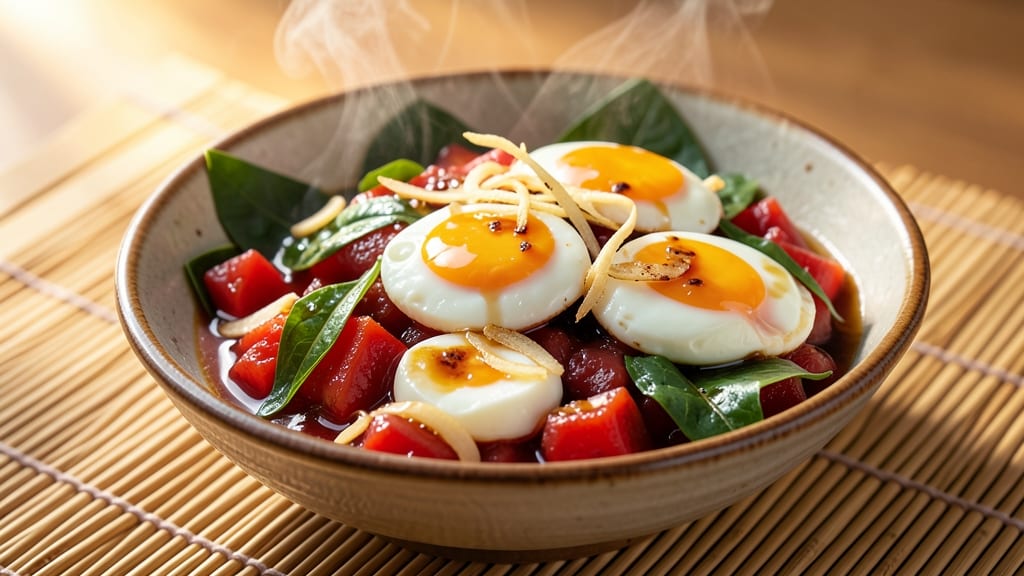
This tomato egg Chinese recipe made with lau delivers the perfect balance of crispy, caramelized edges and silky egg yolks that practically melt in your mouth. ✨ The secret lies in stir-frying the tomatoes until deeply caramelized—what we call "lau"—before gently folding in perfectly poached eggs.
I developed this recipe after years of perfecting the art of wok hei (breath of the wok), and it's become a staple in my weeknight rotation.
The magic happens in the wok, where high heat transforms ordinary tomatoes into sweet, sticky caramelized pieces while keeping the eggs silky and intact.
This dish requires just a handful of ingredients—ripe tomatoes, eggs, garlic, ginger, and a touch of sugar—but each plays a crucial role in creating that signature Chinese restaurant flavor. The result is a dish that's both comforting and sophisticated, with just the right amount of tangy-sweet balance.
What you'll end up with is a plate of golden, crispy tomato pieces surrounding perfectly poached eggs with runny yolks that glisten under the light. The aroma alone will have everyone gathering around your table, and each bite delivers that perfect combination of textures and flavors.
This recipe is foolproof, delivering restaurant-quality results in under 30 minutes.
Serve it over steamed rice or with a side of noodles for a complete meal that feels indulgent yet simple. The beauty of this dish is its versatility—it works equally well as a main course or a flavorful side dish. Let's get cooking!
Ingredients for tomato egg chinese recipe made with lau
Four eggs, tomatoes, and a handful of pantry staples transform into crispy, caramelized bites of Chinese restaurant magic.
| Ingredient | Amount | Notes |
|---|---|---|
| Large Eggs 🥚 | 4 whole | Room temperature for perfect poaching |
| Ripe Tomatoes 🍅 | 4 medium | Heirloom or beefsteak preferred |
| Garlic Cloves 🧄 | 3 cloves | Minced for aromatic base |
| Fresh Ginger 🌿 | 1 inch | Julienned for bright flavor |
| White Sugar 🍚 | 1 tbsp | Balances tomato acidity |
| Light Soy Sauce 🥢 | 1 tbsp | For umami depth |
| Sesame Oil 🫒 | 1 tsp | Toasted for nutty aroma |
| Vegetable Oil 🫒 | 2 tbsp | High smoke point for stir-frying |
| Salt 🧂 | ½ tsp | Kosher salt for seasoning |
| Black Pepper 🌶️ | ¼ tsp | Freshly ground for heat |
| Green Onions 🧅 | 2 whole | Sliced for garnish |
| Cornstarch 🌾 | 1 tsp | For crispy tomato texture |
| Steamed White Rice 🍚 | 2 cups | For serving (optional) |
The tomatoes are the star—heirloom or beefsteak hold up best to caramelization. Trader Joe's or local farmers markets usually have great options. Look for ones that are ripe but still firm, with vibrant color. The garlic and ginger should be fresh—no musty smells. I always grab extra ginger because it keeps for weeks in the freezer. For the eggs, room temperature is key—cold eggs won't poach properly. If you're short on time, just take them out 15 minutes before cooking.
No heirloom tomatoes? Roma or vine-ripened grocery store tomatoes work just fine—just cut them into smaller pieces. Running low on soy sauce? Coconut aminos gives a similar flavor profile. The cornstarch is non-negotiable for that crispy texture—Arrowhead brand is my go-to, but any cornstarch works. If you don't have sesame oil, toasted sesame seeds sprinkled at the end add that nutty aroma. The green onions can be subbed with chives if that's what you've got. For extra crispiness, toss the caramelized tomatoes in crushed potato chips before serving.
This dish reheats beautifully—just pop it in a 350°F oven for 5 minutes to revive the crispiness. Keeps for 3 days in the fridge, though it's best enjoyed fresh. I always make extra because the leftovers make amazing fried rice the next day. Store in an airtight container with parchment paper between layers to keep everything crisp. The eggs are best made fresh, but you can prep the tomato mixture ahead and store it separately for 2 days—just reheat before adding the eggs.
Why You'll Love This Recipe
- Pantry Staples Only: I swear by this when I forget to grocery shop. Eggs, tomatoes, garlic, ginger—stuff I always have lurking in my fridge or pantry. No fancy imports, no last-minute runs. The sugar just balances the acidity like magic.
- Sweet-Savory Magic: That ginger-garlic base? It’s the secret weapon. The tomatoes caramelize into something almost jam-like, while the eggs stay silky with just a hint of crisp. Honestly, it’s the kind of dish that makes you pause mid-bite to wonder why you don’t eat it more often.
- Leftover Reinvention: Make a big batch on Sunday, and you’ve got breakfast, lunch, or a quick dinner covered. Cold slices in toast? Check. Stir-fried with rice? Done. Even my picky son sneaks seconds when it’s reheated—(yes, even on a Tuesday night).
- Lau’s Lazy Genius: Between us, the lau (that simple egg wash) is what turns this from good to "I’ll make it again." No flipping, no fuss—just crack, dip, and fry. The eggs stay whole, the tomatoes stay tender, and I’m not scrubbing a pan for an hour. One sheet pan, one spatula, done.
Step-by-step instructions for crispy tomato egg cups with lau
Here's how to create those irresistible crispy tomato shells filled with silky egg brilliance.
🍳 Step 1: Prepare the Tomato Shells
Cut the 4 medium ripe tomatoes in half horizontally and scoop out the seeds and pulp using a spoon, leaving about ¼-inch thick shells. Place the shells on a paper towel-lined plate and sprinkle with ½ teaspoon salt and 1 teaspoon cornstarch. This creates a crispy exterior while keeping the inside tender.
Let them sit for 10 minutes while you prep the rest. The cornstarch works its magic during this time, ensuring those perfect crunchy edges. I always press down gently on the shells with my fingers to help them crisp up evenly—this is where the magic happens for that restaurant-quality texture.
🍳 Step 2: Build the Flavorful Tomato Filling
Heat 2 tablespoons vegetable oil in a skillet over medium heat. Add the 3 minced garlic cloves and 1-inch julienned fresh ginger, cooking for 30 seconds until fragrant. Add the scooped tomato pulp and cook for 3-4 minutes until softened.
Stir in the 1 tablespoon light soy sauce, 1 tablespoon white sugar, and ¼ teaspoon black pepper. Let it simmer for 2 minutes until the mixture thickens slightly and the sugar caramelizes just a bit. This step builds the umami depth that makes the dish sing—don't skip it!
🍳 Step 3: Fry the Tomato Shells to Golden Perfection
Heat 1 tablespoon vegetable oil in a clean skillet over medium-high heat. Place the tomato shells cut-side down and fry for 2-3 minutes until the edges turn golden brown and crispy. Flip carefully and cook another 1-2 minutes until the other side is lightly browned.
Real talk: This is where most home cooks mess up. Don't overcrowd the pan or the shells won't crisp properly. You want them to sizzle gently—if they're smoking, reduce the heat slightly. Remove and drain on paper towels, keeping them warm while you prepare the egg filling.
👨🍳 Step 4: Create the Silky Egg Filling
In a bowl, whisk together the 4 whole large eggs (room temperature is key for perfect poaching) with 1 teaspoon toasted sesame oil. The eggs should be well combined but still slightly runny—this creates that luxurious, silky texture we're after.
Here's the thing—don't overmix. Just a few strokes until everything is incorporated. You want the yolk to remain vibrant and creamy, not scrambled. This is the moment that matters: the contrast between the crispy tomato shell and the velvety egg filling is what makes this dish special.
🥘 Step 5: Assemble and Serve
Fill each tomato shell with the egg mixture, pressing down gently to create a dome shape. Return the filled shells to the skillet over low heat for 1-2 minutes until the eggs are just set but still runny in the center. This ensures that perfect balance of set and silky egg.
Garnish with sliced 2 whole green onions and serve immediately over 2 cups steamed white rice if desired. The contrast of the warm, crispy tomato shells with the cool, creamy egg filling is what makes this dish so addictive. Enjoy while everything is hot—this isn't something that waits!
Pro Tips For Making Tomato Egg Chinese Recipe Made With Lau
- CRACK EGGS INTO HOT WATER: I learned this the hard way—cracking eggs directly into the pan makes them scatter like a toddler’s temper tantrum. Instead, drop them into a small bowl of hot water first (just off-boil), then slide them into the wok in one smooth motion. The water keeps the whites intact, and the heat preps them for that perfect silky curd. Works every time, even if you’re as clumsy as I am.
- CUT TOMATOES SMALLER THAN YOU THINK: Big tomato chunks turn to mush in this dish, no matter how gentle you are. Dice them into ¼-inch pieces—small enough to soften quickly but not so fine they disappear into the sauce. My grandmother swore by this, and she was right: the texture stays bright and juicy, not sad and mushy.
- STOP STIRRING WHEN IT LOOKS DONE: The second the eggs start to set and the tomatoes release their juice, walk away. I know, I know—it’s unnatural to leave food unattended—but constant stirring after this point turns the eggs rubbery. Let the wok’s residual heat finish the job in 10 seconds. Trust me, your future self will notice the difference.
- USE GINGER-GARLIC PASTE (IF SHORT ON TIME): Grated ginger and minced garlic burn faster than you can blink, especially when you’re juggling eggs and tomatoes. Skip the fresh prep and use a high-quality paste—just 1 teaspoon each. It’s not cheating; it’s a shortcut that still delivers the same aromatic punch. (Yes, even if you’re impatient like me.)
Troubleshooting your tomato egg chinese recipe made with lau
Tomato Shells Too Soft
If your tomato shells aren’t crispy enough, it’s likely because they didn’t dry properly or the oil wasn’t hot enough. Let the shells sit for 15 minutes (not just 10) on a wire rack to ensure maximum moisture evaporation.
For extra crispiness, toss them in 1 tsp cornstarch again after frying. I’ve also found that using a nonstick skillet with a light coating of oil helps prevent sticking while maintaining high heat. 🔥
Eggs Overcooking
Overcooked eggs ruin the dish’s silky texture. The key is low heat—keep the filled shells on low-medium heat for just 1-2 minutes until the edges are set but the center remains runny.
If your eggs are cooking too fast, reduce the heat further or cover the skillet with a lid to trap warmth. I always check the doneness by gently shaking the pan—if the egg moves slightly, it’s perfect. 💡
Tomato Filling Too Watery
A watery tomato filling happens when you don’t cook the pulp long enough. After adding the soy sauce and sugar, let it simmer uncovered for 3-4 minutes until the liquid reduces noticeably. If it’s still too thin, stir in ½ tsp cornstarch mixed with 1 tsp water to thicken it.
I’ve also had success adding 1 tsp grated carrot or potato to absorb excess moisture. 🥄
Shells Breaking When Filled
Thin tomato shells often crack when filled with egg. To prevent this, press the shells gently with your fingers after scooping to firm them up. For extra strength, brush the inside with a light egg wash (1 egg white + 1 tsp water) before filling.
If they still break, use slightly thicker shells (leave ⅓-inch walls) and fill them in stages. 💪
Uneven Caramelization
If your tomato filling isn’t caramelizing evenly, you’re likely not cooking it long enough or at the right temperature. After adding the soy sauce and sugar, maintain medium heat for 4-5 minutes**, stirring occasionally.
For deeper caramelization, add ½ tsp balsamic vinegar at the end—it enhances the sweetness. I also recommend using a wide, shallow skillet to maximize surface area for browning. ✨
Flavor Too Mild
If the dish lacks depth, boost the umami with ½ tsp fish sauce or 1 tsp oyster sauce in the filling. For brightness, add ½ tsp rice vinegar or a pinch of Sichuan peppercorns (lightly toasted) to the egg mixture.
I’ve also found that a sprinkle of toasted sesame seeds on top adds nutty complexity. Don’t forget to taste as you go—adjust seasonings gradually! 🌶️
Nutrition facts
Frequently asked questions
What exactly is "lau" in this Chinese tomato egg recipe?
"Lau" refers to the traditional Chinese cooking technique of caramelizing ingredients until they reach a deep golden-brown color—what we call "wok hei" or "breath of the wok." In this recipe, it means stir-frying the tomatoes until they become sweet, sticky, and slightly crispy at the edges. This technique enhances the natural sugars in the tomatoes while building rich umami flavors.
Can I make this recipe without heirloom tomatoes?
Roma tomatoes or even standard grocery store tomatoes work perfectly—just cut them into smaller, uniform pieces. The key is using ripe tomatoes that hold their shape during cooking. If your tomatoes are very watery, pat them dry with a paper towel before scooping to prevent soggy shells.
How do I get the eggs perfectly silky instead of scrambled?
Use room-temperature eggs and whisk them gently with just 1 teaspoon sesame oil—no overmixing! Cook on low heat for 1-2 minutes after filling the shells, and avoid stirring. The eggs should be just set around the edges with a runny center. If they cook too fast, reduce the heat or cover the pan to trap warmth.
What's the best way to store leftovers?
Store the filled tomato shells separately from the tomato pulp in airtight containers. The shells keep for 2 days at room temperature (best eaten within 1 day for maximum crispiness), while the pulp can be refrigerated for 3 days. Reheat the shells in a 350°F oven for 5 minutes to restore crispness.
Can I make this vegetarian?
Yes! Replace the eggs with silken tofu or firm tofu cubes, lightly pan-fried with a touch of soy sauce. For extra richness, add mushrooms or bell peppers to the tomato mixture. The texture will be different but still delicious—just expect a firmer bite than the original egg version.