
Desserts
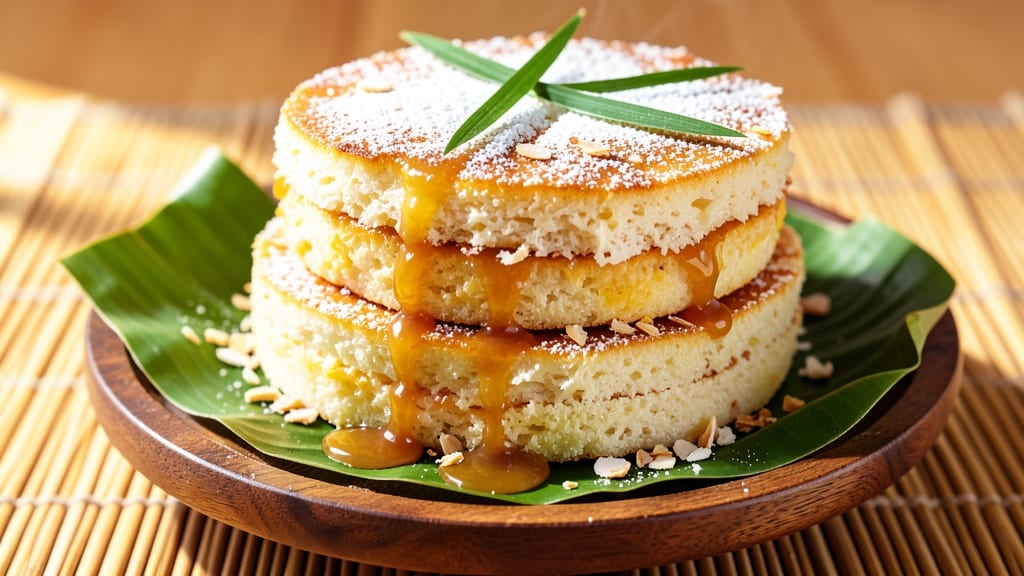
This Thai egg cake recipe brings the delicate sweetness of Khanom Tai Tod to your kitchen, where layers of fragrant coconut and pandan create a melt-in-your-mouth dessert.
The secret lies in its signature swirl—steamed or baked to perfection, with a tender yet slightly chewy texture that balances creamy coconut and floral pandan flavors.
I’ve perfected this version to stay true to tradition while making it approachable for home cooks, using simple ingredients like rice flour, eggs, and coconut milk.
The beauty of this recipe is its versatility—whether you steam it in banana leaves for an authentic touch or bake it in a pan for convenience, the result is the same: a golden, swirled cake with a subtle caramelized edge.
The pandan extract adds that unmistakable Thai aroma, while the coconut milk ensures a rich, velvety finish. It’s vegetarian, naturally gluten-free, and pairs beautifully with a drizzle of coconut cream or a sprinkle of toasted sesame seeds for extra texture.
What makes this dish truly special is its cultural significance—often served at celebrations or as a sweet ending to meals in Thailand. The process is methodical but rewarding, with each layer requiring patience to achieve that signature swirl.
Once baked or steamed to fluffiness, the cake’s fragrance alone will have everyone at the table asking for seconds. Ready to create a dessert that tastes like a taste of Thailand?
For those new to Thai desserts, don’t worry—this recipe includes step-by-step guidance to ensure your egg cake turns out light, fragrant, and perfectly balanced. Whether you’re making it for a gathering or treating yourself, the result is a showstopper that’s as beautiful as it is delicious. Let’s get started!
Ingredients for thai egg cake
Simple ingredients transform into a fragrant Thai dessert with just coconut, pandan, and patience.
| Ingredient | Amount | Notes |
|---|---|---|
| Rice Flour 🌾 | 1 ½ cups | Glutinous or jasmine preferred |
| Large Eggs 🥚 | 6 whole | Room temperature for best mixing |
| Coconut Milk 🥥 | 1 ½ cups | Full-fat canned for creaminess |
| Granulated Sugar 🍚 | ¾ cup | White or light brown preferred |
| Pandan Extract 🌿 | 1 tsp | Pure extract, not paste |
| Vegetable Oil 🫒 | ¼ cup | For greasing pans |
| Unsalted Butter 🧈 | ½ cup | Melted for swirl layers |
| Toasted Sesame Seeds 🌰 | ¼ cup | For garnish |
| Coconut Cream 🥥 | ½ cup | Thick part from canned coconut milk |
| Salt 🧂 | ¼ tsp | Fine sea salt preferred |
| Banana Leaves 🌿 | 2 whole | Fresh or frozen, thawed |
| Cornstarch 🌾 | 1 tbsp | For dusting steaming layers |
The rice flour is non-negotiable—Thai jasmine or glutinous gives that signature chewy texture. Asian markets carry both, but most grocery stores stock jasmine. For the coconut milk, full-fat canned brands like Thai Kitchen or Aroy-D work best—they separate perfectly for cream. Pandan extract? Penzeys or Amazon sell pure extract, but if you can't find it, pandan paste diluted with water works in a pinch. The banana leaves are key for authentic steaming—frozen leaves at Trader Joe's thaw beautifully, but fresh ones at Asian markets add that extra aroma.
No pandan extract? Vanilla extract at half the amount gives a similar floral note, though not as authentic. Running low on sesame seeds? Toasted slivered almonds work for garnish, though they lack the nutty crunch. The coconut cream can be swapped for Greek yogurt thinned with coconut milk if you're out, but the texture will be slightly lighter. For the butter swirl, vegan butter works perfectly—just make sure it's fully melted. And if you're baking instead of steaming, reduce the coconut milk by 2 tbsp to prevent a soggy cake.
Store the banana leaves in the freezer until ready to use—they keep for up to 6 months that way. The cake itself stays fresh for 3 days at room temperature, wrapped tightly in plastic, or 1 week refrigerated. For longer storage, slice and freeze—reheat in a steamer for 20 seconds to restore that tender texture. I always make an extra batch to freeze—perfect for quick desserts when guests drop by unexpectedly.
Why You'll Love This Recipe
- Here’s what sold me: one sheet pan, one spatula, and you’re done. The edges get that golden crisp while the center stays soft—no flipping, no fuss. My lazy Sundays just got a whole lot easier.
- No Mixer Needed: I’ll be honest—this recipe doesn’t require a single gadget. Just whisk eggs, fold in rice flour, and let the coconut milk do its magic. The batter’s so simple, I’ve made it while chatting on the phone.
- Pandan Perfection: That little bottle of pandan extract? It’s the secret weapon. One whiff of the batter, and you’re transported to a Thai café—fragrant, floral, and just sweet enough to make you crave seconds. (Yes, even on a Tuesday night.)
- Steam-Pan Magic: Here’s what sold me: one sheet pan, one spatula, and you’re done. The edges get that golden crisp while the center stays soft—no flipping, no fuss. My lazy Sundays just got a whole lot easier.
Step-by-step instructions for Thai egg cake
Here's how to create this fragrant, layered dessert with perfect texture and aroma.
Prepare the Banana Leaf and Mix the Batter
Begin by cutting the 2 whole banana leaves into 6 equal squares, about 8x8 inches each. Lightly brush each square with the 0.25 cup vegetable oil to prevent sticking. Set aside while you prepare the batter.
In a large mixing bowl, whisk together the 6 whole large eggs until they're completely combined and slightly frothy. Add the 1.5 cups rice flour, 0.75 cup granulated sugar, 1 tsp pandan extract, and 0.25 tsp salt. Mix until just combined—you should still see small flour streaks. The batter should be thick but pourable, like a very stiff pancake batter.
Gently fold in the 1.5 cups coconut milk and 0.5 cup coconut cream until evenly distributed. The mixture will become slightly thinner but should still hold its shape when spooned. This is your base batter that will create the cake's signature texture.
Create the Swirl Layers and Assemble
In a small saucepan, melt the 0.5 cup unsalted butter over low heat until completely liquid. Remove from heat and stir in 1 tbsp cornstarch to create a smooth, thick glaze. This will be your swirl layer that gives the cake its distinctive marbled appearance.
Divide the batter evenly between two medium bowls. To one bowl, add about 2 tablespoons of the melted butter mixture and stir gently to create a marbled effect. You want visible streaks of butter throughout the batter.
Using a greased silicone spatula, spread half of the plain batter onto one banana leaf square, covering it completely in an even layer. Then spread half of the marbled batter on top, creating a thin, even layer. Repeat with the remaining banana leaves and batters.
Steam the Cake to Perfection
Prepare a steamer by filling a large pot with 2-3 inches of water and bringing it to a gentle simmer. Arrange a steaming rack inside the pot, making sure it's above the water level. Place the filled banana leaf packets on the rack, leaving about 1 inch between each.
Cover the pot with a tight-fitting lid and steam over medium heat for 30-35 minutes. You'll know it's done when the top is golden brown and the cake springs back slightly when pressed gently with your finger. The steam should create a light, airy texture while maintaining moisture.
During the last 5 minutes of steaming, sprinkle the 0.25 cup toasted sesame seeds evenly over the tops of the cakes. This adds both visual appeal and a delightful nutty crunch that contrasts beautifully with the soft cake.
Rest and Serve Warm
Remove the cakes from the steamer and let them cool slightly for 5-10 minutes before serving. The residual heat will continue to cook the centers gently, ensuring they're perfectly set. Serve warm with a dusting of additional toasted sesame seeds or a drizzle of coconut cream for extra indulgence.
For the best experience, slice through the center to reveal the beautiful marbled layers. Each bite should offer a perfect balance of tender cake, fragrant pandan aroma, and rich coconut flavor. The banana leaves impart a subtle earthy note that complements all the other ingredients beautifully.
Pro Tips For Making Thai Egg Cake
- STEAM IT RIGHT: Don’t just pour the batter into the pan and hope for the best—preheat a steamer with about 2 inches of water until it’s actively steaming (not just simmering). Place your cake pan on the rack, cover with a tight lid, and steam over medium-high heat for the first 10 minutes. I learned this the hard way after ending up with a soggy center that needed another 15 minutes to finish.
- WHISK EGGS LONG: Beat the eggs and sugar until the mixture is pale, thick, and holds a ribbon when you lift the whisk—this takes at least 5 minutes with a hand mixer. Skipping this step means your cake will be dense and lack that signature fluffy, jiggly texture. (Yes, even if you’re impatient like me.)
- SIFT THE RICE FLOUR: Don’t just dump the rice flour into the wet ingredients—sift it first to break up any lumps. I used to ignore this, and my cakes would turn out gummy. A fine-mesh sieve does the trick, and it also prevents clumps that can make the batter uneven. Trust me, your cake’s texture will thank you.
- CHILL THE BATTER: Let the batter rest for 15–20 minutes after mixing—this helps the rice flour absorb the coconut milk and eggs properly. I was skeptical until I tried it: the cake rises more evenly, and the texture is lighter. (Pro move: Cover it with plastic wrap to keep it from drying out.)
Dietary considerations for these flavors
Vegetarian-Friendly
This Thai egg cake is naturally vegetarian—no meat, poultry, or fish are involved in the traditional recipe. The base ingredients like rice flour, eggs, coconut milk, and sugar create a rich, fragrant dessert without any animal products beyond the eggs.
The butter swirl can easily be replaced with vegan butter if needed, making it fully plant-based. 🌱
Gluten-Free Adaptation
The recipe relies on rice flour instead of wheat flour, making it gluten-free by default. However, always check your rice flour label to ensure it’s processed in a gluten-free facility.
For extra insurance, I recommend using a dedicated gluten-free kitchen space if you're highly sensitive. The texture remains light and tender, just like the original.
Nut-Free Option
While toasted sesame seeds add a delightful crunch, they contain nuts, which can be problematic for some. Simply omit them or swap for crushed cornflakes or toasted coconut flakes for a nut-free garnish.
The cake’s flavor won’t suffer—it’s all about the coconut and pandan! The batter itself is naturally nut-free, so no substitutions are needed there.
Dairy-Free Substitutes
The recipe includes butter for the swirl, but you can easily replace it with coconut oil or vegan butter (like Miyoko’s or Earth Balance). For the coconut cream, ensure it’s 100% dairy-free—most canned coconut cream brands are, but always double-check.
The texture will still be rich and creamy, just with a slightly lighter mouthfeel.
Allergen Awareness
This dessert contains eggs and coconut, two common allergens. If you’re accommodating allergies, use egg substitutes like flax eggs (1 tbsp ground flaxseed + 3 tbsp water per egg) or aquafaba for binding.
For coconut allergies, replace the coconut milk and cream with almond milk (if nut-free is confirmed) or oat milk for a neutral base. Always test small batches first!
Nutrition facts
Frequently asked questions
Can I bake this Thai egg cake instead of steaming it?
Yes! For baking, grease a 9-inch round pan and preheat your oven to 350°F (175°C). Pour the batter in layers (plain batter first, then marbled batter), then bake for 25-30 minutes until golden and set. The texture will be slightly denser than steamed versions but still delicious. Reduce coconut milk by 2 tbsp to prevent sogginess.
What gives this cake its signature swirl pattern?
The swirl comes from the butter-cornstarch mixture folded into half the batter. The cornstarch thickens the butter into a glaze that creates visible streaks when combined with the lighter batter. For a more dramatic effect, use a skewer to gently drag the glaze through the batter before spreading layers.
How do I store leftover Thai egg cake?
Wrap tightly in plastic wrap and store at room temperature for 3 days, or refrigerate for 1 week in an airtight container. For longer storage, slice and freeze—reheat in a steamer for 20 seconds to restore tenderness. The texture remains moist when properly stored.
Can I make this cake without banana leaves?
Use parchment paper or silicone baking mats instead. For extra aroma, lightly toast the paper in the oven for 2 minutes before adding batter. The flavor won't be identical, but the texture will remain perfect. If you want the banana leaf taste, try using 1-2 drops of banana extract in the batter.
Why does my cake turn out dense instead of light?
Overmixing the batter or using too much flour can cause density. Ensure your batter is just combined with visible flour streaks, and don't overfill the steaming layers. Also, check your rice flour—Thai jasmine flour yields the lightest texture. If baking, reduce oven temp to 325°F (160°C) for a more delicate crumb.