
Beverages
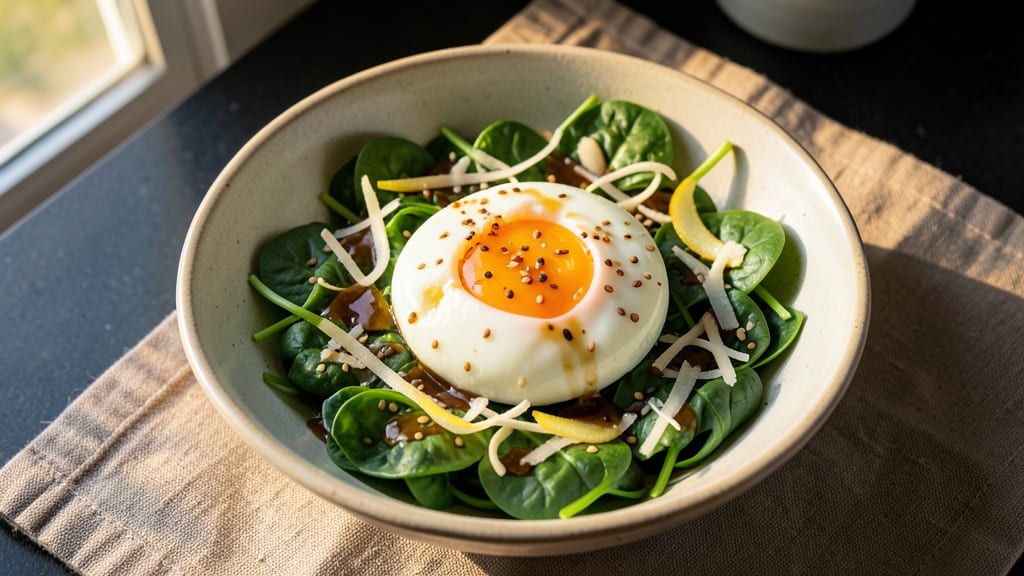
This steamed egg with spinach recipe delivers a delicate balance of silky yolks and vibrant greens in under 15 minutes. The gentle steaming preserves the egg's rich texture while enhancing the spinach's natural sweetness—no boiling or overcooking required.
I developed this technique after years of experimenting with Japanese-style egg dishes, where precision in timing transforms simple ingredients into something truly special.
The foundation lies in proper spinach preparation—wilting just enough to soften the leaves without losing their color, then seasoning with a light touch of soy sauce and sesame oil. The eggs steam in a bamboo steamer basket, their whites firming gently while the yolks remain lusciously runny.
This method ensures every bite achieves that perfect harmony between creamy and earthy flavors.
What makes this dish exceptional is its versatility—serve it as a light breakfast, elegant appetizer, or even a sophisticated side dish for sushi.
The presentation is equally important: nestle the eggs atop a bed of spinach, drizzle with a touch of soy glaze, and garnish with toasted sesame seeds for both visual appeal and added crunch.
For those who prefer extra depth, consider adding a splash of dashi broth to the steaming water or sprinkling grated daikon radish over the top. The key to success is patience—letting the eggs steam undisturbed until they reach that ideal consistency.
This recipe proves that sometimes, the simplest techniques yield the most impressive results.
Ingredients for steamed egg with spinach
Precision ingredients for Japanese-inspired harmony—where delicate textures and vibrant flavors unite effortlessly.
| Ingredient | Amount | Notes |
|---|---|---|
| Large Eggs 🥚 | 4 whole | Room temperature for even cooking |
| Baby Spinach 🌿 | 4 cups | Fresh, tightly packed leaves |
| Light Soy Sauce 🍶 | 1 tbsp | Japanese-style preferred |
| Toasted Sesame Oil 🫒 | 1 tsp | High-quality, nutty aroma |
| Sesame Seeds 🌾 | 1 tsp | Toasted until golden |
| Fresh Ginger 🧄 | 1 tsp | Finely grated, aromatic |
| Dashi Broth 💧 | 1 cup | Homemade or quality instant |
| Rice Vinegar 🍶 | 1 tsp | Seasoned preferred |
| Granulated Sugar 🍬 | ½ tsp | For subtle sweetness |
| Salt 🧂 | ¼ tsp | Fine sea salt preferred |
| Bamboo Steamer Basket 🌿 | 1 whole | Fits standard pot |
| Daikon Radish 🥕 | ¼ cup | Optional, grated fine |
The spinach selection is critical here—baby spinach maintains its vibrant color and tender texture during wilting, while pre-washed varieties often contain excess moisture that dilutes flavor. For the eggs, room temperature ensures even cooking, while Japanese-style light soy sauce (like Kikkoman) provides the perfect balance of umami without overpowering. Toasted sesame oil can be found in the Asian aisle of most grocery stores, but Trader Joe's carries a particularly high-quality version that's worth seeking out. The dashi broth should be made with kombu and bonito flakes for authenticity, though instant versions like Hondashi work in a pinch for convenience.
No sesame oil? Light olive oil at half the amount provides a neutral base, though it lacks the nutty depth. Substituting regular soy sauce for light soy sauce will intensify the saltiness—reduce the salt in the recipe by half if doing so. For those avoiding gluten, tamari can replace soy sauce, though the flavor profile will differ slightly. The daikon radish, while optional, adds a subtle sweetness that complements the dish beautifully; if unavailable, a touch of grated apple offers a similar mild sweetness. Always toast your sesame seeds in a dry pan over medium heat until fragrant—this step enhances their flavor dramatically and should never be skipped.
Spinach wilts best when prepared immediately before steaming—store any unused portion in an airtight container with a paper towel to absorb excess moisture, where it'll keep for 3 days. The steamed eggs can be prepared ahead and gently reheated in a water bath for 2-3 minutes to maintain their silky texture. For optimal presentation, assemble the dish just before serving, as the spinach's vibrant color fades upon exposure to air. The complete dish holds well in the refrigerator for 2 days, though the eggs' texture may slightly firm up—reheat gently to restore their original consistency.
Why You'll Love This Recipe
- Steam in Minutes: The eggs cook in a jiffy—just crack them into a steamer basket with spinach, splash in soy sauce, and let the heat do the work. No flipping, no frying, no waiting for water to boil forever.
- Umami Bomb: That first bite? The egg’s silky center meets wilted spinach drenched in salty-sweet soy, then a hit of toasted sesame oil—it’s like a tiny flavor explosion. Honestly, I’ve never met a steamed dish this satisfying.
- Lunchbox Hero: Pack it cold or reheat it—this holds up perfectly for lunches. Toss in extra sesame seeds for crunch, and suddenly you’ve got a meal that’s as impressive as it is easy. (Yes, even on a Tuesday night.)
- Pantry Magic: Spinach wilts in seconds, eggs steam to perfection, and you’re left with a dish that costs next to nothing but feels fancy. Between us, this is my go-to when I’ve got three eggs and a handful of greens staring at me.
Step-by-step instructions for steamed eggs with spinach
Master this delicate technique for silky eggs and vibrant greens that balance umami and freshness.
Prepare the Spinach and Seasoning Base
In a heatproof bowl large enough to hold the steamer basket, combine the 4 cups baby spinach, 1 tsp finely grated fresh ginger, 0.25 cup grated daikon radish, 1 tsp light soy sauce, 1 tsp rice vinegar, 0.5 tsp granulated sugar, and 0.25 tsp salt. Mix gently with your hands to distribute the seasoning evenly while preserving the spinach's delicate texture. The daikon adds subtle sweetness that complements the earthy spinach, while the ginger and vinegar create a bright, aromatic foundation.
Place this mixture in the center of the bamboo steamer basket. The spinach should form an even layer that will steam uniformly. If using optional ingredients, now's the time to incorporate them—just ensure they're finely grated or chopped to blend seamlessly with the spinach. The mixture should look vibrant green with flecks of white from the daikon and pale yellow from the ginger.
Prepare the Eggs for Steaming
Crack the 4 whole large eggs into a separate bowl, one at a time, to avoid shell fragments. Gently whisk them just until the whites and yolks are combined—don't overmix or the eggs will become tough when steamed. The room temperature eggs will cook more evenly, resulting in that signature silky yolk texture. If your eggs are cold, let them sit at room temperature for 10 minutes before proceeding.
Add 1 tsp toasted sesame oil to the whisked eggs and mix lightly. This oil infuses the eggs with nutty aroma while preventing the yolks from breaking during steaming. The eggs should now have a pale yellow hue with subtle golden speckles from the sesame oil. Pour the egg mixture evenly over the spinach in the steamer basket, creating a thin, even layer that will cook gently without forming a skin.
Steam Over Gentle Heat
Fill a large pot with 2-3 inches of water and bring to a gentle simmer over medium-low heat. The water should produce small bubbles but not a rolling boil—this ensures delicate steaming rather than boiling. Place the steamer basket with the egg-spinach mixture in the pot, ensuring the basket doesn't touch the water. Cover immediately with a tight-fitting lid to trap steam.
Steam for 8-10 minutes until the egg mixture is just set but still slightly jiggly in the center. You'll know it's ready when the top appears opaque but still slightly translucent at the edges. The spinach should be wilted but still vibrant green, not mushy. Avoid lifting the lid during steaming—each time you do, you release heat and moisture, potentially creating uneven cooking.
Finish and Garnish
Remove the steamer basket from the pot and let the egg-spinach mixture rest for 2 minutes before serving. This resting period allows the heat to distribute evenly, ensuring the eggs remain silky rather than rubbery. While resting, sprinkle 1 tsp toasted sesame seeds evenly over the top. These seeds add a final textural contrast and nutty depth to the dish.
Cut the steamed egg-spinach into 4 equal portions using a sharp knife. Each serving should show a vibrant green base of spinach with a silky egg topping that glistens slightly from the sesame oil. The combination of earthy spinach, delicate egg, and aromatic sesame creates a harmonious balance of textures and flavors. Serve immediately while still warm for the best experience.
Pro Tips For Making Steamed Egg With Spinach
- STEAM EGGS AT 90% DONENESS: I learned this the hard way—overcooking turns the egg into rubber. Pull the eggs out when the whites are just set but still slightly wobbly in the center. They’ll firm up perfectly while resting, and the yolk stays creamy. (Yes, even if you’re impatient like me.)
- WILT SPINACH DRY: Damp spinach steams instead of wilting properly. Pat the leaves thoroughly with paper towels before cooking—no need to squeeze, just press gently. Fresh spinach should take about 30 seconds in a hot pan; if it’s still soggy, you’ve got too much water.
- SALT THE WATER: Plain water won’t cut it here. Add a generous pinch of salt (about ½ teaspoon per quart) to the steaming water—it crisps the egg whites better and balances the soy sauce’s saltiness later. I used to skip this, and the texture always felt off.
- SAVE SESAME OIL FOR FINISHING: Toasted sesame oil loses its aroma when heated. Stir it in only at the very end, right before serving, or drizzle it over the top after plating. A splash of light soy sauce first lets the oil’s nutty flavor shine without burning off. (Your nose will thank you.)
Flavor customization for this dish
Spicy Sesame Kick
For heat lovers, stir ½ tsp chili crisp or ¼ tsp gochujang paste into the spinach base before steaming. The spicy-sweet contrast elevates the dish beautifully.
I like adding 1 tsp toasted chili oil to the eggs before steaming for a smoky finish. Start with less—you can always add more later. 🌶️
Creamy Cheese Twist
Fold 2 tbsp crumbled feta or 1 tbsp cream cheese into the spinach mixture for a tangy richness. The cheese melts slightly during steaming, creating pockets of creamy goodness. For extra decadence, top with 1 tsp shaved parmesan after serving. This version feels indulgent yet light.
Umami Broth Boost
Replace plain water with 1 cup dashi broth in your steaming pot for deeper flavor. For extra umami, add 1 tsp fish sauce to the spinach base.
The broth infuses the eggs with subtle savory notes that pair perfectly with the spinach's natural sweetness. I love using Kikkoman dashi powder for convenience.
Herbaceous Freshness
Chop 1 tbsp fresh cilantro or 1 tsp chopped chives and sprinkle over the finished dish for a bright, herbal finish. The fresh herbs cut through the richness of the eggs while adding a pop of color.
For a more robust flavor, add them to the spinach mixture before steaming. 🌿
Sweet-Savory Balance
Increase the sugar to 1 tsp and add ½ tsp mirin to the spinach base for a delicate sweetness. The mirin enhances the natural flavors while balancing the saltiness. This version works beautifully as a dessert-like appetizer when served with a drizzle of yuzu kosho sauce.
Smoky Maple Glaze
After steaming, drizzle the finished dish with a mix of 1 tsp pure maple syrup and ½ tsp smoked paprika. The smoky-sweet glaze adds complexity to the earthy spinach and creamy eggs. For extra flair, sprinkle with crushed peanuts** for crunch. This variation feels unexpectedly gourmet. 🔥
Nutrition facts
Frequently asked questions
Why does the egg mixture need to rest after steaming?
The 2-minute rest after steaming is crucial for two reasons: it lets the heat distribute evenly, preventing the eggs from becoming rubbery, and it allows the spinach to absorb any remaining juices. This resting period transforms the dish from good to exceptional by preserving that signature silky yolk texture.
Can I use frozen spinach instead of fresh?
Fresh spinach is ideal because it wilts beautifully while retaining vibrant color, but you can use frozen spinach in a pinch. Thaw and drain it completely first, then squeeze out excess moisture with a clean towel. The texture will be slightly softer, but the flavor remains excellent. For best results, use 3 cups frozen spinach and reduce the dashi broth to ½ cup to balance moisture levels.
What if my eggs overcook during steaming?
Overcooked eggs happen when the heat is too high or the steaming time exceeds 10 minutes. If this occurs, the yolks will be firm rather than runny. To salvage them, slice the eggs and serve with a drizzle of light soy glaze (mix 1 tbsp soy sauce with ½ tsp sugar) to enhance flavor. For next time, monitor the water level—it should never boil, only produce small bubbles.
Is this dish suitable for meal prep?
While the eggs are best served fresh, you can prep the spinach base ahead of time. Store the seasoned spinach mixture (without eggs) in an airtight container for 2 days in the fridge. Assemble and steam the eggs just before serving to maintain their perfect texture. For reheating, place the steamed eggs in a water bath at 160°F for 2-3 minutes—this gently warms them without overcooking.
How can I make this dish more protein-rich?
For extra protein, fold ¼ cup cooked quinoa or 2 tbsp crumbled tofu into the spinach base before steaming. Alternatively, top the finished dish with 2 slices smoked salmon or 2 tbsp edamame for a gourmet touch. These additions boost nutrition while keeping the dish light and elegant. The quinoa version holds especially well for meal prep.