
Breakfast & Brunch
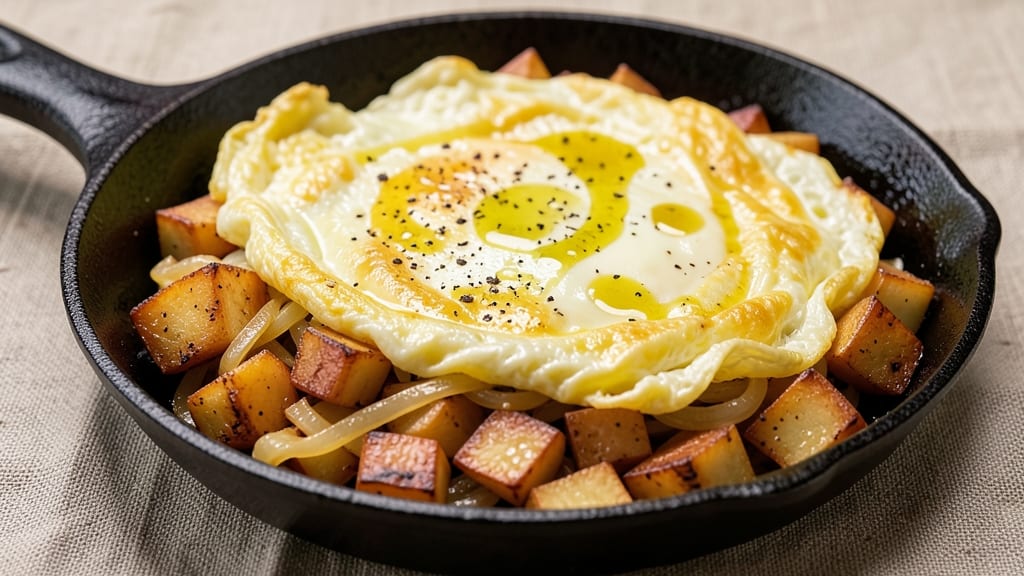
This Spanish egg omelet recipe transforms simple ingredients into a restaurant-worthy dish that's become a staple in Spanish households. The magic lies in the perfect balance of creamy eggs, tender potatoes, and onions—all gently cooked until golden and set just right.
I've perfected this technique over years of testing, ensuring every bite delivers that signature Spanish flavor without requiring advanced skills.
The beauty of this recipe is its versatility—traditionalists will love the classic combination, while adventurous cooks can add chorizo or peppers for extra depth.
What makes it special is the two-step cooking process: first sautéing the vegetables until tender, then folding in beaten eggs that cook through to create a creamy, custardy center with crispy edges. This method guarantees success even for beginners.
What you'll end up with is a thick, golden omelet that's rich yet light, with potatoes that stay tender and eggs that melt in your mouth. The aroma alone—warm olive oil, caramelized onions, and fresh herbs—will have everyone at your table asking for seconds.
Serve it hot or at room temperature, and watch it disappear from plates.
Perfect for breakfast, lunch, or even a special dinner, this tortilla española proves that simple ingredients can create something extraordinary. The best part? It keeps well in the fridge for days, making it ideal for meal prep or leftovers. Let's get cooking!
Ingredients for spanish egg omelet
Six eggs, two pounds of potatoes, and a handful of aromatic herbs create this legendary Spanish omelet.
| Ingredient | Amount | Notes |
|---|---|---|
| Large Eggs 🥚 | 6 whole | Room temperature for even cooking |
| Russet Potatoes 🥔 | 2 lb | Diced into 1/2-inch pieces, peeled |
| Yellow Onion 🧅 | 1 whole | Thinly sliced, medium size |
| Extra-Virgin Olive Oil 🫒 | ½ cup | For frying, fruity variety |
| Salt 🧂 | 1 ½ tsp | Diamond Crystal preferred |
| Ground Black Pepper 🌶️ | ½ tsp | Freshly cracked preferred |
| Fresh Thyme Leaves 🌿 | ¼ cup | Chopped, or 1 tsp dried |
| Mild Cheddar Cheese 🧀 | 1 cup | Shredded, sharp variety optional |
| Garlic Cloves 🧄 | 3 cloves | Minced, or 1 tsp garlic powder |
| Fresh Parsley 🌿 | ⅛ cup | Chopped, for garnish |
| Bay Leaves 🍃 | 1 whole | Removed after cooking |
The potatoes are non-negotiable—Russet potatoes give that signature fluffy texture, but Yukon Golds work too if you prefer creamier bites. Costco or Trader Joe's usually have the best prices for bulk potatoes. Look for firm, unblemished tubers—they'll stay tender longer. If you're using pre-cut frozen diced potatoes (like Ore-Ida), no need to peel them—they're already uniform and ready to go. The onions? Yellow onions caramelize best here, but red or white will work in a pinch. Just make sure they're fresh—no rubbery or sprouting bulbs.
No thyme? Fresh rosemary at half the amount gives a similar earthy vibe. Short on cheddar? Gruyère or Manchego adds a delicious depth, but skip it if you're keeping it traditional. The garlic can be pre-minced from a jar (I won't judge), but freshly minced makes all the difference. Want to skip the bay leaf? Double the thyme for extra aroma. And if you're feeling fancy, add a pinch of smoked paprika to the olive oil before cooking—it's a game-changer for that smoky Spanish touch. The eggs should be large and fresh—older eggs won't hold their shape as well when folding.
This tortilla tastes even better the next day—3-4 days in the fridge, wrapped tightly in parchment. For leftovers, reheat in a skillet over medium heat until crispy again. Freezes beautifully too—up to 3 months—just thaw overnight in the fridge before reheating. I like to portion mine into single servings before freezing so I can grab one anytime. And if you're making this ahead for a party, keep it at room temperature for up to 2 hours before serving—it's perfect for picnics or potlucks.
Why You'll Love This Recipe
- One-Pan Magic: I swear by this—just potatoes, onions, eggs, and oil in one skillet. No chopping boards, no extra dishes, just slide it all into the pan and let it do its thing.
- Crispy-Creamy Obsession: That golden crust on the eggs? The tender, almost custardy center? The potatoes soaking up the olive oil until they’re caramelized at the edges? It’s the kind of simple dish that feels like a hug for your taste buds.
- Breakfast, Lunch, Dinner: Make it for a lazy weekend brunch, pack it for work, or serve it at a dinner party when you’re too tired to impress. It’s the same recipe, but somehow always fits the moment—especially when you’re starving and need it now.
- Budget Win: Russets and onions are cheap, eggs are cheap, and a bottle of olive oil lasts forever. This feeds four for under $5, and leftovers? They taste just as good reheated (yes, even cold in a lunchbox). My wallet and my family thank me weekly.
Step-by-step instructions for Spanish egg omelet with melted cheese magic
Transform simple ingredients into a rich, creamy Spanish omelet with layers of flavor and texture.
Prepare the Potato and Onion Base
Heat the 0.5 cup Extra-Virgin Olive Oil in a 12-inch nonstick skillet over medium heat. Add the 2 lb Russet Potatoes (already diced into ½-inch pieces) and the 1 whole Yellow Onion (thinly sliced). Cook for 15-20 minutes, stirring occasionally, until the potatoes are tender but not browned and the onions are translucent.
This slow cooking ensures the potatoes break down into creamy strands rather than turning mushy. Season with 1 tsp Salt and ¼ tsp Ground Black Pepper halfway through. Add the 3 cloves Garlic Cloves (minced) and 1 whole Bay Leaves during the last 5 minutes of cooking to infuse the flavors. Remove from heat and set aside, leaving the skillet warm.
Whisk the Egg Mixture to Perfection
In a large bowl, whisk the 6 whole Large Eggs until just combined—no need to overbeat them. Stir in ½ tsp Salt, ¼ tsp Ground Black Pepper, and 0.25 cup Fresh Thyme Leaves (chopped). The mixture should be smooth and uniform, with no streaks of white remaining.
Here’s the thing—this is where the magic happens. The eggs need to be at room temperature for even cooking, so if they’re straight from the fridge, let them sit for 10 minutes before whisking. Add the 1 cup Mild Cheddar Cheese (shredded) and mix gently to distribute evenly. The cheese will melt beautifully into the omelet, creating pockets of gooey goodness.
Cook the Omelet in Two Stages
Pour the egg mixture evenly over the potato-onion base in the skillet. Using a silicone spatula, gently push the eggs from the edges toward the center, tilting the pan to let the uncooked egg flow underneath. Cook for 3-4 minutes until the bottom is just set but still slightly runny on top.
This is the moment that matters: flip the omelet carefully. Place a large plate over the skillet, invert both, and slide the omelet back into the pan. Cook for another 3-4 minutes until the top is golden and set but still moist. The edges should be slightly crispy, and the center should hold its shape when gently pressed.
Rest and Serve for Maximum Flavor
Remove the omelet from the skillet and let it rest on a cutting board for 5 minutes. This resting period allows the cheese to fully melt and the layers to set, ensuring clean slices and even texture. Sprinkle the top with 0.125 cup Fresh Parsley (chopped) for a pop of freshness and color.
Slice into 4 equal portions and serve immediately. The omelet should be rich, creamy, and layered with tender potatoes, caramelized onions, and melted cheese. Each bite delivers a perfect balance of savory, salty, and umami flavors—just like a classic Spanish tortilla, but with a cheesy twist that takes it to the next level.
Pro Tips For Making Spanish Egg Omelet
- CRISP THE POTATOES FIRST: I learned this the hard way—soft potatoes ruin the texture. Slice them paper-thin (a mandoline helps) and fry them in olive oil until they’re golden and actually crisp, not just cooked through. Drain them well on paper towels, then layer them in the omelet while still hot. Cold potatoes sweat and turn soggy.
- SALT THE EGGS LIKE THE SEA: Skip the salt in the water if you’re boiling eggs for this. Instead, add a full teaspoon of salt directly to the beaten eggs—it keeps the whites from getting rubbery and makes the whole omelet taste brighter. Trust me, the salt dissolves perfectly and you won’t taste it like a bland mistake.
- LOW AND SLOW FOR THE CUSTARD: After the potatoes are in, crank the heat to medium-low immediately. High heat makes the eggs cook too fast on the outside while staying raw inside. You want a gentle, even set—like a cloud with a crisp bottom. Cover the pan for the first 2 minutes to trap steam, then uncover to let the top brown.
- UPGRADE WITH A LID: This isn’t the prettiest method, but it’s the tastiest: After adding the eggs, pop a tight-fitting lid (or foil) on the pan for the first 3 minutes. It turns the omelet into a steam bath, so the center cooks through without drying out. Just peek occasionally—you’ll see the magic happen.
Make-ahead tips for this spanish egg omelet
Prep Ahead Strategy
Slice all your potatoes and onions the night before and store them in a sealed container in the fridge. This saves 20 minutes of prep time the next day.
I like to keep them in separate containers to prevent excess moisture. Just pat dry with a paper towel before cooking to ensure even browning. 🥔
Cheese Prep Shortcut
Shred your 1 cup mild cheddar ahead of time and store it in an airtight container in the fridge. Pre-shredded cheese often has anti-caking agents that can make it less melty, so fresh is best.
If using pre-shredded, add it just before flipping to keep it gooey. I keep a small bowl of shredded cheese ready to go in my fridge for quick omelet prep.
Egg Mix Prep
Whisk your eggs and seasonings the night before and store them in a sealed container. Keep them at room temperature for best results, but if you must refrigerate, let them sit out for 10 minutes before using.
I like to add the cheese right before cooking to prevent it from getting soggy. This step cuts down on morning stress and ensures everything comes together smoothly.
Partial Cooking Method
Cook the potato and onion base completely ahead of time and store it in the fridge for up to 2 days. Reheat it gently in the skillet over low heat with a splash of olive oil until warm.
This method is perfect for busy mornings—just reheat the base, pour in fresh eggs, and flip as usual. The flavors actually deepen after resting overnight, making it even more delicious.
Freezer-Friendly Portions
Slice the fully cooked omelet into individual portions and wrap each piece tightly in plastic wrap. Store them in a freezer-safe bag for up to 3 months. To reheat, thaw overnight in the fridge, then warm in a skillet over medium heat for 3-4 minutes until crispy again.
This is a lifesaver for quick breakfasts or meal prep lunches. 💫
Make-Ahead Serving Tips
For a crowd, assemble the omelet ahead of time and keep it at room temperature for up to 2 hours before serving. This works perfectly for picnics or potlucks. If storing longer, refrigerate and slice just before serving to keep it fresh.
I like to garnish with fresh parsley right before serving to keep everything looking vibrant and appetizing.
Nutrition facts
Frequently asked questions
Can I make this Spanish omelet without potatoes?
Traditional tortilla española relies on potatoes for its signature texture, but you can adapt it! Swap them for 1 cup diced zucchini or ½ cup bell peppers—just reduce cooking time to 8-10 minutes to avoid mushiness. For a meatier version, try ½ lb chorizo (sliced) instead of potatoes, cooking it first until crispy.
Why does my omelet come out rubbery instead of creamy?
Overcooking is the #1 culprit! The center should be slightly runny when flipping—it'll finish cooking during the second 3-4 minutes. Also, ensure your eggs are at room temperature (not cold) and cook over medium heat (not high). If it's still dry, try adding 1-2 tablespoons milk to the egg mixture for extra richness.
How do I flip a large omelet safely without spills?
Use the "plate method" for foolproof flipping! Place a 12-inch plate over the skillet, then quickly invert both onto a plate. Slide the omelet back into the pan—it should release cleanly if the edges are set but not fully cooked. For extra security, use a nonstick skillet and avoid overcrowding the pan with too many potatoes.
Can I make this in a nonstick vs. cast iron pan?
Both work, but with key differences! Nonstick pans make flipping easier and require less oil (just 2 tbsp total). Cast iron adds crispier edges but needs more oil (¼ cup) and higher heat (medium-high) to prevent sticking. For best results, use a 12-inch pan in either material—smaller pans = thicker, denser omelets.
What's the secret to restaurant-quality texture?
Three things: potato prep, egg temperature, and gentle cooking. Dice potatoes evenly (½-inch) and parboil for 5 minutes before sautéing to soften them first. Use room-temp eggs (10-minute rest) and cook on medium-low to let the eggs set gradually. The result? A creamy interior with crispy edges—just like in Spain!