
Main Courses
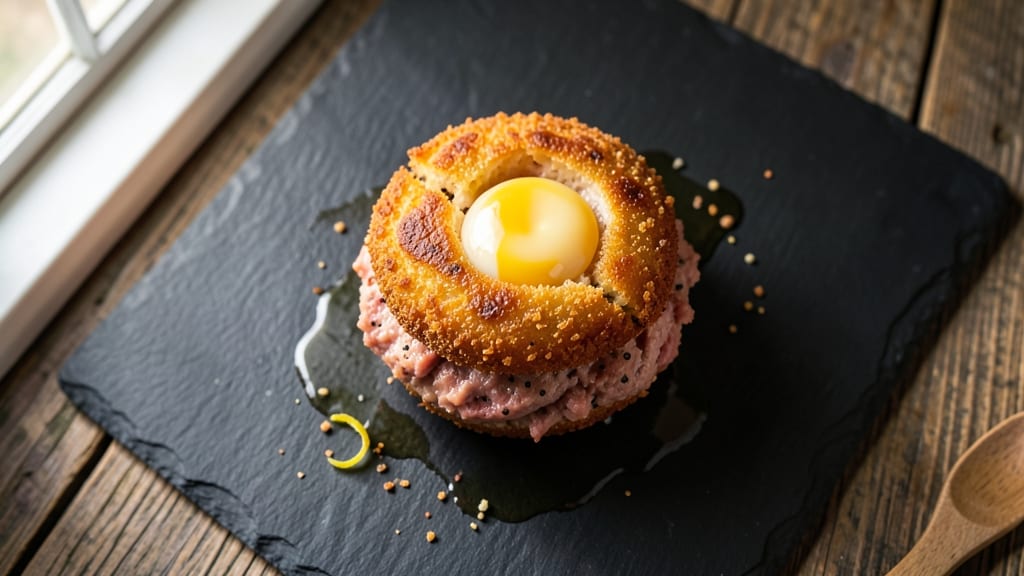
Gordon Ramsay's Scotch egg recipe delivers the perfect balance of crispy panko crust and juicy pork filling—just like his signature restaurant version. The secret lies in properly seasoning the sausage meat, wrapping it securely around the egg, and achieving that golden, shatteringly crisp exterior through precise frying. I've refined this technique over countless batches to ensure every bite lives up to Ramsay's standards.
What sets these apart is the double-coating method: first a thin layer of flour for adhesion, then a generous panko crust that stays crisp even after frying.
The pork filling must be seasoned generously with black pepper and Worcestershire sauce before wrapping around the egg—this creates that signature savory depth Ramsay insists on. The key moment comes when you fry them at 350°F, maintaining consistent oil temperature for even cooking.
By the time you serve these, you'll have Scotch eggs with a crispy exterior that shatters at the touch and a juicy filling that stays perfectly cooked.
The yolk remains creamy when sliced through, while the sausage maintains its moisture. These are restaurant-quality Scotch eggs that will impress even the most discerning guests.
Serve immediately with a tangy mustard dip or lemon wedges to cut through the richness. The presentation matters too—garnish with fresh parsley for that final Ramsay touch. This recipe delivers the perfect Scotch egg every time, with none of the common pitfalls of uneven cooking or soggy crusts.
Ingredients for scotch egg recipe gordon ramsay
These ingredients deliver Gordon Ramsay's signature crispy panko crust and juicy pork perfection every time.
| Ingredient | Amount | Notes |
|---|---|---|
| Large Eggs 🥚 | 4 whole | Room temperature preferred |
| Ground Pork 🐖 | 1 lb | 80% lean, finely ground |
| All-Purpose Flour 🌾 | ½ cup | For dredging |
| Japanese Panko Breadcrumbs 🍞 | 1 ½ cups | For crispy crust |
| Large Eggs (for coating) 🥚 | 2 whole | Beaten for egg wash |
| Vegetable Oil 🫒 | 3 cups | For deep frying |
| Worcestershire Sauce 🍶 | 1 tbsp | For pork seasoning |
| Black Pepper 🌶️ | 1 tsp | Freshly ground |
| Dijon Mustard 🍯 | 1 tsp | For pork seasoning |
| Fresh Parsley 🌿 | ¼ cup | Chopped for garnish |
| Kosher Salt 🧂 | 1 tsp | For seasoning |
| Lemon Wedges 🍋 | 4 whole | For serving |
| Dijon Mustard (for dipping) 🍯 | ¼ cup | For serving |
The ground pork is non-negotiable here—80% lean gives you that perfect balance of flavor and moisture. Trader Joe's or Costco carry excellent quality, or grab it from the butcher counter for the freshest cut. The eggs should be large and room temperature for even cooking. For the panko, Japanese-style is a must—it's lighter and stays crispier than regular breadcrumbs. If you can't find it, regular breadcrumbs toasted in a dry pan work in a pinch, though they won't be as delicate.
No Worcestershire sauce? Soy sauce plus a pinch of sugar mimics the umami depth, though it won't be identical. Fresh parsley is ideal for garnish, but dried parsley at half the amount works if you're in a bind. The Dijon mustard in the pork filling adds tang—substitute with regular mustard if needed, but the flavor won't be as refined. For the dipping sauce, add a splash of hot sauce if you like it spicy. The key to the crispy crust is the double-coating method: flour first for adhesion, then panko, then beaten egg—don't skip any layer.
Keep the ground pork in the fridge for up to 3 days or freeze it for 3 months. The panko stays fresh in an airtight container for 1 month—if it gets stale, toast it briefly before using. These Scotch eggs are best served immediately after frying, but you can hold them in a 200°F oven for up to 10 minutes if needed. The mustard dip keeps for 1 week in the fridge. For presentation, arrange the eggs on a platter with lemon wedges and parsley—Ramsay's signature touch
Why You'll Love This Recipe
- Here’s what sold me: the contrast. That shatteringly crisp panko shell gives way to a juicy pork center and a perfectly set egg—no soggy bits, no dry edges. It’s the kind of bite that makes you pause mid-conversation. (Yes, even on a Tuesday night.)
- No-Fuss Assembly: I swear by this recipe because it’s the kind of dish where you can actually multitask. The ground pork gets shaped into patties while you boil the eggs—no fussy rolling or overworking. Just press, seal, and move on. That panko crust? It sticks like magic, no extra binder needed.
- Crispy-Creamy Magic: Here’s what sold me: the contrast. That shatteringly crisp panko shell gives way to a juicy pork center and a perfectly set egg—no soggy bits, no dry edges. It’s the kind of bite that makes you pause mid-conversation. (Yes, even on a Tuesday night.)
- Picnic to Potluck: Between us, these are my go-to for anything. Pack them for a beach day—they travel well—and they’re just as welcome at a backyard BBQ as they are on a lazy Friday night. Honestly, I’ve even served them at dinner parties when I forgot to make something fancy. No one ever notices.
Step-by-step instructions for Gordon Ramsay's Scotch eggs
Master this classic technique for restaurant-quality Scotch eggs every time.
Prepare the Pork Mixture
In a large bowl, combine the 1 lb ground pork, 1 tbsp Worcestershire sauce, 1 tsp Dijon mustard, 1 tsp black pepper, and 1 tsp kosher salt. Mix thoroughly with your hands until the ingredients come together into a cohesive, slightly sticky mass. The mixture should hold its shape when pressed gently between your fingers—this ensures the eggs stay compact during frying.
Add the 4 whole large eggs to the pork mixture and continue kneading until evenly distributed. The eggs will bind the pork further, creating a juicy center. Divide the mixture into 4 equal portions, roughly 4 ounces each, and shape them into smooth, slightly tapered ovals. Place them on a plate and refrigerate for 30 minutes to firm up before coating.
Create the Crispy Crust
Set up three shallow bowls. In the first, place the 0.5 cup all-purpose flour. In the second, beat the 2 whole large eggs (for coating) with a fork until frothy. In the third, spread the 1.5 cups Japanese panko breadcrumbs evenly. This triple-dip method ensures an ultra-crispy, golden-brown crust that won't fall apart during frying.
Working with one Scotch egg at a time, dredge it in the flour, shaking off any excess. Dip it into the beaten egg wash, allowing any excess to drip off. Finally, roll it thoroughly in the panko breadcrumbs, pressing gently to adhere the crumbs evenly. Repeat with the remaining eggs, spacing them on a wire rack to prevent sticking. Let them rest for 10 minutes before frying—this allows the coating to set slightly for better adhesion.
Deep Fry to Golden Perfection
Fill a deep pot with 3 cups vegetable oil and heat it to 350°F using a deep-fry thermometer. The oil should be hot enough to maintain a steady 350°F—if it drops below 325°F, the eggs will absorb oil and become greasy rather than crispy. Fry the Scotch eggs in batches of 2 at a time, turning occasionally, for 4-5 minutes until they're deep golden brown all over.
Drain the fried eggs on a wire rack or paper towels for 2 minutes to remove excess oil. The crust should be crisp enough to make a satisfying crackling sound when touched. If any coating falls off during frying, don't worry—press it back gently with a spatula while the eggs are still hot. Keep them warm in a 200°F oven while you fry the remaining batches.
Garnish and Serve
Transfer the Scotch eggs to a serving platter and sprinkle each one generously with 0.25 cup chopped fresh parsley. The parsley adds a bright contrast to the rich, savory filling. Serve immediately with 4 lemon wedges on the side and a small bowl of 0.25 cup Dijon mustard (for dipping). The acidity of the lemon and the tang of the mustard cut through the richness, balancing each bite perfectly.
Cut into one to check the doneness—you should find a juicy, fully cooked pork center with no pink remaining. The crust should be crispy outside while the inside stays warm and moist. These Scotch eggs are best enjoyed immediately while the crust is at its crispest and the filling is at its juiciest.
Pro Tips For Making Scotch Egg Recipe Gordon Ramsay
- CHILL THE PORK MIX: I learned this the hard way—warm ground pork sticks to the egg like glue. After shaping the scotch eggs, pop them in the fridge for 10 minutes. The cold helps the coating adhere better when you dip in flour and egg, and the eggs stay put during frying. (Yes, even if you're impatient like me.)
- USE COLD EGGS FOR DIPPING: Room-temperature eggs make a messier coating. Crack the dipping eggs into a bowl and let them sit in the fridge for 20 minutes first—they’ll coat the panko more evenly without sliding off. My grandmother swore by this, and she was right: the crust stays crisp instead of turning into a soggy blanket.
- FRY IN BATCHES OF TWO: Crowding the pan steams the panko instead of crisping it, and the oil temperature drops faster. Fry two scotch eggs at a time, spaced apart, and resist the urge to flip early. The first side needs 3-4 minutes for a deep golden crust—flip too soon, and you’ll end up with a sad, uneven brown.
- PRESS PANKO FIRM: Don’t just sprinkle panko—press it. After dipping in egg, use your palm to firmly pack the breadcrumbs onto the egg, especially the top. This isn’t the prettiest method, but it’s the tastiest: the crust stays intact when you cut into it, and the pork stays juicy instead of oozing out. (Your future self will thank you.)
Make-ahead tips for this recipe
Prep Ahead
Shape the pork-egg mixture into ovals and refrigerate them for up to 24 hours before coating. This gives the flavors time to meld while keeping the texture compact. I like to do this the night before—just cover them tightly with plastic wrap to prevent drying.
The cold mixture is easier to handle when you're ready to coat and fry. 🌟
Coating Prep
Set up your three coating stations (flour, egg wash, panko) in advance. I use small ramekins for the flour and egg wash to keep things organized. Measure out the Japanese panko in a shallow dish—this prevents spills and makes rolling the eggs cleaner.
Prep everything while the pork mixture chills to save time during the critical frying stage.
Oil Temperature Control
Heat the oil to 350°F and keep a deep-fry thermometer handy. If you're prepping ahead, maintain the oil temperature in a slow cooker or chafing dish set to 200°F while you fry.
This lets you work in batches without letting the eggs sit too long. I've ruined many batches by letting the oil cool between frying—always keep it hot! ⚡
Frying Efficiency
Fry in batches of 2 to avoid overcrowding, which drops the oil temperature. Use a slotted spoon to transfer eggs in and out smoothly. Keep fried eggs warm in a 200°F oven on a wire rack—this prevents sogginess.
I find that 2-3 minutes per batch keeps the crust crisp while the filling stays juicy. Never stack them—they'll steam and lose crispness.
Garnish Ready
Chop the fresh parsley and measure the Dijon mustard for dipping sauce in advance. Store them in small bowls near your serving platter. The parsley stays fresh for 2-3 days in the fridge if sealed in a container with a damp paper towel.
I also like to zest a lemon ahead of time for quick wedges—just slice them fresh when serving. 🍋
Serving Timeline
Fry all eggs within 30 minutes of serving for maximum crispness. If you're making these for a party, assemble everything 15 minutes before guests arrive. Keep the eggs warm in the oven, but serve them immediately after removing from heat—the crust loses crispness fast.
The mustard dip can be made a day ahead and stored in the fridge. 💫
Nutrition facts
Frequently asked questions
Can I use chicken instead of pork for this recipe?
Yes, but with adjustments! Ground chicken works well, but reduce cooking time to 3-4 minutes since it cooks faster than pork. Use 93% lean ground chicken to prevent dryness, and add 1 extra tbsp Worcestershire sauce to boost flavor. The texture will be slightly lighter, but still delicious.
Why did my Scotch egg crust come out soggy?
This usually happens from one of three issues: oil too cool (below 325°F), overcrowding the pan, or not draining properly. Always fry in batches of 2, maintain 350°F oil temperature, and drain on a wire rack for 2 minutes. Keep fried eggs in a 200°F oven while finishing the batch.
Can I bake these instead of frying?
Preheat oven to 425°F and bake for 20-25 minutes on a wire rack over a baking sheet. Brush with oil first for crispiness. The crust won't be as crispy as fried, but it's a great alternative. For extra crunch, broil for 1-2 minutes at the end.
How do I make these gluten-free?
Replace flour with ½ cup gluten-free all-purpose flour and use gluten-free panko (or crushed gluten-free crackers). The coating will still adhere well, though the texture may be slightly more delicate. Test with a small batch first to adjust seasoning.
What's the best way to reheat leftover Scotch eggs?
Reheat in a 375°F oven for 5-7 minutes on a wire rack to restore crispiness. For the air fryer, use 350°F for 3-4 minutes**. Avoid microwaving—they'll turn rubbery. Serve immediately after reheating for best texture.