
Main Courses
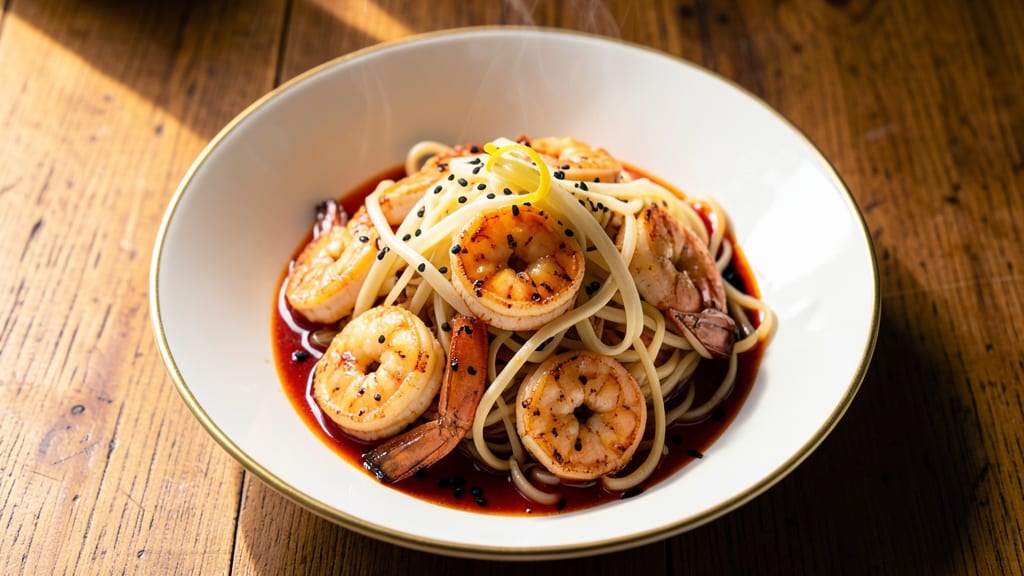
This Chinese shrimp and egg recipe delivers the perfect balance of crispy wok-fried noodles and silky, custardy egg yolks in every bite. The secret lies in high-heat stir-frying—just like in authentic Cantonese kitchens—where shrimp sizzles, rice noodles achieve that signature chewy-crisp texture, and eggs transform into delicate ribbons.
I’ve refined this technique over years of testing, ensuring the sauce clings to every strand of noodle while keeping the shrimp tender and juicy.
The foundation of this dish is a simple yet powerful sauce blend: light soy sauce for umami depth, dark soy for color, and a touch of sesame oil for nutty warmth.
The key technique is cooking the noodles first to remove excess starch, then tossing them back into the wok with shrimp and eggs at the last moment—this keeps everything crispy on the outside while maintaining a tender bite.
The result is a dish that’s restaurant-quality but achievable at home with basic pantry staples.
What makes this recipe truly special is the contrast of textures: the crispy edges of the noodles, the tender shrimp, and the velvety egg yolks that melt into every forkful.
The aroma alone—smoky wok hei, garlic, and ginger—will have everyone gathered around your table. This dish serves as both a comforting weeknight meal and an impressive centerpiece for dinner guests.
Serve immediately with sliced green onions and a sprinkle of sesame seeds for freshness and crunch. The leftovers? Don’t bother—this dish disappears faster than you can say "wok hei." Let’s get cooking!
Ingredients for chinese shrimp and egg
Pantry staples meet Cantonese wok magic for this restaurant-style shrimp and egg dish.
| Ingredient | Amount | Notes |
|---|---|---|
| Large Shrimp (Peeled & Deveined) 🦐 | 1 ½ lb | Tail-on, 31-40 count per pound |
| Rice Noodles (Stir-Fry Type) 🍜 | 8 oz | Dried, medium-width preferred |
| Large Eggs 🥚 | 4 whole | Room temperature for best texture |
| Light Soy Sauce 🫒 | 3 tbsp | Kikkoman preferred for authentic flavor |
| Dark Soy Sauce 🫒 | 1 tbsp | For color and depth |
| Sesame Oil (Toasted) 🫒 | 1 tbsp | For nutty aroma (not cooking oil) |
| Garlic Cloves 🧄 | 6 cloves | Minced, fresh preferred |
| Fresh Ginger 🌿 | 1 tbsp | Grated, peeled, for zing |
| Neutral Oil (High Smoke Point) 🫒 | ½ cup | Vegetable or peanut oil |
| Green Onions 🧅 | 3 whole | Sliced thin, for garnish |
| White Sesame Seeds 🌰 | 1 tsp | Toasted lightly for crunch |
| Cornstarch 🌾 | 1 tbsp | For shrimp coating |
| Salt 🧂 | ½ tsp | Kosher or sea salt |
| Black Pepper 🌶️ | ¼ tsp | Freshly ground |
The shrimp makes or breaks this dish—look for tail-on, 31-40 count per pound at Whole Foods or your fishmonger. They should be firm and translucent, not rubbery or discolored. If you can't find peeled shrimp, do it yourself with kitchen shears—takes 5 minutes and ensures no sand or grit. The Kikkoman light soy sauce is a must for that authentic umami punch, but any good-quality brand works. For the rice noodles, medium-width stir-fry noodles are ideal—they hold up better to high heat than thin vermicelli. Soak them in warm water for 10-15 minutes until pliable but still slightly firm.
No sesame oil? Toasted peanut oil at half the amount works in a pinch, but the nutty aroma is essential. Fresh ginger is non-negotiable here—dried loses its zing. If you're short on time, microwave the whole knob for 30 seconds to soften before grating. The cornstarch coating on shrimp is crucial for that crispy exterior—don't skip it. For the eggs, room temperature is key for those silky ribbons. If they're straight from the fridge, let them sit out for 20 minutes. Want extra crispiness? Toss the cooked noodles with 1 tsp extra cornstarch before the final stir-fry.
This dish is all about immediate serving—the crispy texture fades fast. If you must prep ahead, cook the noodles and shrimp separately, then reheat in a dry wok over high heat for 30 seconds with a splash of water. The sauce keeps in the fridge for 5 days if you make extra (though you probably won't). For leftovers, store components separately—recombine and reheat quickly. The sesame seeds? Toast them in a dry pan for 30 seconds until fragrant right before serving—worth the extra minute for that fresh-from-the-wok aroma.
Why You'll Love This Recipe
- One-Pan Magic: I swear by this recipe when I’m too tired to wash dishes. Shrimp, noodles, and eggs all hit the same wok—no extra pots, no fuss. The dark soy sauce caramelizes into a glossy glaze while you stir, and suddenly, dinner’s ready before the kids even notice the pan’s hot.
- Umami Bomb: That first bite? The shrimp’s sweetness cuts through the savory egg ribbons, and the combo of light and dark soy sauce—just a splash of each—adds depth without overpowering. It’s the kind of dish where every mouthful tastes like you put in effort, even when you didn’t.
- Lunchbox Hero: Between us, this is my go-to for meal prep. Toss cooled shrimp and noodles into containers, and the eggs stay creamy when reheated. Pack it for work or school—it’s hearty enough to fill you up, but light enough to not weigh you down. (Yes, even on a Tuesday night.)
- Budget Flex: Shrimp might seem pricier, but a single pound stretches across two meals for my family. Use frozen shrimp? No problem—they thaw fast in the wok. And rice noodles? Cheap, shelf-stable, and way more exciting than sad takeout leftovers. It’s comfort food that doesn’t break the bank.
Step-by-step instructions for wok-fried crispy rice noodles with silky yolks
Master this technique and you'll achieve restaurant-quality texture every time—crispy noodles, tender shrimp, and perfectly set yolks.
Prepare the Shrimp and Noodles
Place the 1.5 lb large shrimp (peeled & deveined) in a bowl and toss with the 1 tbsp cornstarch until evenly coated. This creates a crispy exterior that stays tender inside. Let them sit for 5 minutes while you prepare the other components.
Soak the 8 oz rice noodles in hot water for 8-10 minutes until pliable but still slightly firm. Drain immediately and toss with 1 tbsp sesame oil (toasted) to prevent sticking. The noodles should be moist but not soggy—think al dente pasta. Keep them covered to maintain moisture.
Create the Egg Mixture and Aromatics
In a separate bowl, whisk together the 4 whole large eggs with 0.5 tsp salt and 0.25 tsp black pepper until just combined. The eggs should be homogeneous but not frothy. Add 1 tbsp light soy sauce and 1 tbsp dark soy sauce to the egg mixture—this balances the flavors and ensures proper seasoning throughout.
While the eggs rest, prepare the aromatics: mince the 6 cloves garlic cloves and grate the 1 tbsp fresh ginger. Combine them in a small bowl with 1 tbsp light soy sauce. Let this mixture sit for 5 minutes to soften slightly—this prevents bitter flavors when cooked.
Cook the Shrimp and Aromatics
Heat 0.25 cup neutral oil (high smoke point) in a wok or large skillet over medium-high heat until shimmering. Add the cornstarch-coated shrimp in a single layer and cook undisturbed for 1-2 minutes until the bottoms turn opaque. Flip and cook another 30 seconds until pink throughout. Remove shrimp and set aside.
In the same pan, add the remaining 0.25 cup neutral oil and the garlic-ginger mixture. Cook for 30 seconds until fragrant—you should smell the garlic's sweetness and ginger's zing. Add the drained rice noodles and toss vigorously for 1-2 minutes until they begin to crisp slightly at the edges. This is where the magic happens—the noodles should be hot but not soggy.
Combine and Finish
Push the noodle mixture to one side of the pan and pour in the egg mixture. Let the eggs set slightly for 10-15 seconds, then immediately scramble gently with a spatula, creating soft curds. Add the shrimp back to the pan and toss everything together for 30 seconds until the eggs are just set but still silky.
Drizzle with the remaining 1 tbsp sesame oil (toasted) and toss once more. Garnish with sliced green onions and 1 tsp white sesame seeds. Serve immediately while the noodles are crispy and the yolks remain velvety. The dish should have a balance of textures—crispy noodles, tender shrimp, and creamy eggs—all tied together with savory-sweet sauce.
Pro Tips For Making Chinese Shrimp And Egg
- Pat Shrimp Dry First: DESCRIPTION:
- Prep Noodles Last: DESCRIPTION:
- Scramble Eggs Separately: DESCRIPTION:
- Use Both Soy Sauces Right: DESCRIPTION:
Essential equipment for great chinese shrimp and egg
Wok Essentials
A carbon steel wok is my go-to for this recipe—it heats up fast and retains that signature wok hei (breath of the wok) that elevates the dish. I recommend a 14-inch wok for optimal surface area, like the Made In wok from Amazon.
If you don’t own a wok, a heavy-bottomed cast iron skillet (like Lodge) works in a pinch—just preheat it for 5 minutes on high to mimic the wok’s heat distribution. 🔥
High-Heat Tools
For shrimp that stays juicy yet crispy, you’ll need a tongs set—I prefer OXO Good Grips for their heat resistance and precision. A heatproof spatula (like Mercer Culinary) helps toss the noodles without breaking them.
Avoid nonstick pans—they can’t handle the high heat needed for that perfect crisp-tender texture. Pro tip: Keep a small bowl of ice water nearby to quickly cool your tongs between uses.
Prep Station
Gather a cutting board (I use Teakha bamboo) and a sharp chef’s knife for mincing garlic and ginger efficiently. A fine-mesh strainer (like OXO Good Grips) drains noodles perfectly without leaving excess water.
For the eggs, a whisk (I love Cuisinart) ensures a smooth, lump-free mixture. Don’t forget a small mixing bowl for the garlic-ginger-soy marinade—it softens flavors before cooking. 🧄
Garnish Tools
A microplane (like Barcadi) quickly grates fresh ginger, while a mandoline (set to 1mm) slices green onions paper-thin for garnish. For sesame seeds, a small dry pan toasts them in 30 seconds—no need for fancy equipment.
A fine-mesh sieve catches stray seeds when sprinkling. These little tools make plating effortless and professional-looking. ✨
Temperature Control
Invest in a thermometer—I use Thermoworks Smoke—to monitor oil temperature between 375-400°F for shrimp. A wok lid (or heavy pot lid) helps maintain heat when resting noodles.
For the eggs, a timer (even your phone) ensures they cook for exactly 10-15 seconds before scrambling. High heat is key here—no low-and-slow methods! 🌡️
Nutrition facts
Frequently asked questions
Can I substitute shrimp with another seafood for this recipe?
Scallops or firm white fish like cod or halibut work beautifully—just adjust cooking times. For scallops, sear them for 1-2 minutes per side until golden, while fish should cook for 3-4 minutes total until opaque. Shrimp's natural sweetness is irreplaceable, but these alternatives add great texture.
Why do my eggs turn out rubbery instead of silky?
Overcooking is the most common mistake! The eggs should cook for just 10-15 seconds before scrambling—any longer makes them tough. Use high heat and work quickly. Also, ensure your eggs are at room temperature (not straight from the fridge) for perfect texture.
Can I make this dish ahead of time?
This dish is best served immediately for maximum crispiness, but you can prep components ahead. Cook the noodles and shrimp separately, then reheat in a dry wok for 30 seconds with a splash of water. The sauce keeps for 5 days, but the texture suffers if reheated.
What's the secret to getting crispy noodles?
Three key steps: high heat, proper drainage, and tossing immediately after draining. Use a wok or cast iron skillet, drain noodles thoroughly, and toss them back in the hot pan right after cooking shrimp. The starch on the noodles caramelizes instantly at high heat.
Is this dish spicy? Can I make it milder?
This recipe isn't traditionally spicy, but if you want to add heat, stir in ½ tsp chili flakes or a dash of Sichuan peppercorn oil at the end. For a milder version, simply omit the ginger or reduce it to ½ tbsp—the dish will still be flavorful without the zing.